"Does this count as porn?"
That can be a useful question, but it is also limited. During recovery, many people stop the obvious sources first: explicit sites, videos, saved links, and accounts they already know are a problem. After that, less explicit material can still be used in the same way.
Short clips on Reddit, sexual stories, OnlyFans browsing, bikini photos on Instagram, suggestive reels, or scenes in normal movies may all sit outside someone's personal definition of porn. In recovery, the important part is how you are using the content.
The better question is simpler: am I objectifying someone for my own sexual use right now?
If yes, treat it as porn for recovery purposes. The label matters less than the loop.
Key takeaways
- "What counts as porn?" is often the wrong recovery question because compulsive behavior can move through soft, legal, or technically non-porn content
- The objectification test asks whether you are reducing someone to a body, category, fantasy, or sexual tool for your own arousal
- Soft porn, erotica, OnlyFans, Instagram, Reddit clips, and thirst traps can all keep the same loop alive if you use them that way
- Normal attraction, sexual thoughts, partnered intimacy, and accidental exposure are not the same as deliberately feeding the compulsive loop
- When in doubt, judge the behavior by its function: is it helping you stay clear, or keeping a loophole open?
What counts as porn during recovery?
For recovery, porn can work as a behavior loop, not just a category of websites.
That loop usually has a familiar shape: cue, search, scan, arousal, more novelty, more specific content, shame, and a promise to stop tomorrow. The clinical literature supports the narrower point that impaired control, repeated unsuccessful attempts to reduce sexual behavior, and continued behavior despite negative consequences are central warning signs in compulsive sexual behavior and problematic pornography use (Kraus et al., 2018, Chen et al., 2022).
That is why "is this technically porn?" can mislead you. Your brain does not care whether the content is on a porn site, a social app, a forum, a private chat, or a fiction archive. If the content gives you the same novelty hit and pulls you into the same compulsive pattern, the recovery effect is similar.
The same is true for "soft porn." A bikini photo, a suggestive reel, a thirst trap, an erotic story, or an OnlyFans profile may be less explicit than the content you used to watch. But if you are using it to edge around your own boundary, you are still feeding the pathway you are trying to weaken.
The same pattern applies when you ask whether porn can be used in moderation. The useful question is whether the content keeps the old loop active, even at a lower frequency.
You can think of it this way:
- Legal definition: Does a platform, court, or policy classify this as pornography?
- Content definition: Is there nudity or explicit sexual activity?
- Recovery definition: Am I using this to trigger, objectify, escalate, or chase arousal?
The third question is the one that protects your recovery.
The loophole problem
When people quit obvious porn, the behavior often moves toward whatever route is still available.
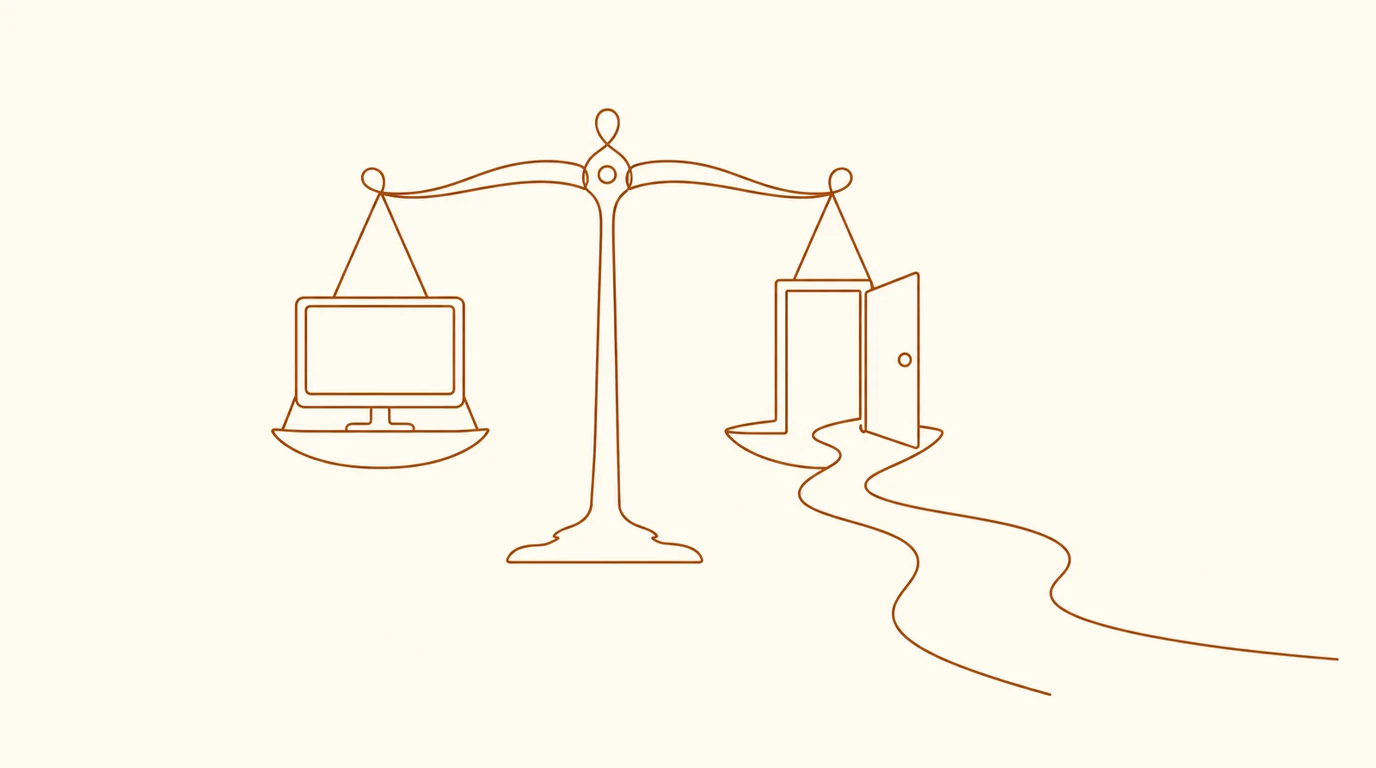
For one person, that door is Instagram. For another, it is erotic fiction. For another, it is "just checking" an OnlyFans creator without subscribing. For another, it is Reddit clips, TikTok thirst traps, dating-app swiping, celebrity photos, AI-generated images, suggestive livestreams, or scenes in normal movies that they rewind and rewatch.
Different formats can support the same pattern: being alone, scanning for bodies, selecting details, building a private fantasy, escalating from mild to stronger, and telling yourself the old label does not apply.
That pattern is the loophole.
The brain learns from repetition and cues. Research on problematic pornography use has found heightened cue reactivity and reward-system involvement around sexual cues, especially in people with symptoms of compulsive use (Gola et al., 2017, Liberg et al., 2022). In plain language: the anticipation, search, and "maybe there is more" feeling can become part of the hook, not just the final explicit content.
Soft substitutes can feel sticky because they preserve the search and anticipation phase while seeming different enough from explicit porn.
The objectification test
The objectification test is blunt:
Am I reducing a person to a body, body part, category, fantasy, or tool for my own arousal?
If the honest answer is yes, step away.
This test works because it moves the decision away from technical labels:
- Is it on a porn site?
- Is there full nudity?
- Is it technically allowed by the app?
- Is everyone else looking at it?
- Is it "just Instagram"?
- Is it "just a story"?
- Is it "just one quick look"?
Those questions can keep the debate going. The objectification test asks what the content is doing in your behavior.
Objectification means treating someone primarily as an instrument for your own sexual use. Pornography use has been linked with sexual objectification and dehumanization in multiple studies, including research showing associations between pornography use and objectifying perceptions of others (Bridges et al., 2024, Zhou et al., 2021). A separate study found that internet sex addiction predicted objectification even when accounting for viewing frequency (Novakova et al., 2025).
Do not turn this into shame. A sexual response is not the problem by itself. The recovery issue is repeatedly using that response to reduce someone to material for a private loop.
For the wider behavior pattern, see how porn trains objectification and how to reverse it. This article focuses on the quick decision rule for ambiguous content.
Common loopholes
Soft porn
Soft porn gives you enough stimulation to stay hooked while preserving plausible deniability.
For recovery purposes, do not treat it as a harmless middle category. If you are searching, saving, zooming, replaying, fantasizing, or looking for the next stronger thing, it is the same objectifying loop with softer packaging.
Instagram, TikTok, Reddit, and feeds
Social platforms are not porn by default, but scrolling sexualized feeds for arousal is objectification. Thirst traps, bikini posts, suggestive reels, creator accounts, Reddit clips, and "just checking" profiles are not neutral if you are using them as sexual material.
That is why digital detox for porn recovery matters. A clearer recovery plan means blocking adult sites and removing less obvious ways back into the same loop.
Erotica and sexual stories
Erotica is not video porn, but it can still become porn behavior. Written sexual content can be used to objectify, fantasize, escalate, and keep arousal high.
If you are reading erotic scenes to build a private sexual session, it belongs outside your recovery plan. The fact that it is text does not make the loop safer.
OnlyFans
OnlyFans belongs in the porn category for recovery. It combines sexual content with money, novelty, creator attachment, direct messages, and the feeling of personal access. Even "just checking" a profile keeps the objectifying loop open.
For the relationship side of this, see Is OnlyFans cheating?.
Bikini pictures and thirst traps
One accidental glance is just an accidental glance. Recovery does not require panic over every attractive person you see.
The pattern matters. Searching for bikini pictures, opening a creator profile, scrolling through similar posts, saving images, or using them as fantasy fuel is deliberate objectification. Treat it as part of the porn loop.
Movies, shows, and suggestive scenes
A sexual scene in a normal movie does not automatically equal relapse. Rewatching it, looking up the actor, searching for clips, or letting it start a browsing chain is where the loop begins.
If a scene catches you off guard, look away, let your body settle, and move on. If you start hunting for more, intervene early.
What does not count
Recovery can go wrong when people become hypervigilant and start treating every sexual signal as danger. That creates shame and anxiety, and shame is a major relapse fuel.
These are not the same as porn:
- Noticing that someone is attractive
- A sexual thought that appears and passes
- Healthy desire for your partner
- Consensual intimacy
- Medical, educational, or artistic nudity that you are not using for arousal
- Accidentally seeing something suggestive and choosing to move on
If sexual thoughts scare you, read how to handle sexual thoughts without relapsing. The point is to notice sexual cues without turning them into a compulsive behavior.
What to do when something fails the test
When something fails the objectification test, keep the response boring and immediate.
Close it. Do not finish the post, scene, thread, or profile. Ending early matters because the first few seconds are where you still have leverage.
Name the loop. Say: "This is the loophole." Or: "I am using this like porn." A clear label cuts through negotiation.
Cut off access. Mute the account, block the subreddit, unfollow the creator, clear the search term, delete the saved link, or add the site to your blocker. If that access remains available, you will probably use it again.
Log the trigger. Was it boredom, stress, loneliness, curiosity, late night scrolling, or shame? Your answer belongs in your recovery data. The broader guide to porn urges and triggers can help you map the pattern.
Break the state. Do something physical for two minutes: stand up, shower, walk outside, breathe, clean one surface, text someone, or open your recovery app. The goal is to interrupt the loop before it hardens.
If you already crossed the line, avoid the "I ruined everything" spiral. Use porn relapse recovery and get specific about the loophole that opened.
A simple rule you can actually use
If you need a practical rule, use this:
If I am using it to objectify, fantasize, escalate, or chase arousal, I treat it as porn.
That rule may feel strict, especially when the content is legal, common, or less explicit. Its job is to remove formats from the argument and bring attention back to the behavior.
You do not have to debate every format forever. Ask what the behavior is doing in the moment. Is it helping you stay present and clear, or keeping the old loop alive under a softer label?
That answer is usually visible early.