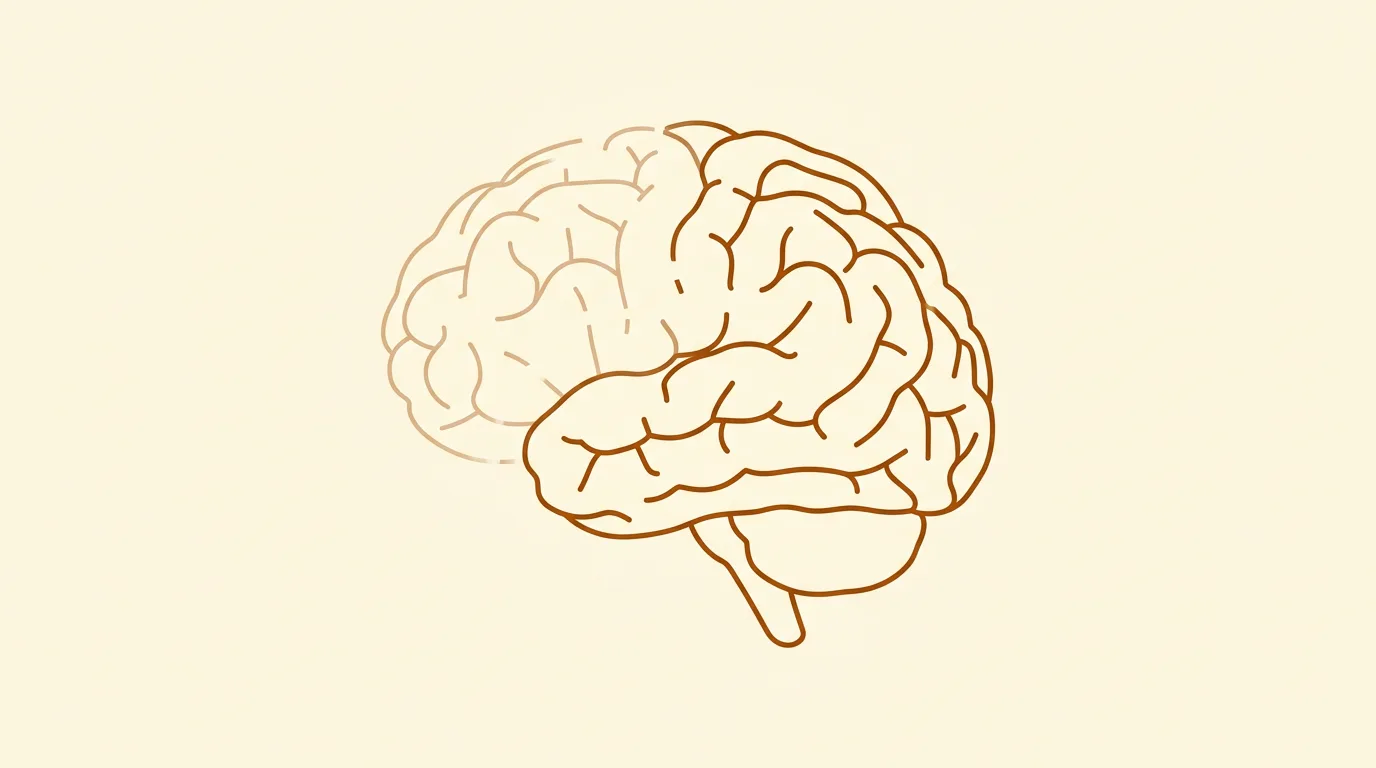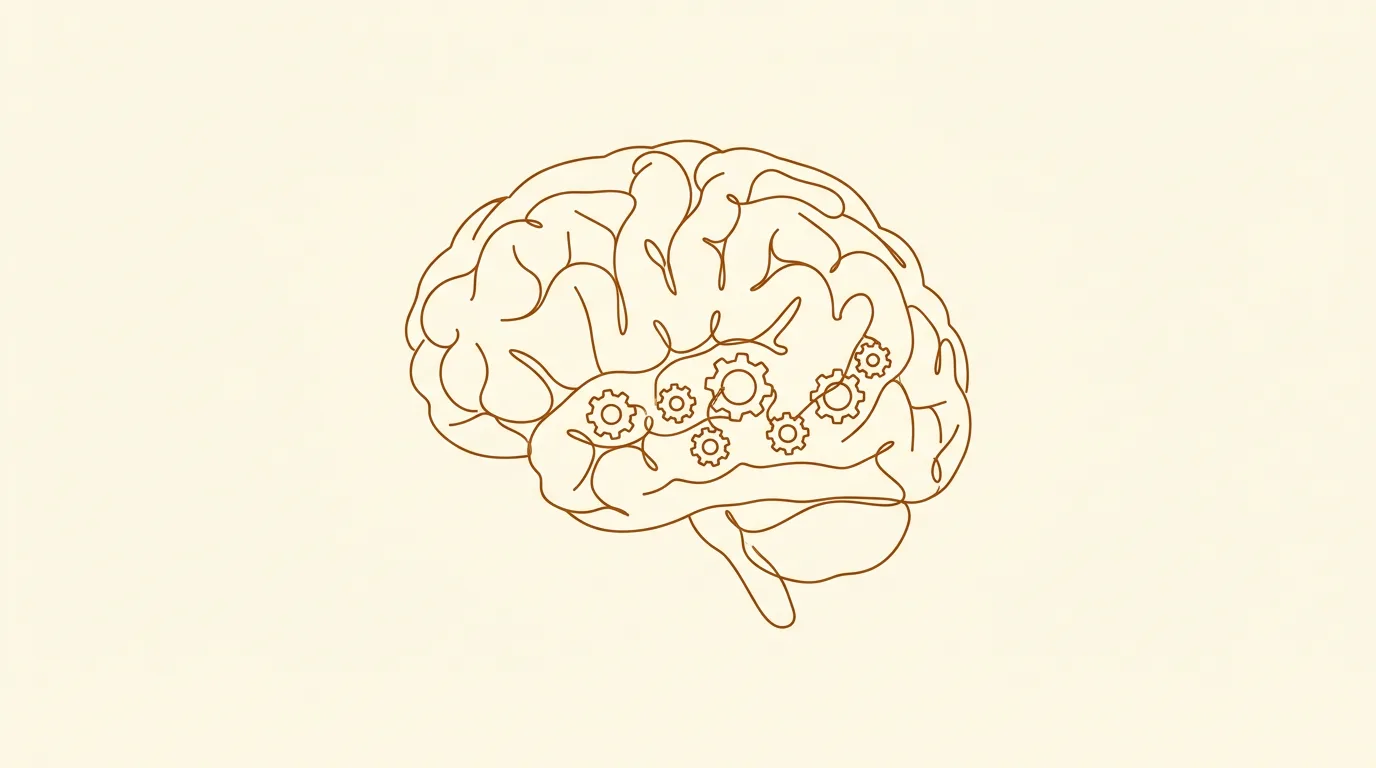
Internet porn can create a mismatch for the brain's reward system. The same circuitry that responds to sexual cues, novelty, anticipation, and connection can be trained by unlimited high-stimulation content.
Understanding how porn rewires your brain is useful when it reduces shame and makes the pattern more concrete. The point is not that the brain is permanently damaged. The point is that repeated cues and rewards can teach the brain what to notice, want, and repeat.
Key takeaways
- Porn can strongly engage reward learning through sexual novelty, anticipation, and repeated cue exposure
- Heavy or compulsive use is associated with stronger responses to porn cues, and some people report ordinary activities feeling less compelling
- The novelty loop matters because each new image, video, or category can renew the sense of pursuit
- Research on porn and the brain is suggestive, and some claims should stay cautious
- Learned patterns can change: with practice, cue responses can lose force and the pause before acting can widen
Your brain's reward system, simplified
Deep in the center of the brain is a structure called the nucleus accumbens. It is part of the reward circuit, the system that helps motivate pursuit of food, connection, sex, achievement, and other important rewards.
Dopamine is often misunderstood as only a pleasure chemical. It is also closely involved in wanting, anticipation, learning, and pursuit. That distinction matters because porn can feel compelling before it feels satisfying.
When you watch porn, sexual novelty and anticipation strongly engage this circuit. The brain learns: this cue matters, this route produces a reward, return to it again. With repetition, the route can become easier to enter and harder to interrupt.
How porn affects the brain differently than real sex
Real sexual encounters involve a broader context: anticipation, touch, emotional presence, effort, communication, and the reality of another person. The reward is tied to a human experience.
Porn delivers intense visual novelty with little effort, little delay, and nearly unlimited variety. It can condition the brain to reduce real people to appearance and to expect a speed and intensity that real intimacy usually does not provide.
A useful comparison is the difference between a meal and a concentrated sweetener. Both involve reward, but the delivery and intensity are different.
The dopamine cycle: tolerance and desensitization
This is where the rewiring can begin.
The brain tries to maintain balance, a process called homeostasis. In addiction research, repeated high-intensity reward can change how cues, rewards, and control systems interact. For porn specifically, the strongest direct evidence points to reward sensitivity, cue-reactivity, and learned arousal patterns rather than a proven dopamine-receptor timeline.
The result can feel like desensitization. The same content that once worked may feel less stimulating. Ordinary pleasures, such as exercise, conversation, work, food, or a quiet day outside, may feel flatter. Some people also report erectile difficulties linked to porn use, especially when arousal works with a screen but not with a partner.
This resembles tolerance-like patterns seen in other compulsive behaviors, while the porn literature remains more cautious than substance-addiction research. A person may need more intense, more novel, or more extreme content, even though the exact mechanism is still being studied.
The practical point is learning. Repetition can make the route to porn more automatic, while some people report that ordinary activities feel less rewarding. Direct studies have not established a single dopamine-based mechanism for that experience.
The novelty loop
The brain responds strongly to novelty. The Coolidge effect describes a renewed sexual response to a new potential mate in animal studies. Internet porn can use the same novelty pull repeatedly: new tab, new video, new category, new search.
That is one reason people spend longer on porn than they planned. A ten-minute intention can become a long session because each click offers another possible reward. AI-generated porn can extend this further by making the novelty supply feel unlimited.
Rapid novelty can keep a browsing session going because each click offers another possible reward. Interrupting that loop usually takes a deliberate pause or a change in the environment.
What changes in the brain
Brain research on porn use is suggestive, not settled. A 2014 JAMA Psychiatry study of 64 healthy men found that higher self-reported pornography hours were associated with lower right caudate gray matter volume and lower functional connectivity between the right caudate and left dorsolateral prefrontal cortex.
Weaker control signals
The prefrontal cortex supports executive control: delaying gratification, weighing consequences, and making decisions that fit long-term goals. The JAMA study did not prove that porn caused brain changes, and it did not show broad prefrontal gray-matter loss. It did find lower connectivity between a reward-related region and a control-related prefrontal region.
That fits the practical experience many users describe: urges feel fast, while the ability to pause feels weak.
Sensitized cue-reactivity
As ordinary rewards feel less compelling, porn-related cues can become more powerful. A time of day, being alone with a phone, a certain website, a mood, or a stress state can activate the reward circuit before a conscious decision has fully formed.
This cue-reactivity is one reason environment matters. Recovery usually needs fewer cues, more barriers between you and porn, and a plan for the moments when the old pattern begins to take over.
Stress-based use can become learned
Many people use porn to manage stress, anxiety, boredom, loneliness, or difficult emotions. Over time, the brain may learn to offer porn as the quickest coping route. Other coping strategies can become less practiced because they are used less often.
The escalation pathway
Desensitization-like experiences and novelty seeking can contribute to escalation. As familiar content feels less stimulating, a person may seek material that is more novel, intense, taboo, or shocking.
This is one way people can end up watching genres that disturb them. Novel or transgressive content may draw the strongest attention in the moment, but that does not necessarily define a person's stable preferences.
If this pattern sounds familiar, Porn escalation: why your tastes change explains it in more detail without adding extra shame.
Neuroplasticity works both ways
Neuroplasticity allows the brain to learn and update patterns. A porn-related habit can change, but research does not provide a fixed neurological timetable. What happens after you stop watching porn explains the evidence and its limits.
When you stop reinforcing the porn loop:
- Ordinary activities may feel more rewarding. This is a meaningful self-reported change, not proof of a receptor reset.
- The pause before acting can widen. Repeatedly choosing another response can make the old sequence less automatic.
- Cue responses can lose force. Triggers may become easier to notice without following them.
The pace varies, and current research does not support a standard schedule for mood, sexual function, or cue response. For a closer look at what happens after you stop watching porn, including the limits of brain-imaging evidence, use functional changes rather than a week-by-week countdown.
What this means for you
Understanding the neuroscience is most useful when it removes mystery and shame. If you keep going back despite wanting to stop, the behavior can be treated as a learned pattern that needs a different environment and repeated alternative responses.
The modern environment offers rapid, nearly unlimited sexual novelty. That design can reinforce repeated searching and make a learned loop harder to interrupt.
The next step is using this understanding to build a recovery approach that works with your brain. Start with Understanding porn addiction for the full picture, or jump to Urge surfing if you need something practical right now.