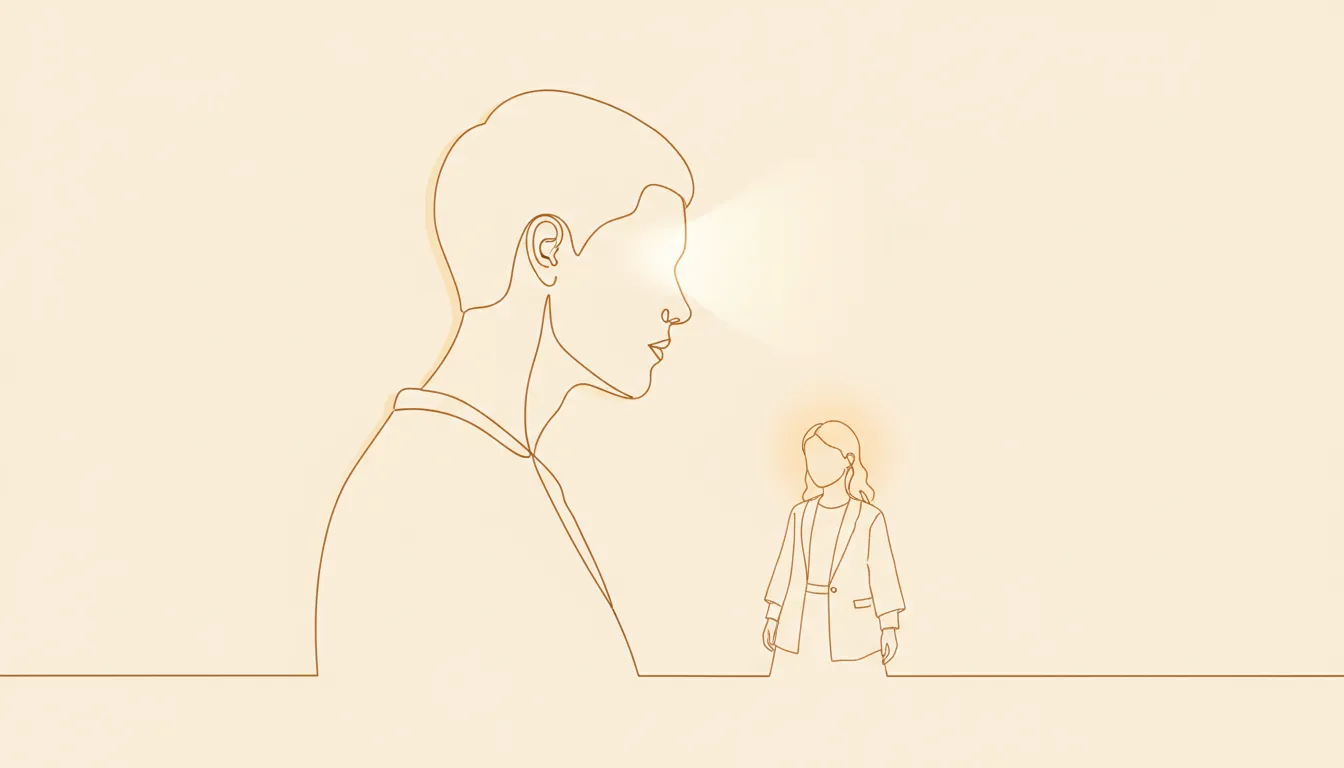
After heavy porn use, objectifying thoughts can start to feel automatic. You may notice yourself reducing someone to appearance before you have had time to think, then feel ashamed or worried about what that reaction says about you.
That reaction is usually a learned attention pattern. Porn can reinforce scanning, rating, and reducing people to sexual cues. Recovery is less about forcing thoughts away and more about changing what you repeatedly pay attention to: reducing porn cues, practicing perspective-taking, and building ordinary interactions where women register as full people.
Key takeaways
- Porn consumption is directly linked to sexual objectification of others, with compulsive use predicting it even beyond viewing frequency
- Objectification is associated with reduced activity in empathy-related brain regions, making it harder to recognize others' pain and emotions
- The pattern is reversible: perspective-taking and compassion training help rebuild the neural pathways porn weakened
- Quitting porn reduces the cues that reinforce objectification; empathy practice helps build a different attention habit
How porn trains your brain to objectify
Pornography shows objectification and teaches it. A content analysis of best-selling pornographic videos found that 88.2% of scenes contained physical aggression and nearly half contained verbal aggression, with women overwhelmingly cast as the target. A second study of 400 popular videos confirmed that women were consistently portrayed through instrumentality: treated as tools for someone else's pleasure rather than as autonomous people.
When you watch this repeatedly, your brain absorbs the framework. A 2024 study of 1,342 adults found that greater pornography use frequency was directly associated with greater sexual objectification of others. For men specifically, interest in degrading content predicted objectification of women even after controlling for overall consumption.
What makes this especially concerning for people struggling with compulsive use: a 2025 study of 1,272 men showed that internet sex addiction predicted objectification of women even after controlling for how often they watched. The addictive pattern itself, not just the exposure, reshapes how you see people. This is part of how porn rewires your brain at a fundamental level.
What objectification does to your empathy
The damage goes deeper than attitudes. Objectification changes how your brain processes other people's experiences.
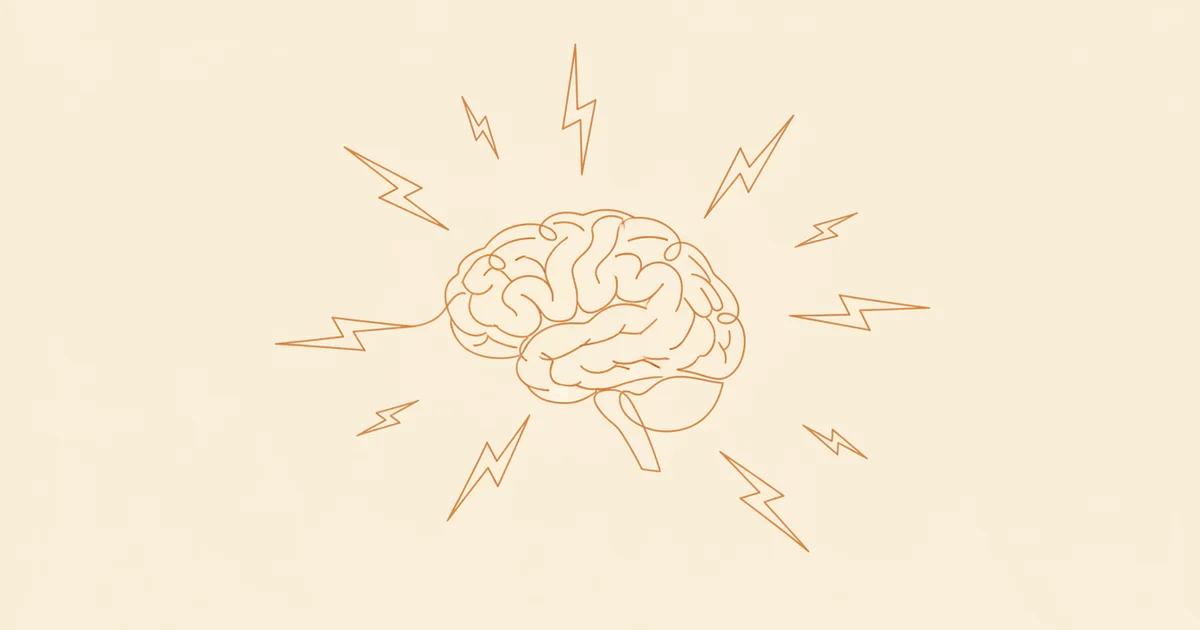
In an fMRI study, researchers found that brain areas responsible for empathy (the anterior insula and cingulate cortex) activated significantly less when participants viewed sexually objectified women compared to non-objectified women. The study suggests that objectified people are processed with less empathic engagement.
Follow-up research using EEG confirmed this: neural markers of vicarious pain, the brain signals that fire when you see someone else hurting, were dampened or absent for sexualized women. Participants also rated sexualized women as experiencing less pain from the same injuries.
That is a measurable neurological shift. The same way porn weakens your brain's motivation system, it weakens the circuits you need to recognize other people as full human beings.
A study on dehumanization took it further, finding that pornography use was associated with two distinct forms: seeing women as tool-like (mechanistic dehumanization) and seeing women as lacking higher cognition (animalistic dehumanization). Both forms predicted different types of aggressive attitudes and behaviors.
How to stop objectifying women
Quitting porn reduces the cues that reinforce the pattern. Rebuilding empathy usually takes practice as well. The strategies below are supported by research on perspective-taking, compassion training, and media exposure.
1. Practice perspective-taking
Research on perspective-taking found that deliberately imagining another person's inner experience decreased stereotypical biases on both conscious and unconscious measures. It works by increasing the overlap between how you see yourself and how you see others.
In practice: when you notice yourself objectifying someone, pause and add one concrete non-visual detail to your attention. They may be heading to work, managing stress, thinking about family, or simply trying to move through their day. The exercise is to shift from evaluation to personhood.
2. Build compassion deliberately
Short-term compassion training has been shown to increase prosocial behavior toward strangers. The research does not require an extreme practice schedule; it points toward brief, consistent repetition.
One option is to spend five minutes each day practicing loving-kindness meditation, focusing on extending goodwill to people you do not know personally. Apps like Insight Timer have free guided sessions. The point is repeated exposure to a different mental habit: deliberately considering another person's experience instead of treating them as an image to evaluate.
3. Interrupt the automatic scan
Porn trains a specific visual pattern: scan, evaluate, categorize. You can disrupt this by consciously redirecting your attention. When you catch yourself reducing someone to appearance, notice it without self-punishment and deliberately shift focus. Look at their expression. Listen to what they are saying. Notice something about them that has nothing to do with their body.
This is similar to the pattern interruption used in managing other types of triggers. The more you practice the redirect, the weaker the automatic scan becomes.
4. Reduce objectifying media beyond porn
Objectifying media consumption as a whole, not just explicit pornography, predicts objectified cognitions about women. This includes certain social media feeds, music videos, and advertising. Audit what you consume. If a feed consistently presents people as bodies first, it is reinforcing the same neural pattern you are trying to break.
This connects to your broader digital environment during recovery. Cleaning up your media diet removes inputs that keep reinforcing the pattern while your brain is trying to rewire. This does not require withdrawing from normal life. It means being selective with feeds and content that keep training the same response.
5. Engage with women as people
Some people in recovery avoid women entirely out of fear that they will objectify them. Others treat every interaction as a "test" of whether they can behave normally. Both approaches keep objectification at the center.
Instead, pursue normal human connections. Have conversations. Collaborate on projects. Build friendships. Accumulate experiences where women are colleagues, friends, and people with ideas, gradually overwriting the one-dimensional framework porn installed. Rebuilding your identity means building a life where your default mode is connection rather than evaluation.
The timeline: what to expect
There is no universal schedule, but patterns emerge across recovery experiences.
Weeks 1 to 4: The automatic objectifying thoughts are still strong, but you start catching them faster. The gap between the thought and your awareness of it shrinks. This is progress, even though the thoughts themselves have not stopped.
Months 2 to 3: You begin noticing moments where the objectifying lens does not activate at all. Conversations with women feel more natural. The shift is not constant, but the baseline is moving. This tracks with the broader porn addiction recovery timeline.
Months 4 to 6 and beyond: The new pattern starts to feel like the default rather than an effort. Healthy sexuality after quitting porn includes experiencing attraction without automatically reducing someone to a body. You can find someone attractive and still see them as a complete person at the same time.
Setbacks are normal. A stressful week, poor sleep, or exposure to objectifying media can temporarily reactivate old patterns. A setback is a signal to return to the practices, not evidence that the work failed. The escalation patterns you learned from porn took time to develop, and reversing them usually takes repeated practice.
Change comes from repeated practice
Objectification after porn is partly an attention habit shaped by repetition. Recognizing the pattern matters because it gives you a place to intervene: what you watch, how you redirect attention, and how you relate to people in ordinary situations.
The research is encouraging, but not magical. Empathy can improve, perspective-taking can be practiced, and objectifying responses can become less automatic when the old cues are reduced and the new habits are repeated.
Understanding how addiction works can help explain why the pattern became so automatic. The practical work is to keep building a different way of seeing until it becomes more available in daily life.