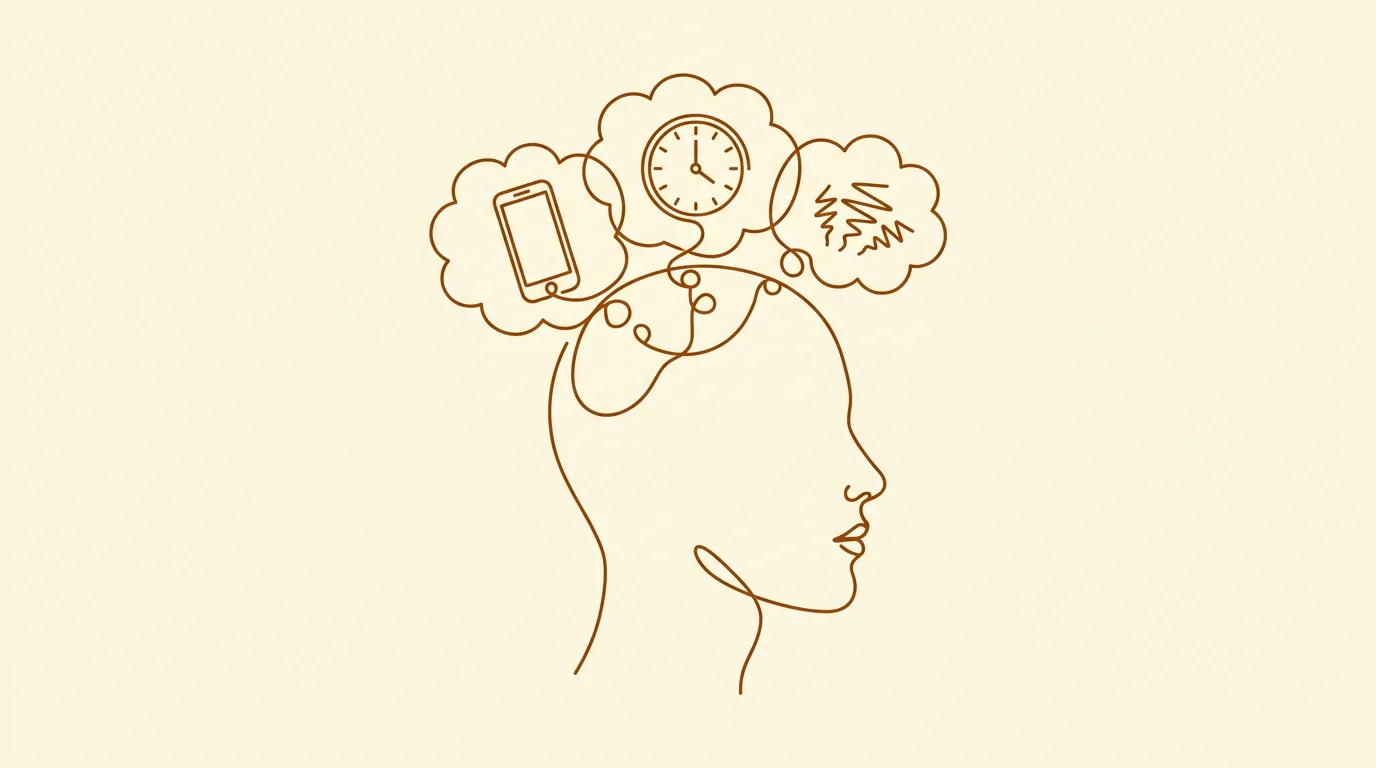
Porn urges often feel sudden, but they usually have a lead-up. A long day, an empty room, a phone in bed, or stress sitting in the background can change what your brain expects next. The pull may show up before you have a clear thought about porn.
That pull is the urge. The situation that made it more likely is the trigger.
Understanding both makes recovery more workable. You can learn the pattern, interrupt it earlier, and respond with a short plan.
Key takeaways
- Urges are conditioned responses that usually rise to a peak and then fade
- Common porn triggers include boredom, nighttime and fatigue, loneliness and rejection, stress and exhaustion, shame, and environmental cues
- A useful response plan has five parts: name the urge, interrupt physically, ride the wave, address the need, and log it
- Logging urges turns vague relapse patterns into specific information you can act on
- With repetition, urges can become less frequent and less intense, though strong triggers may still appear
What is a porn urge, really?
An urge is a learned pull toward familiar relief or reward. It can involve reward circuitry, memory, habit, body activation, and emotion at the same time. The useful response is practical: identify the pattern, reduce the intensity, and choose the next step.
An fMRI study of men with problematic pornography use found heightened activation in the ventral striatum, a reward-processing region, in response to cues predicting erotic content. The authors described this as consistent with cue-reactivity patterns seen in other addictive behaviors.
Once the urge appears, the immediate task is to use a response plan.
Urges have predictable characteristics:
- They rise and fall. Many urges are most intense for a limited window, often around 10 to 20 minutes. The intensity may feel fixed while it is happening, but it usually changes.
- Fighting can increase focus on them. Trying to suppress an urge through force alone often puts more attention on it.
- They respond to interruption. Changing your physical state, leaving the room, or using a short breathing practice can interrupt the loop faster than a long mental debate.
- They can weaken with practice. When you repeatedly move through urges without using porn, the old response can become less automatic.
For a detailed walkthrough of the ride-it-out approach, read the urge surfing guide.
Why porn urges happen: the trigger-response loop
Your brain does not generate urges randomly. There is usually a trigger, sometimes obvious, sometimes hidden inside a routine.
The basic loop works like this:
Trigger -> Emotional discomfort -> Urge -> Behavior -> Temporary relief -> Return of discomfort
Porn can provide temporary relief while leaving the original discomfort in place. After enough repetition, the brain starts treating porn as a familiar response to boredom, stress, loneliness, fatigue, or environmental cues.
The loop can run through softer content too. If you are unsure whether something counts, the objectification test helps you judge the behavior by what it is doing in your brain and by the recovery pattern it creates.
Social feeds can be part of that softer loop. If Instagram, TikTok, X, or Reddit keeps acting as the first step toward relapse, social media porn addiction covers the boundary-setting side in more detail.
Recovery work often starts by interrupting the loop at the trigger and urge stages, before the behavior becomes harder to stop.
The six most common porn trigger categories
Triggers are personal, but they often cluster into recognizable categories. Knowing yours is one of the most useful early recovery tasks.
1. Boredom
Boredom is common because the brain looks for stimulation when there is nothing clear to do. Porn is an easy source of novelty and intensity, especially when it has been used that way many times before.
Boredom can also mean that nothing available feels meaningful or engaging. That version is harder to solve with a simple distraction because the problem includes empty time and a lack of satisfying input.
We have a full article on this: Boredom and porn urges.
2. Nighttime and fatigue
Late nights are difficult because structure is lower, privacy is higher, and fatigue reduces the ability to pause before acting. A phone in bed can turn that situation into a reliable cue.
If relapse usually happens at night, the plan needs to account for the evening environment: where the phone goes, what happens before bed, and what the first step is when an urge appears. Read Late-night urges for specific evening routines and emergency protocols.
3. Loneliness, rejection, and emotional pain
Porn can become a painkiller when emotional needs are unmet. Loneliness, rejection after a date, a fight with someone you love, grief, or sadness can all increase the pull toward something that feels available and predictable.
This category matters because the emotion may need care after the immediate urge passes. Loneliness, rejection, and emotional triggers goes deeper.
4. Stress and exhaustion
Stress and exhaustion reduce the resources needed for patience, planning, and self-control. When the day has been heavy, quick relief can become more appealing because the slower options feel harder to start.
The plan needs to work when energy is low. That usually means fewer decisions, more friction around porn, and easier access to alternatives. See Stress, exhaustion, and lowered defenses.
5. Shame and self-punishment
Shame can turn a lapse into a new trigger. After using porn, disgust or self-criticism can create more emotional pain, and that pain can increase the pull back toward the same coping tool.
Breaking this cycle means responding to a lapse with structure instead of punishment: clean up the environment, log what happened, identify the trigger, and choose the next protective step. Read Quitting porn without shame.
6. Physical cues and environment
Your phone in bed. A specific room. A certain time of day. Physical sensations such as lying in a familiar position. These cues can become linked to porn through repetition, and they can set off an urge without much emotional buildup.
Environmental triggers are often easier to address than emotional ones because the cue can be changed. Move the phone. Rearrange the room. Change the evening routine. The trigger loses some of its pull when the context changes.
How long do porn urges last?
This question matters because it changes the strategy. If an urge is time-limited, the first job is to create enough space for the intensity to drop.
A single urge, at peak intensity, often rises and falls over about 10 to 20 minutes, though this varies. The leading edge may last 2 to 5 minutes. The peak may last 5 to 10 minutes. Then the intensity often begins to decline.
This is why a 10 to 15 minute response plan is useful. The plan has a limited job: helping you avoid acting during the strongest part of the urge.
Over weeks and months of recovery, the pattern often changes:
- Days 1-14: Urges may be frequent and intense. Multiple urges in a day can happen.
- Weeks 3-6: Frequency may drop. Intensity can still spike during stressful periods.
- Months 2-4: Urges may become less frequent and easier to manage. They can still appear, but they may feel less commanding.
- Month 6 and beyond: Many people report fewer and milder urges, though certain triggers can still produce strong ones.
The point of the timeline is not to predict the exact day things change. It is to show that urges can shift with repetition, environment changes, and a more reliable response plan.
A practical framework for responding to porn urges
When an urge hits, a simple plan is easier to use than a perfect one. This five-step framework is meant to be short enough to remember in the moment.
Step 1: name it (30 seconds)
Say out loud or write down: "I'm having an urge. It was triggered by [boredom / stress / loneliness / whatever you can identify]."
Naming the urge creates distance between the feeling and the action. It also starts the habit of looking for the trigger while the intensity is still present.
Step 2: interrupt physically (2-5 minutes)
Start with the body before long reasoning. The nervous system often responds to physical input faster than it responds to a mental argument.
Options that work:
- Splash cold water on your face and wrists
- Do 20 push-ups or air squats
- Step outside and take 10 deep breaths
- Take a cold shower if you can
- Change rooms immediately
We have a full guide on this: Physical resets that interrupt urges.
Step 3: ride the wave (10-15 minutes)
This is where urge surfing comes in. Observe the urge directly. Notice where you feel it in your body. Watch the intensity rise, hold, and fall. Breathe through the window of discomfort.
The intensity usually changes when you give it time and stop feeding it with more stimulation.
Step 4: address the real need (ongoing)
Once the acute urge passes, ask: what was I actually looking for?
- If it was boredom -> engage in something with mild challenge or novelty
- If it was connection -> text a friend, call someone, or go where people are
- If it was stress relief -> take a walk, stretch, or journal for 5 minutes
- If it was escape from pain -> acknowledge the pain without numbing it
This step helps the response reach the need underneath the urge. Without it, the same trigger may come back quickly.
Step 5: log it
Write a quick note: what triggered the urge, which response you used, and how you feel now. This takes about 60 seconds.
Over time, the log turns scattered episodes into patterns. You may notice that urges cluster around certain hours, rooms, emotions, apps, or situations. That information makes the next plan more specific.
What changes over time
Urges can feel urgent because they narrow attention. A response plan gives you a pause between the feeling and the behavior.
At first, that pause may be short. You might notice the urge late, use only part of the plan, or miss the trigger until afterward. That still gives you information. The practical skill is learning to notice the pattern earlier and respond sooner.
Over time, recovery is about making urges less decisive. They may still show up, especially around old triggers, but they no longer have to choose the behavior for you.
Where to go from here
If you are just starting out, focus on identifying your top two or three triggers. Read the articles that match your patterns:
- Boredom and porn urges
- Late-night urges
- Loneliness, rejection, and emotional triggers
- Stress, exhaustion, and lowered defenses
- Physical resets that interrupt urges
- Urge surfing guide
- Quitting porn without shame
Then build your own response plan. Keep it short: something you can remember and use in the moment. Write it on an index card or put it in your phone.
The next urge is easier to handle when the first step is already decided.