During a strong porn urge, reasoning may not be the first tool that works. The body is activated, attention narrows, and the easiest route can start to feel more available than the planned response.
A physical reset changes the situation quickly: temperature, breathing, muscle tension, location, or light. That shift can lower the intensity enough to create space for the next decision.
This article covers practical physical interrupts for porn urges and explains when to use them. For the full picture of how urges function and what triggers them, start with the complete guide to urges and triggers.
Key takeaways
- Strong urges often include physical activation, so a body-based interrupt can help before reasoning does
- Cold water, short movement, breathing, and changing rooms are fast ways to change the state around the urge
- Short, specific actions are usually more useful than staying still and debating the urge
- For stronger urges, combine several resets: leave the room, use cold water, move, then breathe
- Practice the reset outside an urge so the response is easier to reach when the urge is active
Why physical interrupts can help
Your nervous system has two main modes:
- Sympathetic (fight or flight): activated, aroused, seeking stimulation
- Parasympathetic (rest and digest): calm, grounded, recovering
When an urge is strong, the body may be in a state of activation: increased heart rate, shallow breathing, tension, and narrow focus on the reward. In that state, long-term thinking and impulse control can be harder to access.
A physical reset changes the conditions that are amplifying the urge. The urge may still be present afterward, with less intensity and less pull toward the automatic path.
In practice, it often helps to change the body state first, then make the next decision.
The most effective physical resets
Cold water
Cold water can create a fast shift in arousal. It may trigger the mammalian dive reflex, a response associated with changes in heart rate, breathing, and parasympathetic activity. For many people, it is the quickest physical reset to try.
How to use it:
- Splash cold water on your face and wrists. This takes about 10 seconds and can create a quick state shift.
- Hold an ice cube in your hand. The cold sensation pulls attention into the present moment and away from the urge.
- Take a cold shower. If the urge is intense, 60 to 90 seconds of cold water can create a stronger reset. Many people come out feeling more alert and steadier.
Cold exposure is useful because it gives the body a clear signal to respond to. Research on human physiological responses to cold water immersion found that immersion in 14°C water changed dopamine and noradrenaline concentrations, showing that cold exposure can meaningfully shift physiological state.
Intense short-burst movement
Physical movement gives activation somewhere else to go. It uses the body's arousal for effort instead of letting it sit inside the urge.
The key is intensity, not duration. A 30-minute workout is unnecessary here. Two minutes of effort can be enough to raise heart rate and demand full attention.
Options:
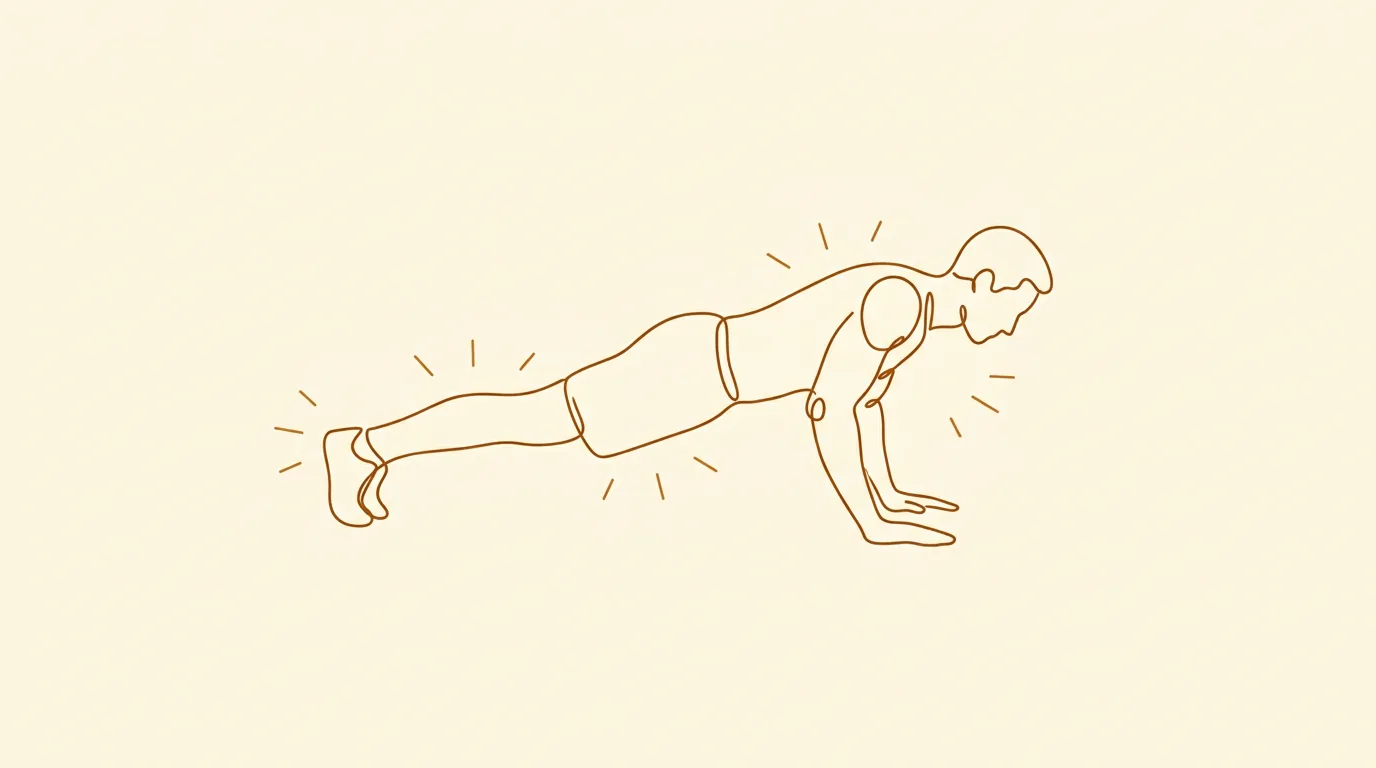
- 20 push-ups or air squats. Fast, intense, no equipment needed.
- Sprint in place for 60 seconds. Pump your arms, drive your knees. Go hard enough that you're out of breath.
- Burpees. 10 burpees takes about a minute and can create a strong state shift.
- Jump rope (or jump without a rope). 60 seconds of jumping creates enough physical disruption to break the craving loop.
- Plank hold. If you need something quieter, hold a plank for 60 to 90 seconds. The physical tension and breathing demand pull your focus into your body.
After 2 minutes of intense movement, check in with the urge. If it is still high, do another round or switch to breathing.
Breathing techniques
Breathing is one autonomic function that can be consciously influenced. That makes it a useful bridge between the body's automatic state and deliberate action.
Box Breathing (for calming down):
- Inhale through your nose for 4 counts
- Hold for 4 counts
- Exhale through your mouth for 4 counts
- Hold empty for 4 counts
- Repeat 4 to 6 cycles
Box breathing can help reduce the arousal state that is feeding the urge.
Physiological Sigh (for fast relief):
- Take a double inhale through your nose: one regular breath in, then a second shorter sniff on top
- Exhale slowly through your mouth for as long as you can
- Repeat 3 to 5 times
This technique has been studied as a fast way to reduce physiological stress. It can be useful when the urge is mixed with tension or panic.
Forceful Exhales (for discharging energy):
- Stand up
- Inhale deeply through your nose
- Exhale hard through your mouth with a "haaa" sound
- Repeat 10 times
This can be useful when the urge carries agitated energy. The forceful exhale gives that energy a physical outlet.
Changing rooms
Changing physical location is simple, but it can be one of the most useful urge interrupts.
The brain can associate specific environments with specific behaviors: the bedroom, the couch, the bathroom. If porn has often happened in those places, the location itself can become a cue.
When an urge hits, stand up and leave the room. Go to a different part of the house. Go outside. Walk to the end of the driveway and back. The change of scenery disrupts the environmental cues that are feeding the urge.
This is especially useful at night. If you are lying in bed with the urge building, get up and go to a lit room. Movement, light, and a new environment can lower the intensity within minutes. For more nighttime-specific strategies, read Late-night urges.
Temperature contrast
Beyond cold water, any temperature change can serve as a reset:
- Step outside into cold air for 60 seconds (especially effective at night)
- Take a warm shower followed by 30 seconds of cold
- Press a cold, damp cloth against the back of your neck
Temperature shifts demand the body's attention. They can pull the nervous system out of its current state and create a reset point.
How to combine physical resets
One reset may be enough. For stronger urges, combining two or three can work better:
Example stack for a strong urge:
- Stand up and leave the room (5 seconds)
- Splash cold water on your face (15 seconds)
- Do 20 air squats (45 seconds)
- Do 4 rounds of box breathing (2 minutes)
Total time: about 3 minutes. In that time, you have changed location, used cold exposure, discharged physical energy, and slowed the breath. The urge may still be present, but it is now happening in a different physical state.
From here, you can transition into urge surfing, observing the remainder of the urge as it fades.
When physical resets aren't enough
Physical resets address the acute urge: the immediate pull or spike in intensity. If the urge is driven by a deeper emotional trigger, the reset buys time, and the underlying cause still needs attention.
If you find that urges come back quickly after a physical reset, look at what's driving them:
- Is it boredom that needs a structural fix?
- Is it loneliness or emotional pain that needs to be acknowledged?
- Is it stress and exhaustion that needs pre-loading strategies?
The physical reset helps with the immediate moment. The deeper work reduces how often those moments build.
Building the habit of physical interruption
The difficult part is remembering to use the reset when the urge is intense. In that moment, the easiest path can feel more available than standing up, moving, or using cold water.
A few ways to build the habit:
- Practice when you do not need it. Do a cold water splash and breathing exercise once a day, outside of any urge context. This builds familiarity so the action feels natural when you actually need it.
- Create a trigger-action plan. Write it down: "When I feel an urge, my first action is to stand up and leave the room." Rehearse this mentally. The more times you mentally simulate the response, the more automatic it becomes.
- Keep it visible. Put a note on your nightstand or bathroom mirror: "Cold water. Move. Breathe." When the urge hits, you don't want to have to remember the plan; you want to see it.
Make the reset easy to reach
Physical resets work best when they are easy to start. Choose one technique and make it obvious: cold water at the sink, a note near the bed, a planned route out of the room, or a breathing pattern you already know.
With repetition, the sequence can become more automatic: urge, stand up, change state, then decide. The reset becomes one part of the recovery plan because it protects the moment where the old route usually takes over.
Start with one technique that is realistic for your life. Use it the next time an urge hits, then adjust from there.
For the full framework on understanding and responding to urges, go back to Urges and triggers: the complete guide.