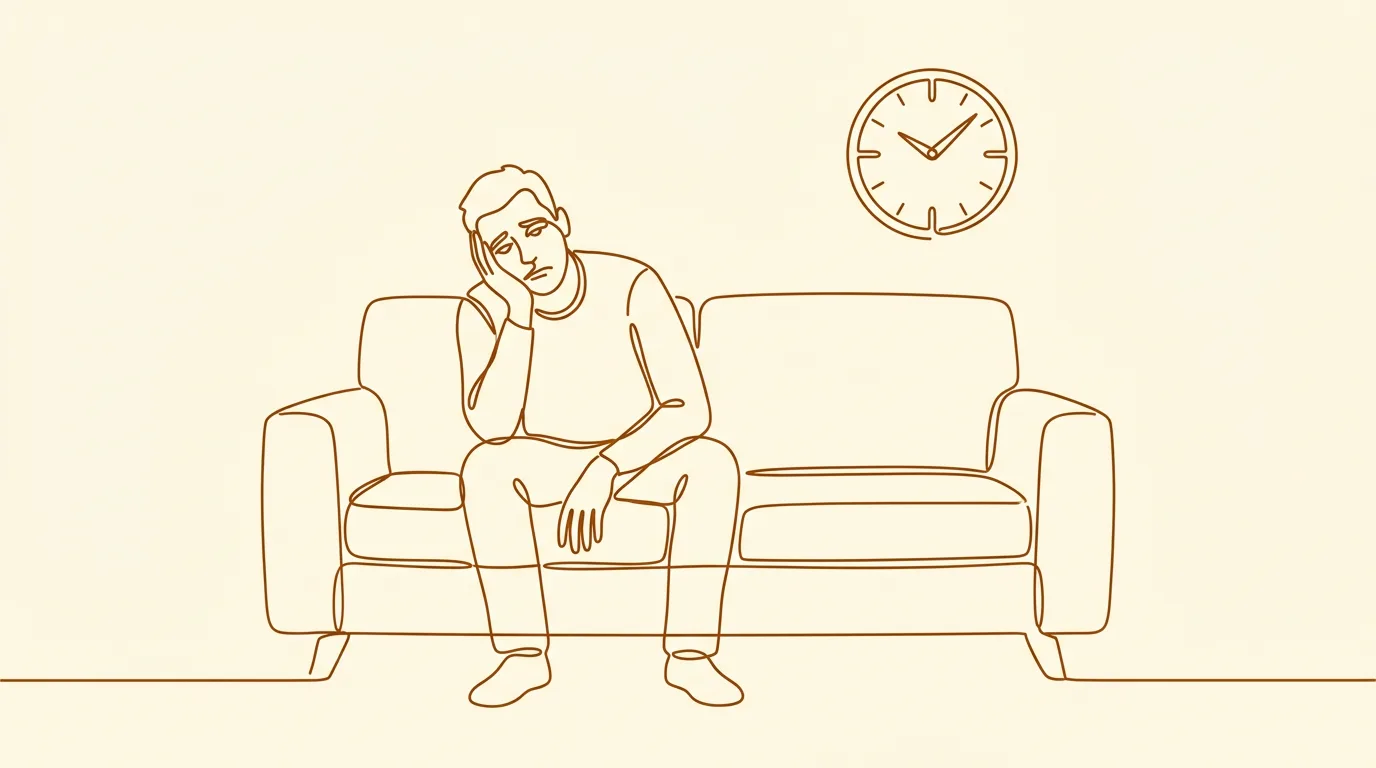
Late-night urges often arrive after the day has lost its structure. The phone is nearby, tiredness is higher, and there may be a long gap between the last activity and sleep.
If night is a recurring relapse window, focus on the setup: what is nearby, how tired you are, and what happens between the last activity and sleep. The work is to change those conditions before the urge has to be handled in bed.
This article is part of the complete guide to urges and triggers. Here, the focus is on why nights raise risk and how to build a practical evening plan.
Key takeaways
- Late-night urges often come from a combination of fatigue, lost structure, privacy, loneliness, and phone access
- A phone curfew removes the easiest route before the urge starts
- A wind-down sequence gives shape to the gap between the last activity and sleep
- A nighttime protocol should be simple enough to follow while tired: get out of bed, turn on a light, do a physical reset, and wait out the urge
- The first weeks of a new evening routine can feel uncomfortable while the old pattern loses strength
Why night raises the risk
Several conditions are usually present at once.
Fatigue and decision load
After a full day, attention and impulse control are often lower. There have been decisions, conversations, tasks, and interruptions. By late evening, even simple choices can feel harder than they did earlier.
A review of circadian rhythms, sleep deprivation, and human performance found that fatigue can impair attention, decision-making, and impulse control, with some effects comparable to mild intoxication. That makes the end of the day a poor time to rely on last-minute restraint.
Loss of structure
During the day, a schedule can create natural barriers against porn use: work, errands, meals, movement, social obligations. At night, that structure often disappears. The gap between the last activity and sleep can become high-risk when there is no clear next step.
Loneliness and isolation
Night can make loneliness more noticeable. Other people may be asleep or unavailable, messages slow down, and there is less to interrupt difficult thoughts.
Porn can offer simulated intimacy at a moment when real connection is not available. If loneliness is a major part of the pattern, read Loneliness, rejection, and emotional triggers for a deeper look.
The phone-in-bed problem
For many people, the phone is the access point, and it is also the last thing touched before sleep. Being in bed, in the dark, alone, with unlimited access makes it easier for a passing thought to turn into a relapse.
For some people, this turns into gooning-style sessions built from edging, tabs, and lost time. Removing the phone from bed matters because it changes the setup before the urge starts.
The "can't sleep without it" pattern
Some people have used porn as a sleep aid for long enough that the two become linked. The thought is often, "I need to release tension to fall asleep." When that routine stops, sleep can feel disrupted for a while because the expected sequence is missing.
A replacement wind-down pattern helps the body learn a different route into sleep. The first stretch can be uneven, but the association usually weakens with repetition.
Building an evening routine that protects you
A useful plan reduces access and gives the evening more structure before the high-risk window begins.
Set a phone curfew
For many people, this is the most useful first change. Pick a time that fits your schedule, such as 9 PM or 10 PM. After that time, the phone goes in another room. Not on the nightstand, not face-down on the bed, and not within reach.
If you use your phone as an alarm, use a basic alarm clock instead. The point is to remove the easiest access point from the place where relapse usually happens.
Create a wind-down sequence
The evening needs a transition between "day" and "sleep." Without one, the gap can fill with restlessness, scrolling, and urges. A wind-down sequence gives the last part of the day a predictable ending.
A simple sequence:
- Stop screens 30 to 60 minutes before bed. Phone away, laptop closed.
- Do one calming activity. Read a physical book, stretch, take a warm shower, journal.
- Prepare for tomorrow. Lay out clothes, review your schedule, write a brief to-do list. This gives the day a clearer endpoint.
- Get into bed only when you are ready to sleep. If you are not tired, stay up doing something calm in another room. The bed should not become the place where the urge is negotiated.
Have an emergency protocol
Even with a good routine, there will be nights when an urge appears. The protocol should be simple enough to follow while tired.
The Nighttime Emergency Protocol:
- Get out of bed. Physically stand up. Leave the place where the urge is building.
- Turn on a light. Darkness can make the urge feel more immersive. Light changes the state.
- Do a physical reset. Splash cold water on your face. Do ten push-ups. Step outside for 60 seconds of cold air. See Physical resets that interrupt urges for more options.
- Set a 15-minute timer. Sit somewhere that is not your bed and wait out the urge. It will usually rise, peak, and fall. Read our urge surfing guide for the full technique.
- Go back to bed only when the urge has passed.
This protocol works by changing the situation: location, lighting, physical state, and time pressure. The urge has less room to grow when the setup changes quickly.
Addressing the deeper nighttime patterns
Phone curfews, routines, and emergency protocols handle many nighttime relapses. If nights remain difficult, an underlying emotional or relational problem may also need attention.
If you're using porn to avoid your thoughts
When the day stops and the noise fades, avoided thoughts can become louder. For some people, the urge to watch porn at night is less about arousal and more about shutting down what comes up in the quiet.
A short journal note before bed can help reduce the pressure. Even three sentences about what is present can make the feeling less vague and less urgent.
If you're exhausted but wired
In this stress pattern, the body is tired, but the nervous system is still activated. Relaxing feels difficult, sleep does not come easily, and porn may seem like the fastest way to shut the state down.
The issue may be that the body has not shifted out of stress mode. A warm shower, progressive muscle relaxation, or slow breathing exercises, such as inhale for 4 counts, hold for 4, exhale for 6, can help bring arousal down. For more on the stress-relapse connection, read Stress, exhaustion, and lowered defenses.
If nights are lonely
A routine may not be enough when nighttime loneliness is a major trigger. It may point to a relational need that is not being met during the day. That does not necessarily mean a partner. It means real connection needs a place somewhere in daily life.
Start small: a phone call with a friend in the evening, a recurring social commitment once a week, or another form of genuine contact before the time of night when you usually feel most isolated.
The first weeks can feel rough
If you are just starting to change your nighttime routine, expect some discomfort. The old pattern was familiar and rewarding, so the new one may feel awkward at first. Sleep may be worse for a few days. Restlessness and irritability can show up too.
Discomfort is common when a repeated pattern changes. With enough repetition, the new routine usually starts to feel more normal and the nighttime urge pattern can weaken.
Use the emergency protocol as many times as needed during the first stretch. A perfect evening is unnecessary; what matters is getting through the evening without returning to the old pattern.
Night can get easier
Night does not have to stay the main relapse window. With the phone outside the room, a predictable wind-down sequence, and a simple protocol for urges, the evening becomes less open-ended.
The quiet may still feel uncomfortable at first. Over time, it can become easier to finish the day without returning to the old pattern.
Start with one concrete change: the phone is out of reach before the evening gets risky. If an urge appears anyway, leave the bed, turn on a light, and follow the protocol.
For the full framework on how to handle any urge, go back to Urges and triggers: the complete guide.