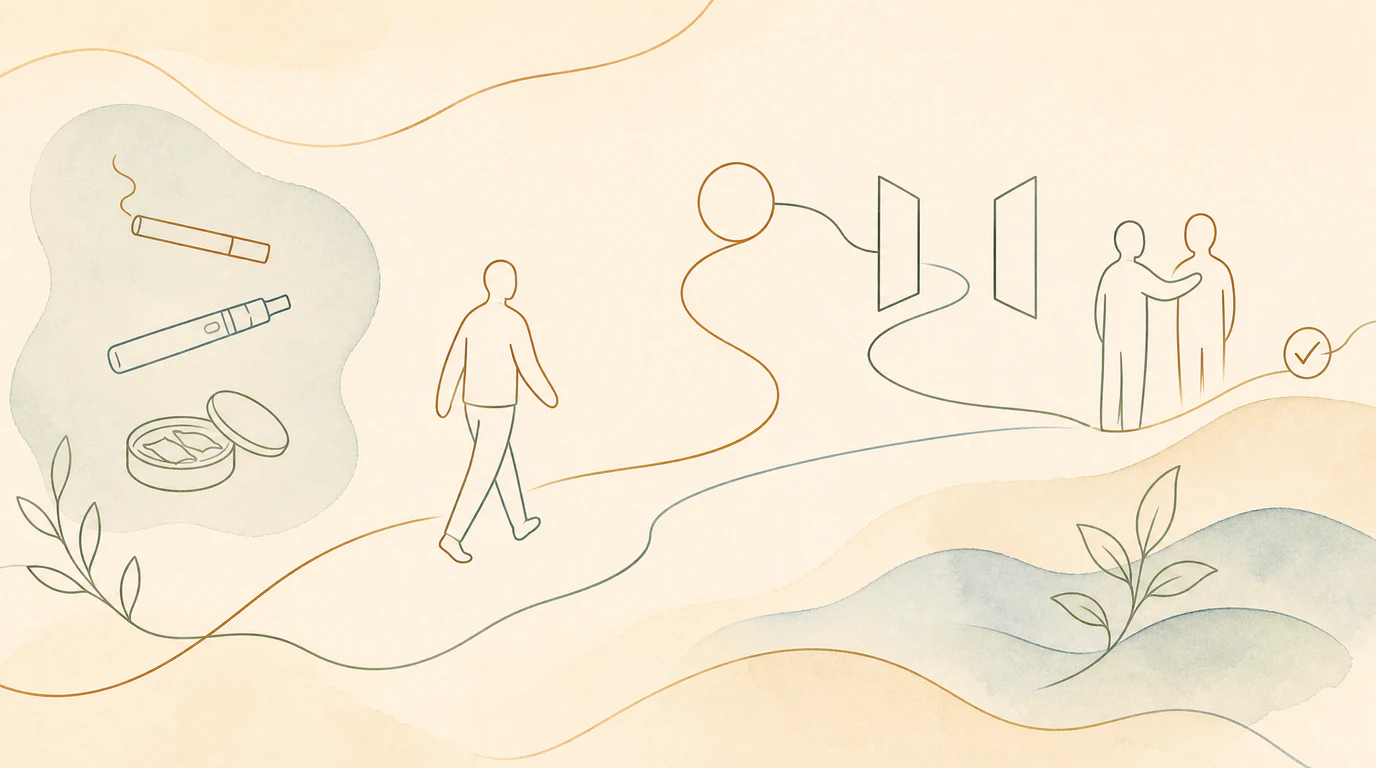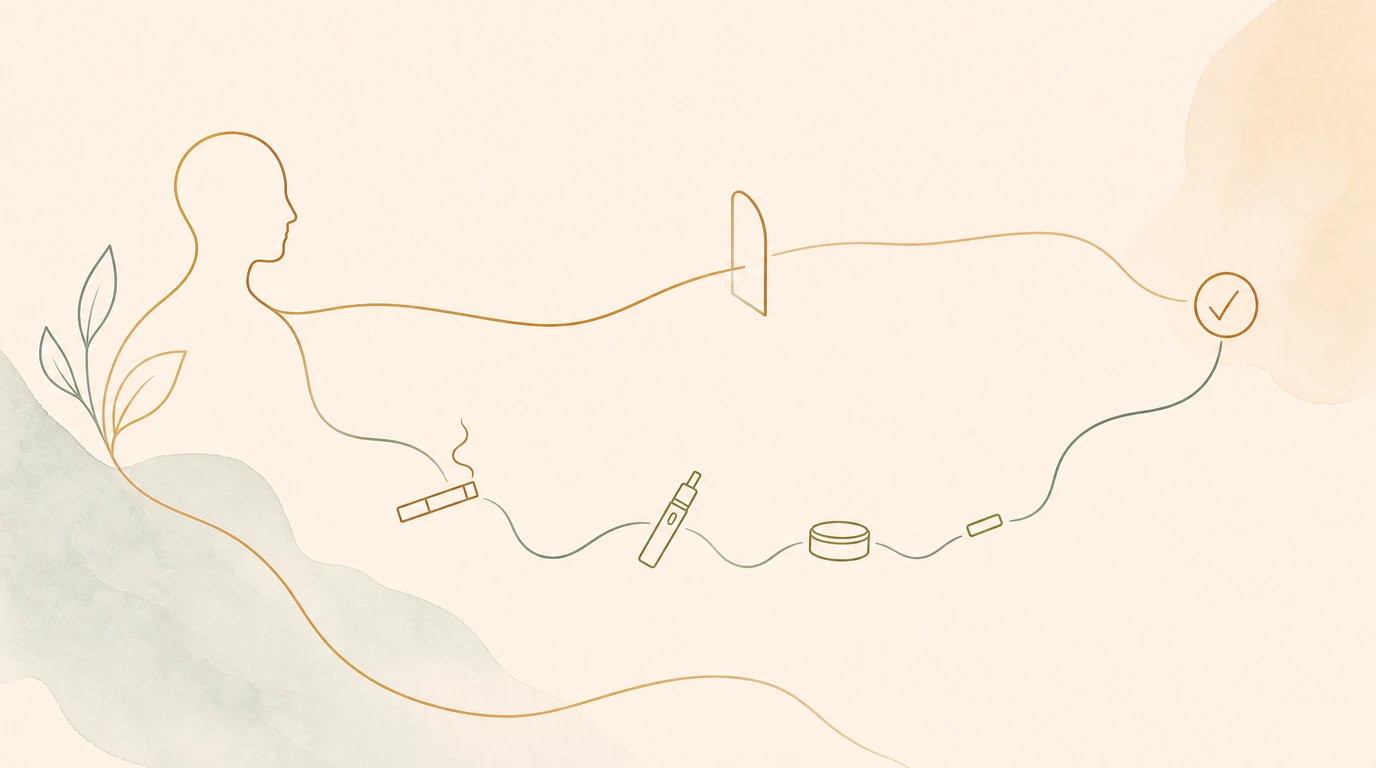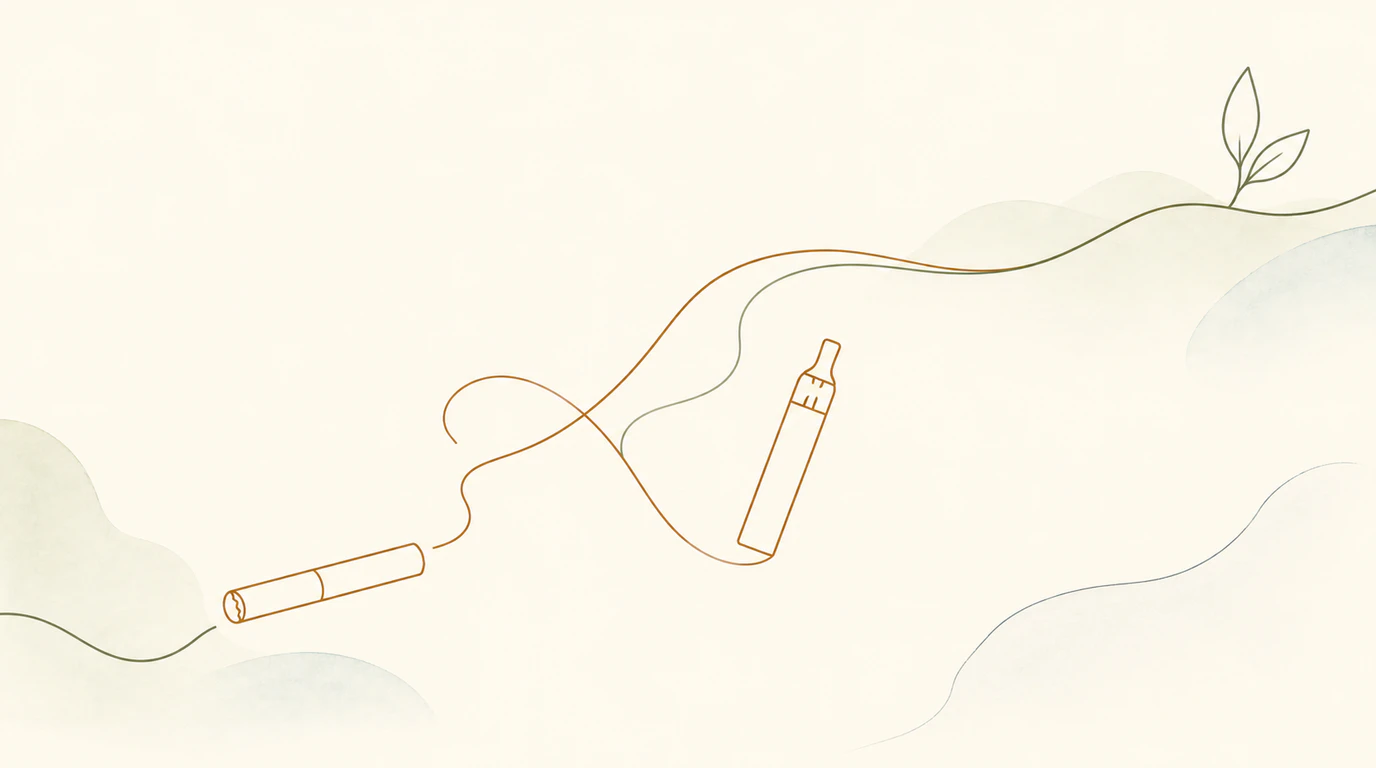
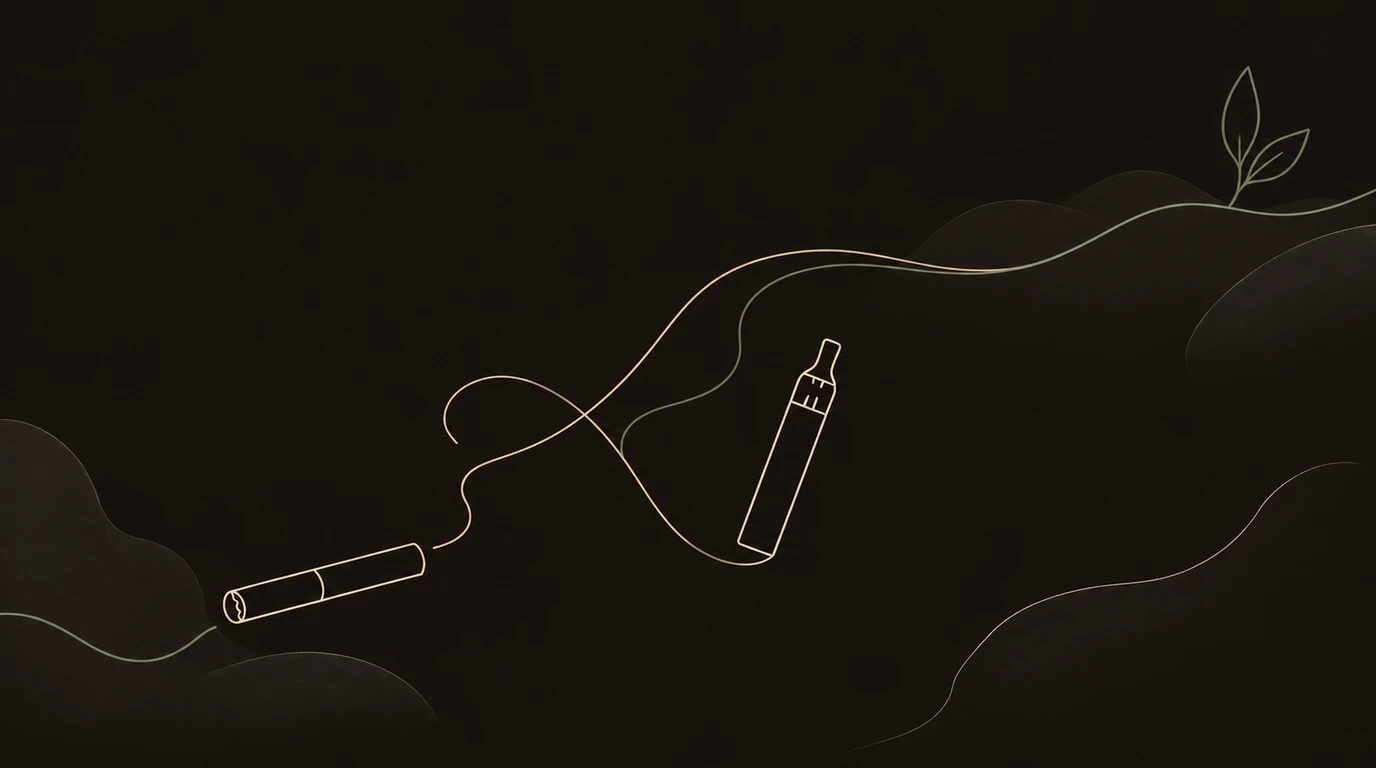
Using cigarettes and a vape can create one nicotine pattern with two delivery systems. The products may divide the day between them. A cigarette might belong to coffee, a work break, or time outside. Vaping might fill driving, screen time, indoor spaces, or the gaps between cigarettes. When one becomes unavailable, the other can take over quickly.
This guide is for people who want to stop both. It assumes that you have already chosen a quit method through the general nicotine quit plan. The work here is narrower: reveal how the two products interact, give both a shared endpoint, and close the routes that allow switching between them.
Direct research on stopping cigarettes and vaping together is still developing. A 2023 scoping review found that published guidance relied largely on indirect evidence and identified zero intervention studies focused on complete cessation of both products among dual users (Kundu et al., 2023). The steps below combine observed dual-use patterns with practical cessation planning. They are a structure you can adapt with a clinician, pharmacist, quitline, or other support.
Key takeaways
- Record cigarettes and vaping on one timeline while keeping a separate measure for each
- Find the moments when one product becomes the automatic replacement for the other
- Write one nicotine quit plan with a clear final endpoint for both products
- Close cigarette and vaping supply routes at the same planned time
- Review both measures together so a decrease in one stays visible beside any increase in the other
Build one dual-use record
Use three ordinary days to record both products. Keep everything on one timeline. For each cigarette, write the approximate time and situation. For vaping, choose a defined episode that you can repeat consistently, such as each time you pick up the device after setting it down or each ten-minute period that contains vaping.
Record these details:
- time and place
- cigarette or vape
- what happened immediately before use
- which product you had used most recently
- why that product was available at that moment
- people, activities, drinks, or emotions present
- what ended the episode
At the end of each day, add the cigarette total and one or two observable vaping measures. Useful vaping measures include defined episodes, pods or disposables used, milliliters of liquid, nicotine-free time blocks, or time from waking to first use. Keep the original units. Puff-to-cigarette conversions vary too much across devices, liquid strengths, power, and puffing patterns to serve as a dependable personal measure.
Review the timeline as one sequence. Circle every place where the product changes. You may see vaping through the afternoon followed by a cigarette after dinner, cigarettes during work breaks followed by vaping in the car, or vaping at home followed by cigarettes with friends. These changes are the main subject of your plan.
Find your product handoffs
A handoff is a situation where access, rules, convenience, or preference moves you toward the other product. The switch may happen within minutes or several hours later.
Common handoffs include:
- vaping where smoking is restricted, followed by a cigarette once you go outside
- smoking after meals, alcohol, coffee, or social contact, while vaping fills the rest of the day
- reaching for cigarettes when a device is empty, uncharged, broken, or left behind
- reaching for a vape when cigarettes run out or smoking requires leaving the room
- using one product around certain people and the other when alone
- carrying a vape as a backup for cigarettes, or keeping cigarettes as a backup for the device
These patterns have appeared in studies of real-world dual use. Ecological momentary assessment found that contexts influenced whether participants smoked or vaped, with different patterns around other people, locations, and internal states (Piper et al., 2022). Qualitative research also found that vaping often filled places where smoking was restricted, while cigarettes returned when a device failed, ran out, or felt less satisfying (Pokhrel et al., 2015).
Write one sentence for each frequent handoff:
- Situation: When and where does the change happen?
- Access: What makes the second product easy to reach?
- Function: What job does it serve in that moment?
- Response: What will you do when that handoff begins after the final endpoint?
For example: "When I finish dinner, I usually smoke even if I have vaped all afternoon. I will clear the table, brush my teeth, and walk around the block while my support person knows that this is a high-use window."
The response should begin early in the sequence. If the handoff starts when you check the device battery, leave the table, or see someone reach for a pack, plan from that first step.
Give both products one final outcome
Write the outcome in one sentence that names both products. For example: "My nicotine quit plan includes cigarettes and vaping, with the final use of both at 9 p.m. on August 20."
If your chosen method uses a reduction period, give cigarettes and vaping observable measures and write the final endpoint for both. The all-at-once and cut-down comparison covers method choice. This article focuses on keeping the two product schedules coordinated.
Use a simple planning block:
- Cigarette baseline: daily count and first-cigarette time
- Vaping baseline: defined episodes plus one product measure
- Cigarette checkpoints: the measures from your chosen method
- Vaping checkpoints: the measures from your chosen method
- Final endpoint: the date and time when both end
- Support: the person or service that knows you use both
- Treatment plan: the plan agreed with a clinician or pharmacist, when applicable
Keep treatment on its own line and follow the plan agreed with your clinician or pharmacist. The nicotine quit-aids guide maps the main support and medication categories at a high level. Share your cigarette frequency, vaping frequency, device type, and nicotine strength so the conversation reflects the whole pattern.
Remove cigarettes and vaping supplies
Cigarettes and vaping have separate supply chains. Your final removal pass needs to cover both at the time written in your plan.
For cigarettes, check:
- packs, cartons, loose cigarettes, and emergency supplies
- lighters, matches, ashtrays, and cigarette cases
- bags, drawers, coat pockets, vehicles, balconies, and outdoor storage
- stores, delivery services, saved orders, and familiar purchase routes
For vaping, check:
- the active device and every backup
- disposables, pods, cartridges, bottles, and coils
- chargers, cables, batteries, and cases
- bedside tables, desks, cars, bags, bathrooms, and work storage
- subscriptions, saved carts, repeat orders, shops, and friends who supply products
Then look for paired routes. A convenience store may sell both. A bag may hold a pack and a disposable. A friend may offer either product. A charger failure may send you to a store where cigarettes are also easy to buy. Make one change to every paired route before the final endpoint.
The cigarette-specific guide covers packs, smoke breaks, buying routes, and smoking spaces in detail. The vaping-specific guide covers devices, liquid strength, constant access, chargers, and backups. Use those checklists for each product, then return to this paired pass to close the connections between them.
Prevent one product from replacing the other
A lower count for one product can look like progress while use of the other rises. A small US survey of adults with a history of regular dual use illustrates this risk. During their most recent attempt to quit vaping, 20.1% reported increased cigarette smoking. During their most recent attempt to quit cigarettes, 17.6% reported increased vaping (Klemperer and Villanti, 2021). The study used a self-selected online sample and retrospective reports, so its percentages may differ in other groups. The pattern still gives you a useful planning question: where could the other product expand?
Review these possibilities before the final endpoint:
- cigarette breaks turning into longer or more frequent vaping episodes
- indoor vaping continuing after outdoor cigarettes end
- a vape moving into the hand, pocket, car cup holder, or bedside space more often
- cigarette purchases returning after a device problem
- social cigarettes appearing after solo vaping ends
- stress, alcohol, coffee, or meals shifting toward the product that remains easiest to obtain
Give each route a response that protects the shared outcome. Remove the backup product, change the location, contact support, use the planned treatment, or begin the replacement activity before a purchase or offer occurs.
Review separate measures together
During the preparation period, review both measures at the same time each day. A simple record might show:
- cigarettes today
- first cigarette time
- defined vaping episodes today
- longest nicotine-free block
- product used first after waking
- number of cigarette-to-vape and vape-to-cigarette handoffs
Look at direction across several days. If cigarettes fall while vaping episodes, liquid use, or continuous access rises, revise the next checkpoint with your support person. If vaping falls while cigarette count or earlier morning smoking rises, protect the cigarette routes more closely.
Longitudinal research shows that dual use can remain stable or shift back toward one product. In an early nationally representative PATH analysis, 44.3% of dual users maintained dual use about one year later, while 43.5% had stopped vaping and continued smoking cigarettes (Coleman et al., 2019). Product patterns and devices have changed since those survey waves. The finding still shows why both sides of a personal record matter.
The measures are planning information. They show whether the two product schedules are moving toward the same endpoint and where access remains open.
Prepare for the first week as a dual-product change
The first days may contain cues from both products. Build the schedule around the handoffs you identified:
- replace the first product used after waking
- change the coffee, meal, driving, work-break, and screen-time sequences that involve either product
- keep both products out of the home, car, bag, and work area
- tell people who smoke or vape what you are doing and what support helps
- keep your treatment and ordinary replacements available at the times named in the plan
- check the paired access routes once each evening
Use the first seven days without nicotine guide for the broader daily structure. Add your product handoffs to that schedule so the first week covers the moments when you used to move between cigarettes and vaping.
If one product reappears, protect the shared plan immediately. End access to the remaining supply, write down the handoff that opened, and choose the next concrete action. The nicotine slip guide provides a short triage process. Your counter remains your decision.
A combined cigarette and vaping checklist
- Record cigarettes and vaping on one timeline for three ordinary days
- Keep a separate, observable baseline for each product
- Circle every cigarette-to-vape and vape-to-cigarette handoff
- Write one response for each frequent handoff
- Put both products in one nicotine quit statement
- Coordinate cigarette and vaping checkpoints under the chosen quit method
- Write one final endpoint for both products
- Give your full dual-use record to any clinician, pharmacist, quitline, or support person
- Remove cigarette supplies, vaping supplies, backups, and paired buying routes
- Review both measures together during preparation
- Add dual-product cues to the first-week schedule
- Use the slip plan quickly if either product returns
Quitting cigarettes and vaping together becomes more manageable when the interaction between them is visible. Keep separate measures, use one coordinated plan, and make sure the plan covers every switch from one product to the other.