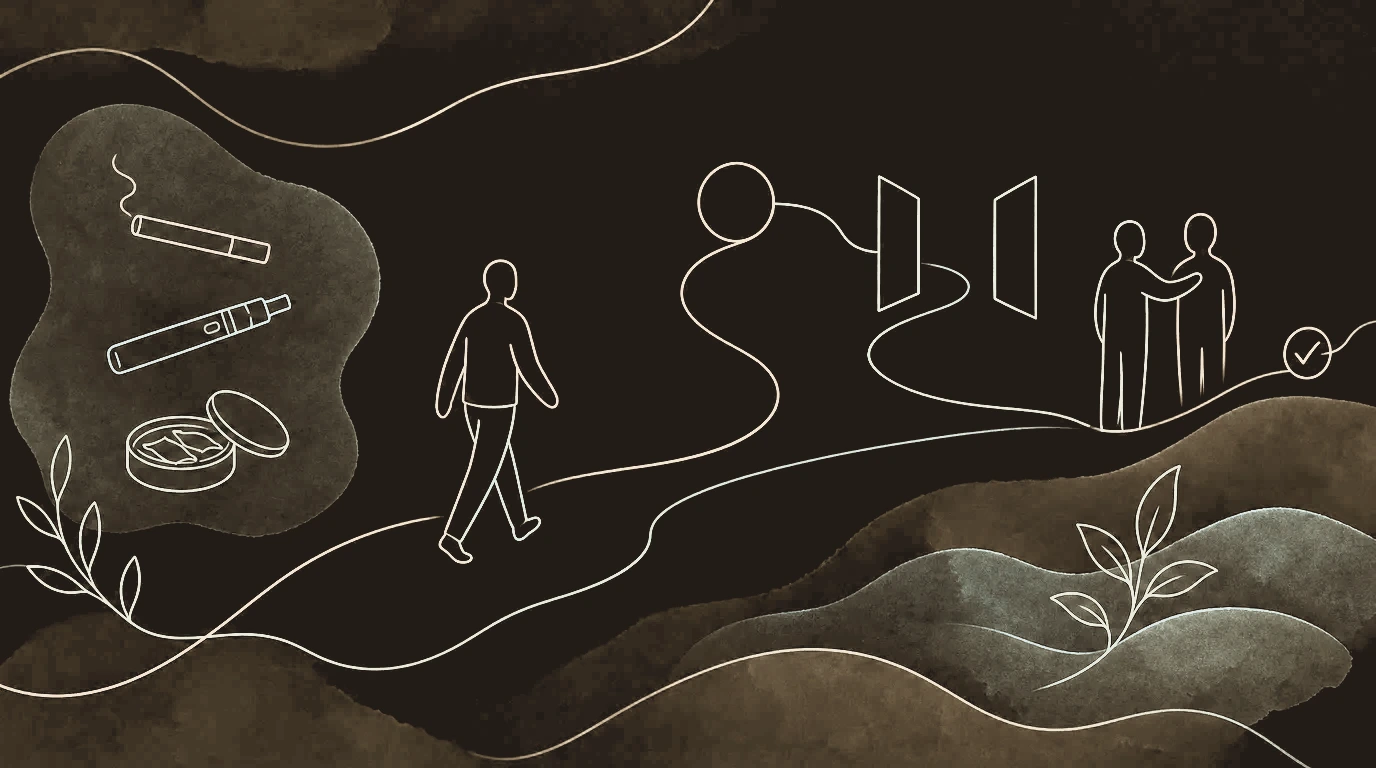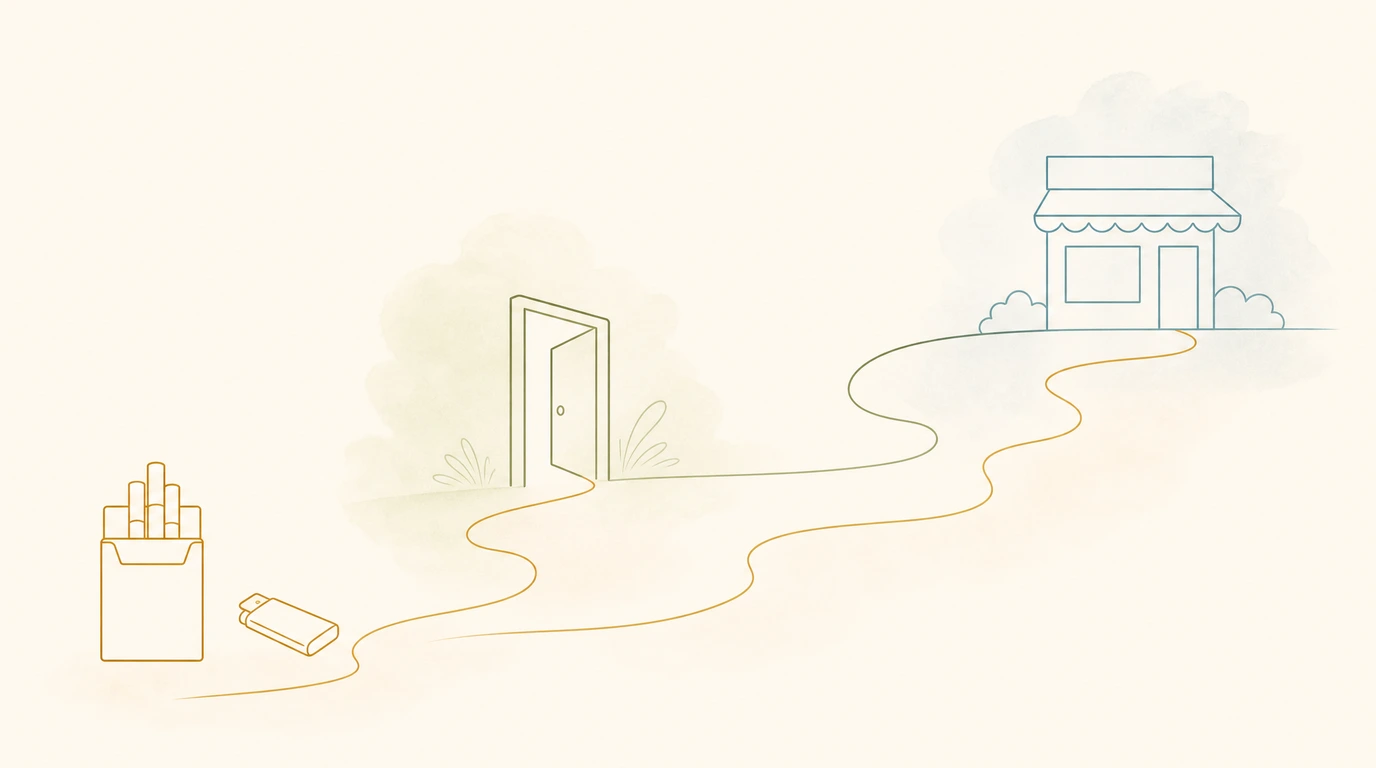
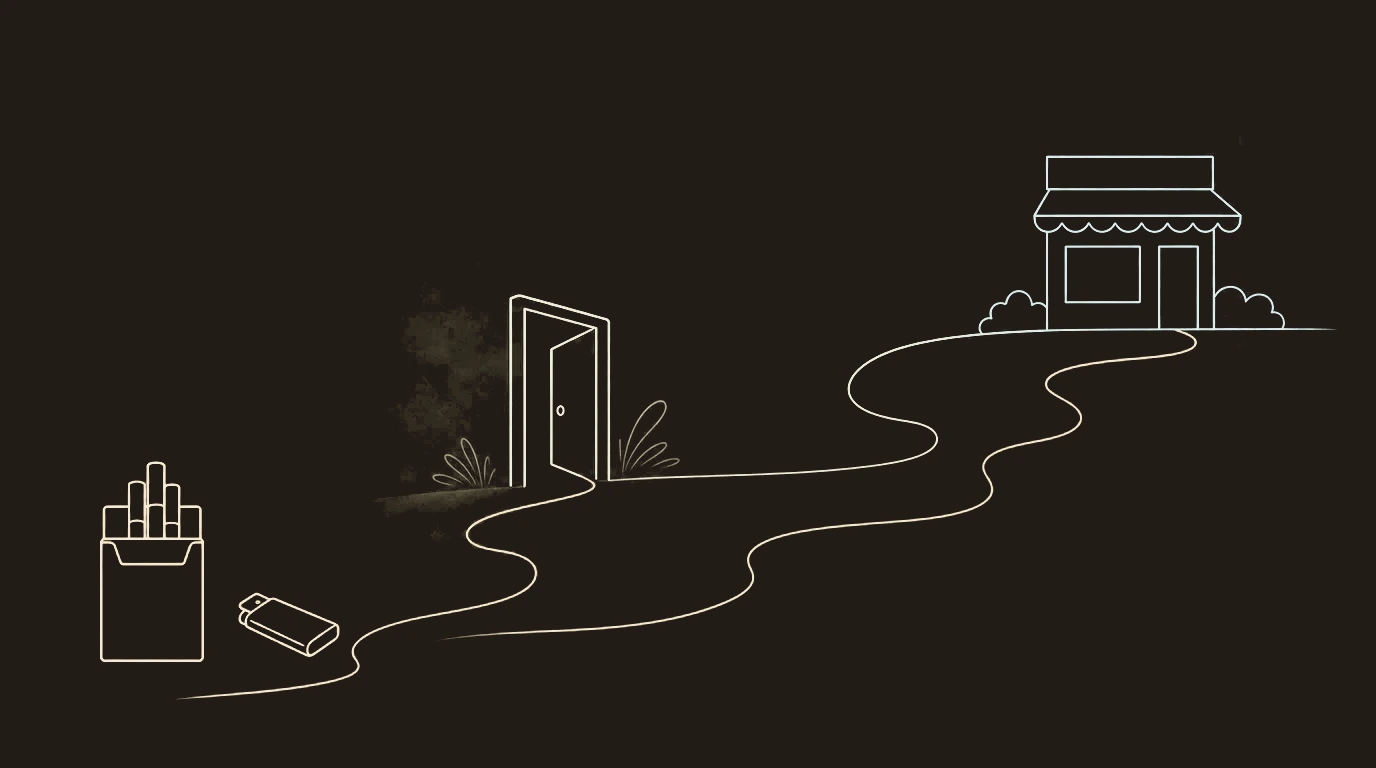
Quitting cigarettes has a practical layer that other nicotine products do not share. Cigarettes come in countable units, live in packs, require a lighter, produce smoke and ash, and often divide the day into smoke breaks. The shop, doorway, car, coffee cup, and people around you can become part of each smoking episode.
Start with the general nicotine quit plan for your reasons, quit method, date, support, and first response to a craving. This guide adds the pack, the break, and the buying routine to that plan.
Key takeaways
- Count cigarettes and record the first one of the day before changing the pattern
- Track the full smoking routine, including the pack, lighter, place, activity, and people around it
- Decide what will happen to the last pack, partial packs, and hidden backups
- Keep useful breaks while changing their location and activity
- Interrupt the routes and transactions that make another pack easy to buy
Record when and where you smoke
Use several ordinary days to record the cigarette pattern before your quit date. Keep the record brief enough to complete each time. For every cigarette, note:
- approximate time
- location
- what you were doing just before it
- whether anyone else was smoking
- where the cigarette came from
- whether you finished it
Also record the total number smoked and the time of your first cigarette after waking. Time to first cigarette has shown stronger predictive value for cessation outcomes than the other individual items in several common dependence measures, and it may capture a pattern of heavy or automatic smoking (Baker et al., 2007). That makes it useful context for planning, even though it cannot predict what your own quit attempt will be like.
Daily totals give you a countable baseline. Avoid turning the number into a judgment about how serious your smoking is. People who smoke intermittently can still have highly patterned use, and real-time studies have found wide variation in when, where, and socially with whom cigarettes are smoked (Shiffman et al., 2009). The record is there to reveal your pattern.
Track the full smoking routine
A cigarette can occupy more time than the minutes spent smoking it. The episode may begin when you check the pack, decide whether you have enough, find a lighter, walk to a permitted place, or join someone outside. It can continue through putting out the cigarette, washing your hands, using gum, or returning to work.
Choose three frequent cigarettes from your record and write each sequence from beginning to end. A work-break cigarette might look like this:
- Finish a task or reach a certain time.
- Check the pack and lighter.
- Walk to the smoking area.
- Stand with two coworkers who smoke.
- Smoke one cigarette.
- Return to the desk with a drink.
This gives you several parts that can be changed. The plan may need a new destination, a different person to contact, another way to mark the end of a task, and a replacement for carrying the pack. Focusing only on the moment of craving leaves those other steps intact.
Laboratory research found that cigarette cues and the perceived availability of cigarettes increased reported craving (Bailey et al., 2010). Your map identifies the cues and access points that deserve a concrete change.
Decide what happens to the last pack
Make the last-pack decision before the quit date. Write down:
- whether you will stop at the end of a pack or remove a partial pack
- the exact time when all remaining cigarettes leave your access
- who will dispose of them if doing it yourself feels difficult
- where unopened packs, loose cigarettes, and cartons may be stored
- which bags, coat pockets, drawers, or vehicle compartments need checking
Avoid buying a fresh carton or multipack close to the quit date. A large supply can turn the amount already paid into a reason to postpone. If someone else in your home smokes, ask them to keep their cigarettes and lighters in a place you do not use and to avoid offering you one.
Do the same for the objects that start the sequence. Collect lighters, matches, ashtrays, cigarette cases, rolling equipment, and the containers where you keep cigarette ends. A lighter left in its usual place can keep the first steps of the episode available even after the cigarettes are gone.
Give smoke breaks a new structure
Many smoke breaks serve more than one purpose. They may provide a pause, fresh air, movement, privacy, contact with coworkers, or a clear boundary between tasks. Keep those useful parts while changing the location and activity.
For each regular break, decide four things:
- Time: when the break begins
- Place: where you will go instead of the smoking area
- Activity: what fills the few minutes
- Return: what tells you the break is over
For example, leave at the same time, walk once around the building, refill water, and return when one short song or timer ends. If the social part matters, ask a nonsmoking coworker to walk with you or call someone. If privacy matters, choose a quiet place where smoking is prohibited.
Smoking patterns can be strongly tied to setting. In one large real-time study, daily and intermittent smokers differed in how much their smoking was linked to bars, alcohol, socializing, being away from home, and being around other smokers (Shiffman et al., 2014). Build replacements from your own record instead of assuming that every smoke break has the same job.
The detailed redesign of work breaks and commutes belongs in a separate routine plan. For this quit guide, give each frequent break one cigarette-free destination before day one.
Break the pack-buying routine
Buying cigarettes may be attached to another task: getting fuel, buying coffee, finishing a shift, walking home, ordering food, or visiting a familiar store. Record every place where you usually buy them.
Change the transaction before you reach the counter:
- fuel up at a store where you have not bought cigarettes
- take a route that does not pass the usual shop
- bring coffee or lunch so the purchase stop is unnecessary
- remove saved tobacco orders, bookmarks, or delivery history
- tell a familiar clerk that you are quitting if that feels useful
- avoid carrying spare cash for an automatic purchase
Retail access can affect quit attempts. In a population-based cohort, having a tobacco outlet within 500 metres of home was associated with higher relapse risk among people who made a quit attempt, while several other outlet measures showed no association (Chaiton et al., 2018). The observational design limits this finding to an association. Easy local access still belongs in the context of your plan.
Write one if-then response for the route that is hardest to avoid: "If I reach the usual store, I will keep walking and send a message before deciding where to go next." A small randomized worksite study found that participants asked to form a smoking-related implementation intention had better quitting outcomes than controls, with stronger effects among people already motivated to quit (Armitage, 2007). This is limited evidence from one setting, but a specific response is easier to use than a general promise to resist.
Reset the places where cigarettes live
Check the spaces connected to smoking: home, balcony, doorway, car, garage, workplace, outdoor chair, and the route between them. Remove the products and accessories first. Then clean only what is likely to function as a familiar smoking cue:
- empty and wash ashtrays
- remove cigarette ends and empty packs
- wash the coat or bag that holds the pack
- clean ash from the car and its storage compartments
- air out the chair, doorway, or room connected to smoking
- move the chair or cup that starts a repeated sequence
Put the replacement in the place where the pack used to be. That might be ordinary gum, water, a short written response, walking shoes, or the details of your support person. The replacement should be available at the same point where the cigarette sequence used to begin.
A later environment guide can cover a full home, car, and workplace reset across nicotine products. Here, the purpose is narrower: make cigarettes, lighters, smoke, and ash less likely to act as automatic prompts.
Add the cigarette-specific details to your quit plan
Your quit plan should now contain two connected parts. The general part covers your reasons, method, treatment decisions, support, trigger responses, and quit date. The cigarette-specific part covers:
- your usual count and first-cigarette time
- the three most frequent smoking episodes
- the final plan for packs and backups
- one replacement for each regular smoke break
- changed routes for buying cigarettes
- cleared smoking objects and spaces
If you still need to choose between stopping all cigarettes on one date and reducing toward a final stop, use the comparison of quitting cold turkey and cutting down first. Keep that method decision separate from this record so each part stays clear.
Complete the cigarette-specific part before the evening prior to your quit date. On quit day, the main job is following the decisions you already made. The first day without nicotine guide provides the hour-by-hour structure without repeating this preparation.
A cigarette-specific quit checklist
Use this short version to review the plan:
- Record cigarette count, first-cigarette time, places, and people for several ordinary days
- Write the complete sequence around three frequent cigarettes
- Set the time when the last partial pack and every backup leave your access
- Collect lighters, ashtrays, cases, loose cigarettes, and smoking supplies
- Give every regular smoke break a time, cigarette-free place, activity, and endpoint
- Change the store, route, or transaction attached to buying packs
- Clean the smoking cues in your home, car, clothing, and work area
- Put replacements where the pack or lighter used to be
- Connect this layer to your quit method, date, treatment decisions, and support
The finished plan should show where cigarettes enter your day and what will happen at each of those points after you stop smoking. That detail turns a broad intention into a plan built around the way cigarettes have actually been used.