Nicotine cravings are strong desires to smoke, vape, use a pouch, or return to another nicotine product. They can arise during withdrawal, around a learned cue, or from several influences at once. Knowing which pattern is active helps you choose a response that fits the situation.
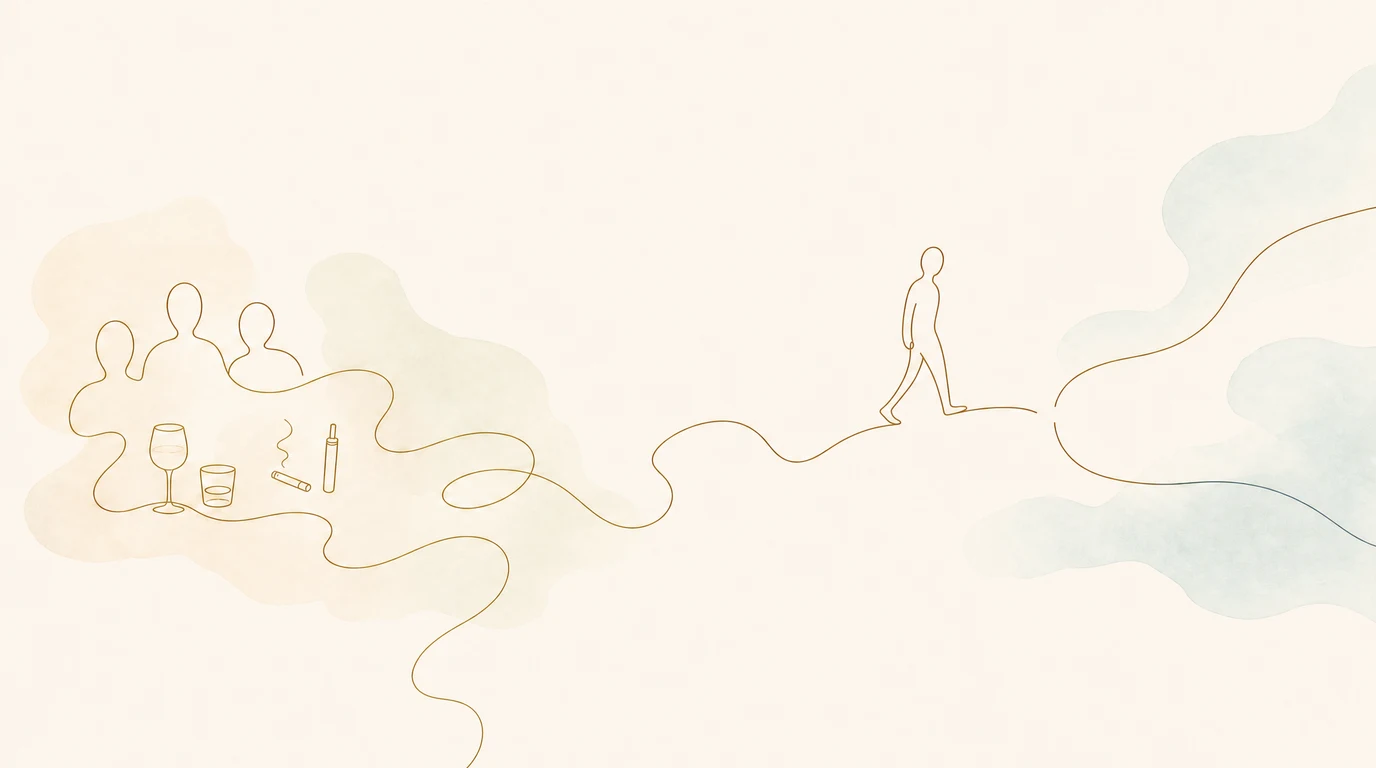
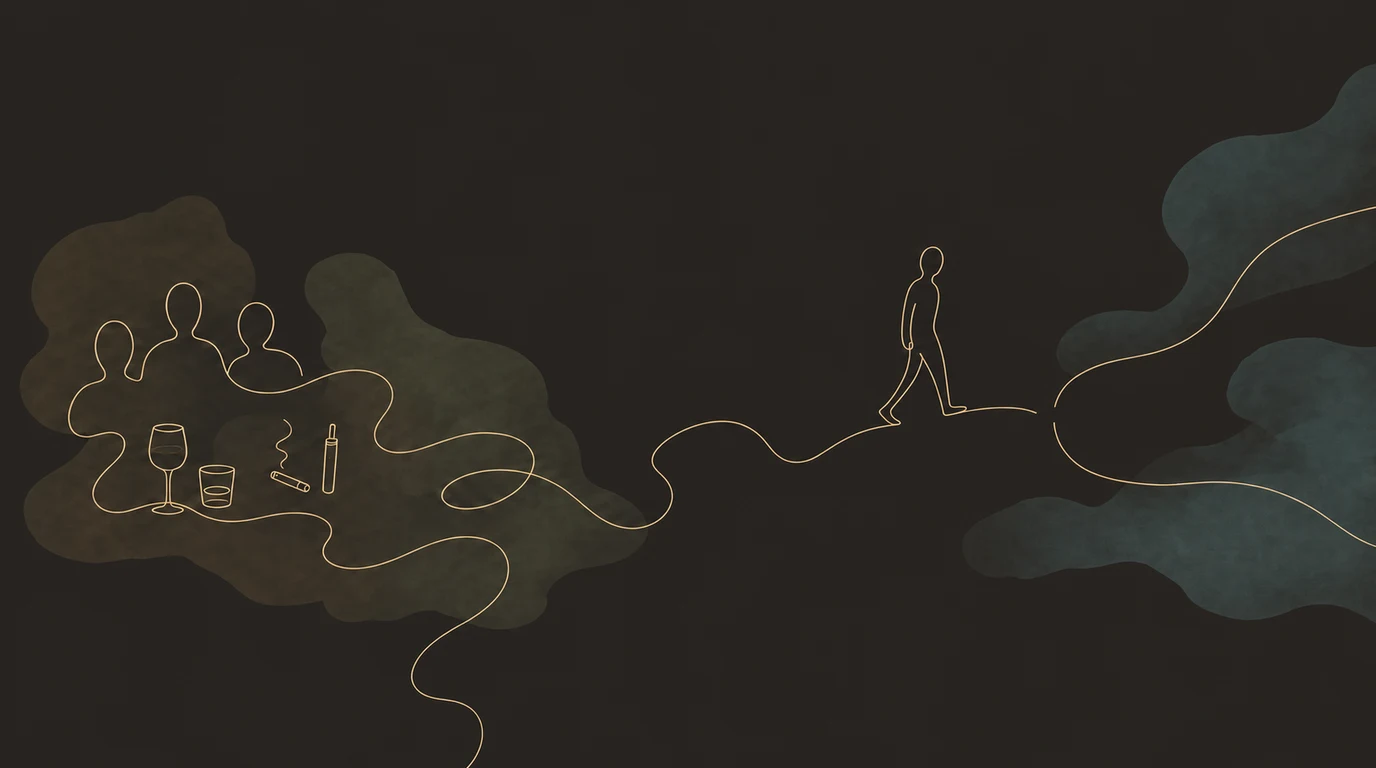
Alcohol, parties, offers, and watching other people use nicotine can create a more specific social pattern. The alcohol and social nicotine triggers guide covers planning for those settings.
Craving is a subjective experience, so researchers measure what a person reports across several dimensions. A clinical review describes craving as useful in assessment and treatment while also emphasizing that its measurement and ability to predict behavior vary across settings (Tiffany and Wray, 2012). A strong craving deserves attention and still leaves room for another action.
Key takeaways
- Withdrawal pressure and learned cues can produce different craving patterns, and they often overlap
- Sensory, routine, emotional, social, and access cues may all become linked with nicotine use
- A trigger map should describe what happened before the craving, how it changed, and what followed
- The duration of one craving varies, so avoid treating a fixed number of minutes as a promise
- Repeated, overwhelming, or dangerous situations are good reasons to add professional or behavioral support
What nicotine cravings can feel like
A nicotine craving may feel like a physical pull, a repeated thought, restlessness, anticipation, or a strong sense that using nicotine would change the moment. Some cravings focus on the product itself. Others focus on an expected effect, such as relief, stimulation, concentration, a break, or social ease.
Research measures several dimensions because one rating cannot capture every part of the experience. Studies of smoking cravings commonly distinguish wanting the rewarding effects of smoking from wanting relief from discomfort or negative mood (Clausius et al., 2012). You can notice that distinction by asking what you expect nicotine to do right now.
Craving intensity also changes. A craving can build gradually during abstinence, arrive sharply when a cue appears, fade, and then return when the same cue remains present. Tracking that movement gives you more useful information than labeling the whole day as a craving day.
Withdrawal-driven cravings
Regular nicotine exposure can create a recurring desire to use as nicotine levels fall. During early abstinence, cravings may rise alongside irritability, restlessness, anxiety, low mood, or concentration difficulty. In a small real-time study of the first hours without cigarettes, heavier smokers reported stronger cravings during hours one through four, and withdrawal or negative mood became more prominent after several hours (Bujarski et al., 2015).
This pattern often feels broad. The craving may appear across several settings because time since the last use is contributing to it. It may still be stronger in a familiar place or routine, since withdrawal and learned cues can occur together.
The nicotine withdrawal guide covers onset, peak, duration, the full symptom map, and signs that need medical support. For trigger mapping, record whether cravings are widespread during abstinence or concentrated around particular events.
Cue-driven cravings
A cue is something that has become associated with nicotine use. Repetition teaches the situation to predict the product or its effects. The cue can then bring nicotine to mind and increase craving even when continuous withdrawal discomfort has eased.
The cigarette evidence for this effect is substantial. A meta-analysis of 128 tobacco cue-reactivity publications found that smoking cues produced a moderate-to-large increase in self-reported craving compared with neutral cues (Betts et al., 2021). Research on vaping is smaller, but a laboratory study also found that both proximal vaping cues and simulated nicotine-use environments increased cravings to vape (Long et al., 2025).
Cue-driven cravings can be very specific. You may feel little desire for nicotine during an unfamiliar morning, then experience a sharp craving when you enter the car, finish a meal, smell smoke, see a device, or reach the time of a usual break. That contrast is useful evidence about the pattern.
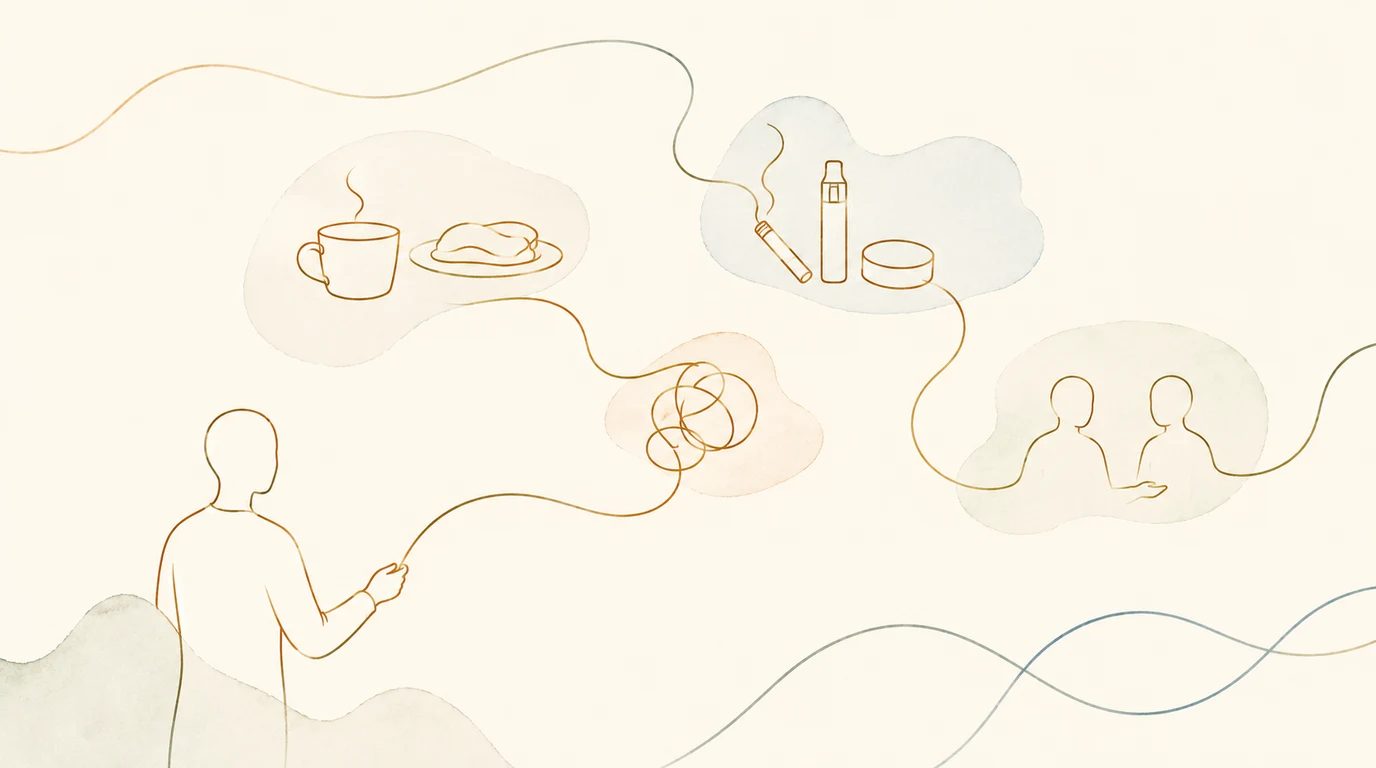
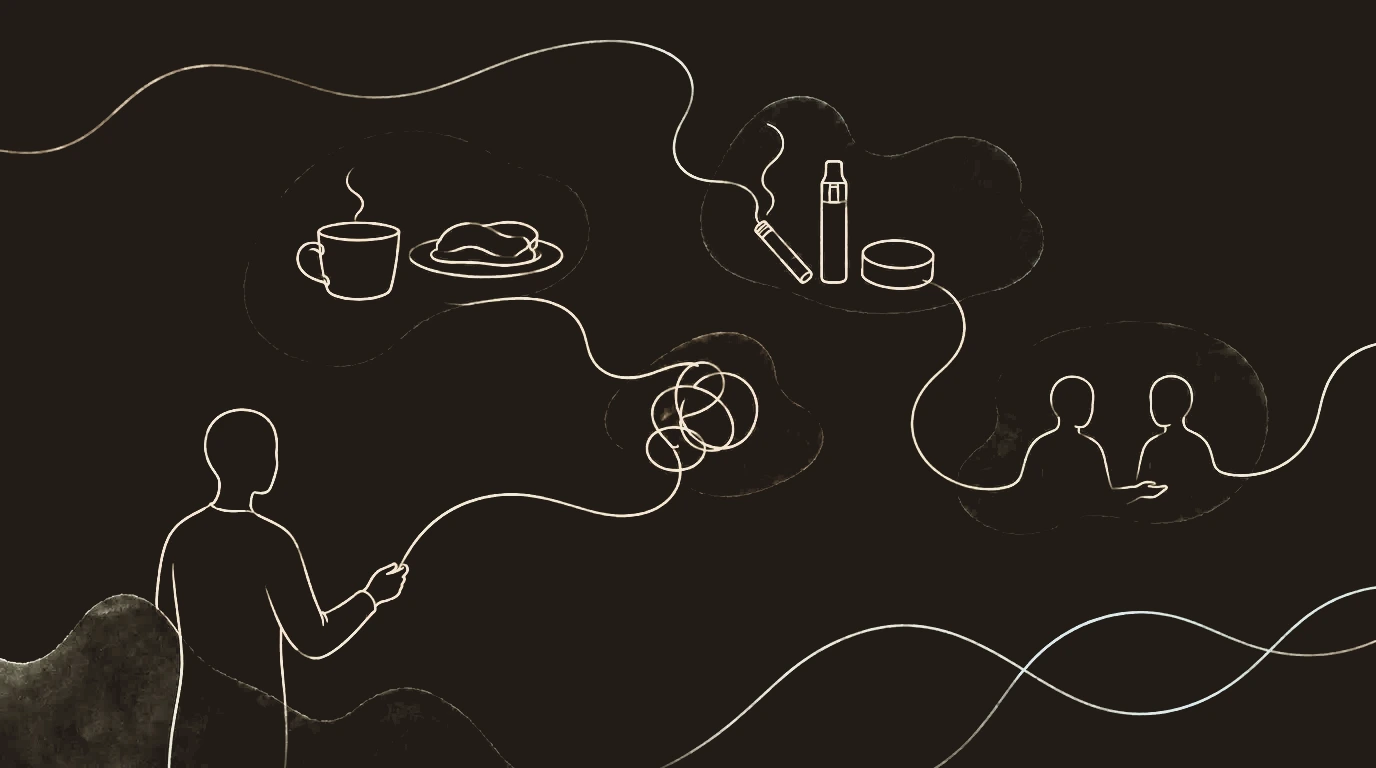
Five categories of nicotine triggers
Trigger categories are a way to organize observations. One event can belong to several categories, and the categories that matter most will depend on your product and routine.
Sensory and product cues
These include the sight, smell, flavor, sound, touch, and physical motions connected with nicotine. A cigarette pack, lighter, cloud of vapor, pouch tin, device light, throat sensation, hand-to-mouth motion, or familiar flavor may all become cues.
Sensory triggers can be surprisingly narrow. In a small laboratory study, the smell of fresh tobacco increased craving compared with an odorless control among nicotine-dependent smokers (Cortese et al., 2015). The separate sensory-cue guide will cover hands, mouth, inhalation, flavor, and device handling in depth. For now, record the exact sense or object involved.
Routine and place cues
Coffee, meals, driving, commuting, work breaks, scrolling, gaming, studying, and moving between tasks can become reliable signals. The craving may arrive at the same point in a sequence, such as when the meal ends or when you sit in the driver's seat.
Look at the whole sequence around the time shown on the clock. A morning craving might combine waking, coffee, a particular chair, checking your phone, and seeing the product within reach. Later guides can rebuild morning, meal, break, and commute routines separately. Your current job is to identify where the sequence begins.
Emotional and internal cues
Stress, boredom, frustration, loneliness, excitement, fatigue, and relief can all be linked with nicotine use. Experimental research found that induced negative emotion produced a moderate increase in cigarette craving across studies (Heckman et al., 2013). This finding supports an emotional connection while leaving room for individual differences and other influences.
Record the feeling precisely when possible. "Bad" gives you little to plan around. "Restless after finishing work" or "lonely after everyone goes offline" points to a recognizable situation. The dedicated emotional-trigger and stress-cycle articles will handle those patterns in more depth.
Social cues
Social triggers include seeing someone use nicotine, receiving an offer, joining a smoke break, sharing a vape, being in a group where nicotine is normal, or expecting a familiar social reward. The person, product, place, and activity may function together.
During the first week of a smoking quit attempt, alcohol use, being around other smokers, and negative mood were each associated with stronger cravings and lapses in a real-time study of 300 women (Lam et al., 2014). For your own record, the useful application is to note which combinations recur in your life.
Access and availability cues
Craving can change when nicotine feels immediately available. A product in your pocket, a backup in the car, a shop on the route, a saved order, or another person who will share can shorten the distance between a craving and use.
An experimental cigarette study found that cue effects were influenced by whether participants expected that smoking would be available (Droungas et al., 1995). Availability belongs in your trigger record because the same place can feel different when access changes.
How to build your nicotine trigger map
Track cravings for several ordinary days. Keep the record brief enough to complete during real life. Use one line for each craving:
- Time and place: Where were you, and what time was it?
- People: Who was present, and was anyone using or offering nicotine?
- Activity: What were you doing just before the craving?
- Internal state: What were you feeling physically and emotionally?
- Product or sensory cue: What did you see, smell, taste, touch, or imagine?
- Access: How easy did nicotine feel to obtain?
- Intensity and movement: Rate the strongest point from 0 to 10, then note whether it rose, held steady, faded, or returned.
- Outcome: What did you do, and what happened next?
Review the record after three to seven days. Mark each entry as mainly withdrawal-driven, sensory, routine, emotional, social, access-related, or mixed. Then look for repeated combinations across the entries.
A pattern might read: "strongest after lunch, when I walk past the shop, especially after a stressful morning." That entry contains a routine cue, a buying route, access, and an emotional condition. It gives you several possible points to change.
The nicotine quit plan uses your most frequent triggers to create short if-then responses. Keep the longer observation record separate so the one-page plan remains easy to use.
Match the pattern to a response category
Different patterns call for different kinds of preparation. Choose a response category before filling in the exact steps:
- Withdrawal support: review the early withdrawal plan and any cessation treatment with an appropriate professional
- Distance from a cue: change the route, location, access, or immediate company
- Routine replacement: give the usual time or transition another sequence
- Sensory replacement: prepare something that fits the hand, mouth, flavor, or movement cue
- Emotional response: identify the feeling and use support or a coping action that addresses it directly
- Social boundary: prepare a refusal, request, shorter visit, or exit option
- Immediate craving protocol: use a brief, rehearsed sequence for the next few minutes
This guide stops at the category level. The first-day plan provides one immediate sequence for quit day, while dedicated guides for the 5 Ds and observation-based craving practice can teach those techniques without crowding the trigger map.
How long cravings last
Search results often promise that every craving lasts only a few minutes. Research does not support one dependable duration for every episode. A laboratory study found that cue-elicited tobacco craving remained elevated for 30 minutes when participants stayed with the cue and were not interrupted, while the authors noted that retrospective reports and other experiments had found shorter episodes (Heishman et al., 2010).
Track duration as one part of the observation. Record when the craving begins, when it reaches its strongest point, whether the cue remains present, and when the craving stops affecting your decisions. A craving may fade and return in waves, especially when the trigger continues.
Across a longer period, cravings generally become weaker and less frequent after quitting. A longitudinal study of people abstinent from smoking found a steep decline over time, while some participants still reported occasional cravings at six or twelve months (Ussher et al., 2013). A later craving can reflect an old cue reappearing. The guide to why nicotine cravings return later provides a maintenance response for weeks and months after quitting.
When cravings need more support
Add support when cravings repeatedly overwhelm the plan, lead to frequent nicotine use, or keep you from getting through ordinary parts of the day. Support may include a clinician, pharmacist, counselor, quitline, or another structured cessation service.
Bring your trigger record. It can show the products involved, time to first use, withdrawal pattern, strongest cues, access points, and what has already been tried. That information makes a support conversation more specific.
Cravings and cues are associated with smoking lapses in real-time research, although a recent systematic review rated confidence in its pooled estimates as limited by study quality (Perski et al., 2023). Use recurring cravings as planning information while keeping their predictive limits in mind.
Seek urgent local help if a craving occurs alongside thoughts of suicide or self-harm, severe confusion, chest pain, major breathing difficulty, or another symptom that feels dangerous. Those situations need immediate assessment beyond a craving plan.
Your trigger map will change as routines change. Keep the categories stable, add new situations when they appear, and move detailed techniques into their own plans. The result should be a clear picture of where cravings come from and which kind of response belongs at each point.