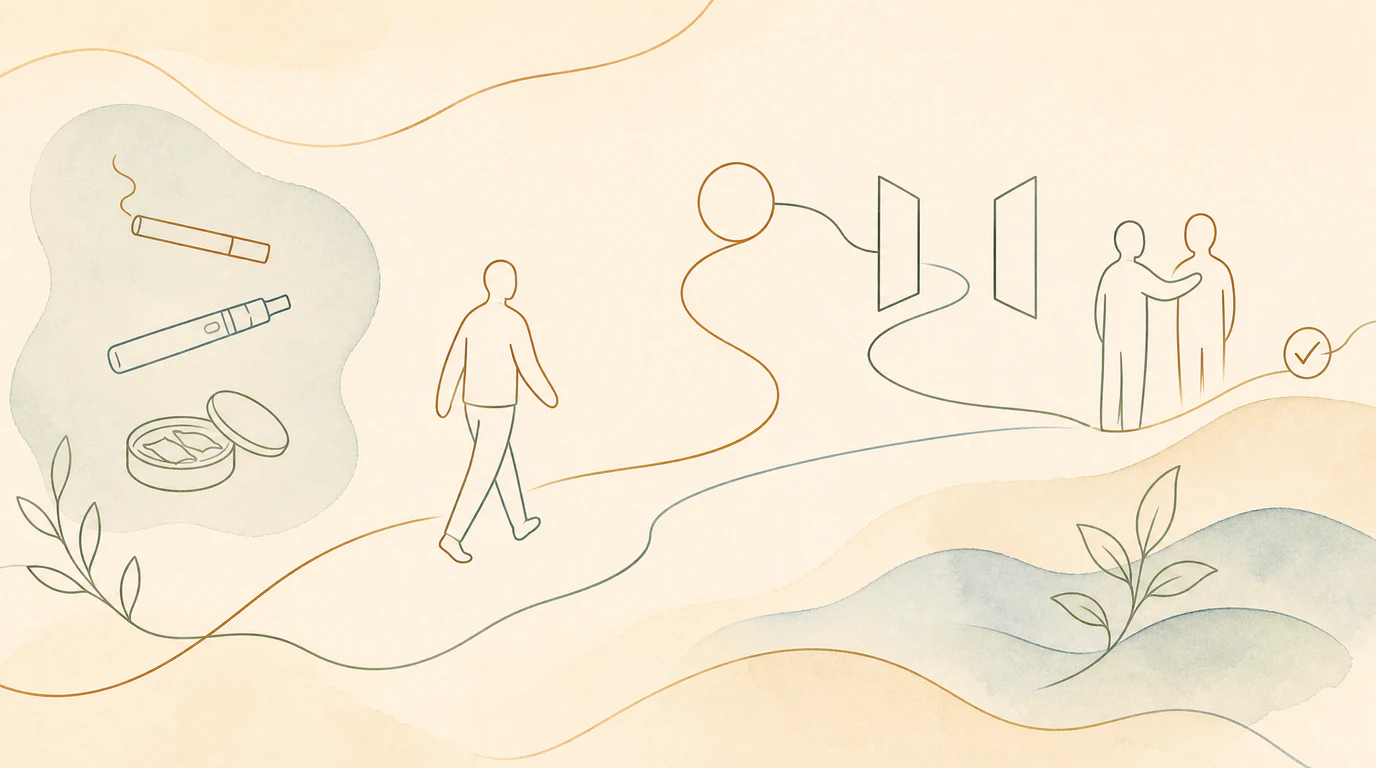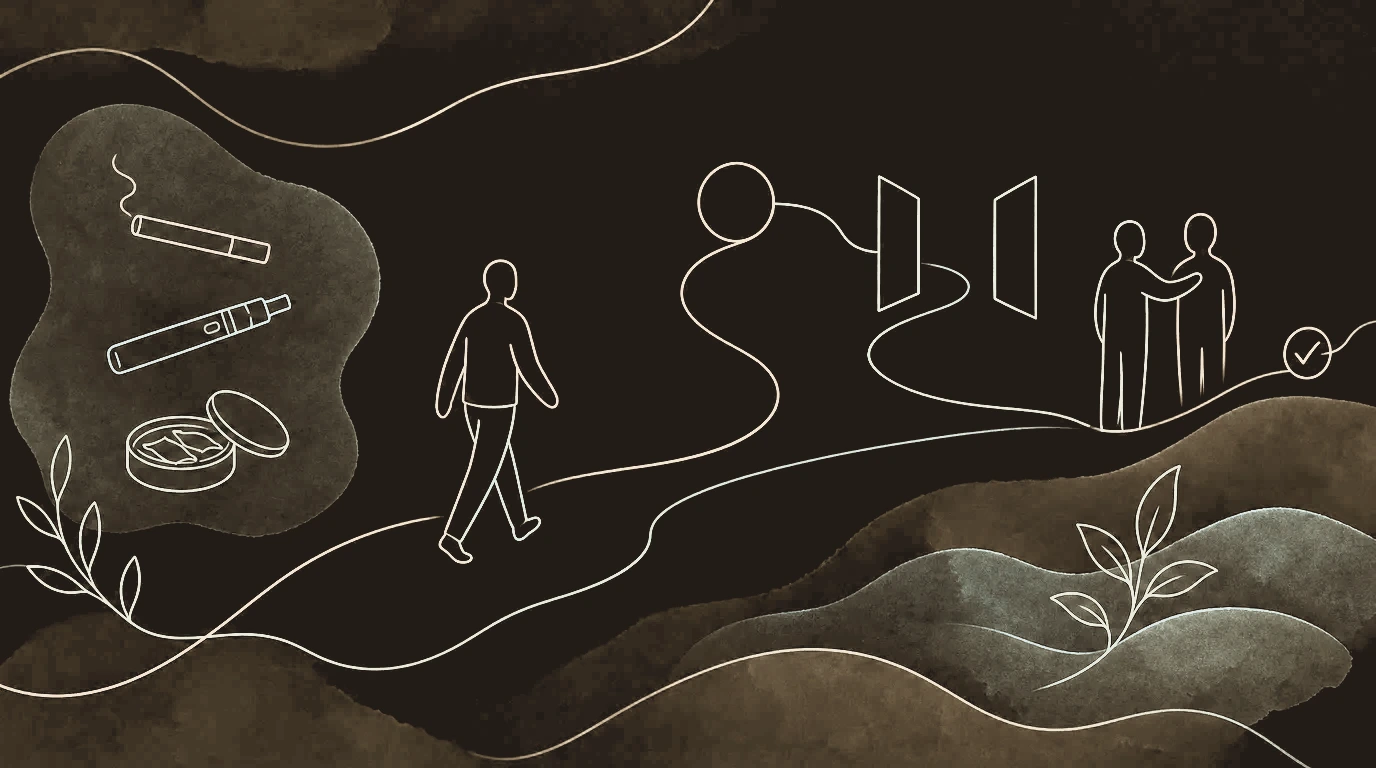
Your first day without nicotine is easier to navigate when it has a clear shape. The purpose of an hour-by-hour plan is to prepare for the ordinary moments that used to include a cigarette, vape, pouch, or another nicotine product, from waking up through going to bed.
This flexible quit-day schedule focuses on routines. Physical responses can unfold on different schedules. A review of nicotine withdrawal found that symptoms can begin about 4 to 24 hours after stopping regular nicotine use and often peak around the third day, with substantial variation between people (McLaughlin et al., 2015). Day one may feel difficult, surprisingly manageable, or uneven.
If you have not chosen your quit method, date, support, or treatment approach yet, start with the nicotine quit-planning guide. The schedule below assumes those decisions have already been made.
Key takeaways
- Organize quit day around your real routines before cravings appear
- Change the first morning, meal, break, commute, and evening cues that usually include nicotine
- Use one short response sequence whenever a craving interrupts the day
- Follow any quit aid or treatment plan you already chose according to its instructions
- End the day by preparing for tomorrow, since withdrawal may become stronger after day one
The night before: make morning easier
Spend ten minutes setting up the first part of the day. Remove the nicotine products, chargers, pods, tins, lighters, ashtrays, and backups that belong to your quit target. Check the places where access tends to be automatic: your bedside, bathroom, coat, bag, car, desk, and usual online order.
Put useful replacements where you will actually need them. Depending on your plan, that may include water, breakfast, ordinary gum or mints, something for your hands, walking shoes, the details of your support person, and any quit aid you have already chosen. Keep the treatment plan stable on quit day by following the product label or your clinician's instructions.
Write tomorrow's first three actions on one line. For example: "Get up, shower, eat breakfast in the kitchen." A specific opening keeps the first familiar nicotine cue from becoming the day's first decision.
When you wake up: begin the plan immediately
Get out of bed and start the sequence you wrote. Avoid lying there while checking whether you already feel a craving. Your experience during the first few hours will depend partly on when you last used nicotine and how frequently you normally use it.
Change the part of your morning most closely linked to nicotine. Drink coffee in another chair, take a different route outside, shower before looking at your phone, or leave home earlier. Keep the replacement simple enough to repeat tomorrow.
If the morning feels calm, use that time to follow the plan and keep nicotine products out of reach.
Hours 1 to 3: protect your strongest morning cue
Think about what normally happens after waking. Some people use nicotine immediately. Others reach for it after coffee, breakfast, driving, arriving at work, or opening a laptop. Treat that event as a scheduled risk point.
Five minutes before it arrives:
- Move away from the usual nicotine location.
- Put your prepared replacement within reach.
- Begin a short task with a visible endpoint.
- Send a brief message to your support person if that was part of your plan.
Early abstinence timing varies. In a small hourly study of smokers, heavier smokers reported greater craving during hours 1 to 4 and greater withdrawal or negative affect after three hours than moderate smokers, while individual patterns varied (Bujarski et al., 2015). Use the schedule to anticipate your routine while allowing symptoms to begin on their own timeline.
Midmorning: respond to the first craving you notice
When a craving arrives, use the same short sequence each time:
- Name the cue: time, place, emotion, person, or activity
- Create distance: stand up, change rooms, step away from the shop, or leave the group using nicotine
- Delay the decision: set a short timer and make no purchase or use decision until it ends
- Occupy your body: walk, stretch, shower, tidy one small area, or use the prepared hand or mouth replacement
- Contact support: send the message before you begin negotiating with yourself
The goal is to change what is happening around the craving. Distance from the product and cue is a practical part of the response.
A short walk can also be a reasonable option. A systematic review found that brief exercise reduced cigarette cravings in many experimental studies, with effects usually strongest during or shortly after the activity (Roberts et al., 2012). This evidence comes from smokers and does not guarantee the same effect for every nicotine product or person.
Around lunch: replace the after-meal sequence
Eat at a normal time if you can. Hunger, tiredness, and a disrupted schedule can make the day harder to interpret. Keep the meal straightforward and have something non-nicotine available for the minutes immediately afterward.
Change what you do when the meal ends. Get up before the usual nicotine routine begins, clear the table, brush your teeth, take a short walk, call someone, or move directly into the next planned task. If you usually buy nicotine during lunch, bring what you need and avoid the route or shop connected to that purchase.
An uncomfortable lunch identifies a cue you may need to redesign and says little about the rest of the day or week.
Early afternoon: make concentration easier
Within that broad timeline, some people notice restlessness, irritability, or concentration difficulty during the first day, while others do not notice these changes until later. If possible, divide work or study into shorter blocks and choose tasks with clear next steps.
Write the decisions on a visible list. Take your normal breaks, but give each break a destination: refill water, walk around the building, stand outside in a nicotine-free area, or message your support person. An empty break can pull you directly toward the old routine.
If another person uses nicotine nearby, move before the offer or smell becomes a longer internal debate. Ask people around you not to offer nicotine and keep their products out of sight for the day.
Late afternoon: prepare for the transition home
The end of work or school often joins several cues: fatigue, relief, commuting, passing a shop, or meeting someone who uses nicotine. Decide how you will move through that transition before it begins.
You might change your route, call someone during the commute, keep your hands occupied on public transit, or go directly to a planned activity. If nicotine was your marker that work had ended, replace the marker with something concrete such as changing clothes, taking a shower, walking once around the block, or making a drink.
Keep the evening plan easy to follow. Quit day is a poor time to depend on a complicated burst of self-improvement. One meal, one activity, one support contact, and a reasonable bedtime are enough structure.
Evening: reduce optional exposure
Choose an evening setting where nicotine is difficult to access and where leaving is easy. If alcohol, a particular venue, or a group of people is strongly connected to your nicotine use, skip that context on the first day. This is a temporary protection for a predictable cue.
In one study following 300 women during the first week of a smoking quit attempt, alcohol use, being around other smokers, and negative affect were each associated with stronger cravings and lapses (Lam et al., 2014). Your triggers may differ, but familiar combinations deserve more planning than a quiet evening at home.
Use the time and money that would usually go toward nicotine for one modest reward or absorbing activity. Pick something that lasts long enough to carry you through the strongest evening routine without turning the day into a test of deprivation.
Before bed: close day one and prepare day two
Take five minutes to record:
- the moments when cravings appeared
- the cue attached to each one
- what response you tried
- what reduced access or made the moment easier
- what needs to be ready tomorrow morning
Prepare breakfast, water, your route, support contact, and any plan you are following for the next day. Because nicotine withdrawal commonly intensifies beyond its first hours, reaching bedtime is a useful milestone, and preparation continues for the next morning.
If sleep is slower than usual, keep the room and routine calm and allow for a less productive morning. The nicotine withdrawal timeline explains the broader symptom pattern. Tonight, your task is simply to protect the nicotine-free environment and give yourself time to rest.
If you use nicotine during the first day
End the episode as soon as you can. Remove what remains, leave the setting, contact support, and return to the next part of the schedule. Do not wait for another date, because that can allow one use to extend into a longer return.
Write down the sequence immediately before it happened: where you were, who was present, what you felt, how you obtained the product, and which planned response was missing or unavailable. Then make one practical change. That may mean changing tomorrow's route, moving money or ordering access, asking someone to keep products away, or contacting support before the same time of day.
You decide what the event means for your counter. The useful action for the current day is to stop, learn from the context, and continue with the recovery you chose.
A compact first-day checklist
Keep this version where you can reach it:
- Wake: get up and begin the written morning sequence
- Morning cue: change the place, route, or activity connected to first use
- Craving: name it, move, delay, act, and contact support
- Meal: leave the table and begin a replacement routine
- Break: give it a specific nicotine-free destination
- Commute: avoid the buying route and prepare the transition home
- Evening: reduce exposure and choose one absorbing activity
- Bedtime: record the cues, prepare tomorrow, and protect the environment
Your first day without nicotine gives you a sequence that carries you from one familiar cue to the next while keeping nicotine out of the decision. The first-week guide continues with daily checkpoints for Days 2 through 7.