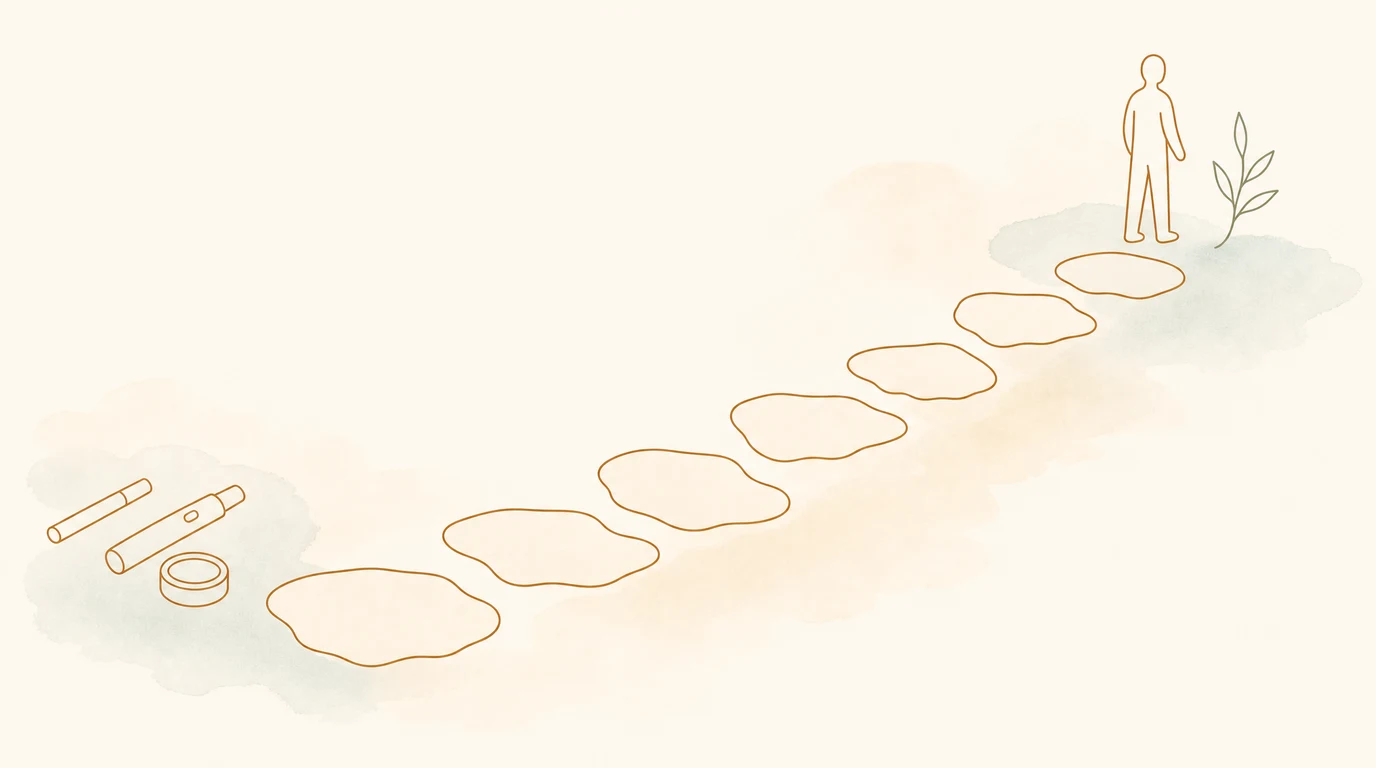
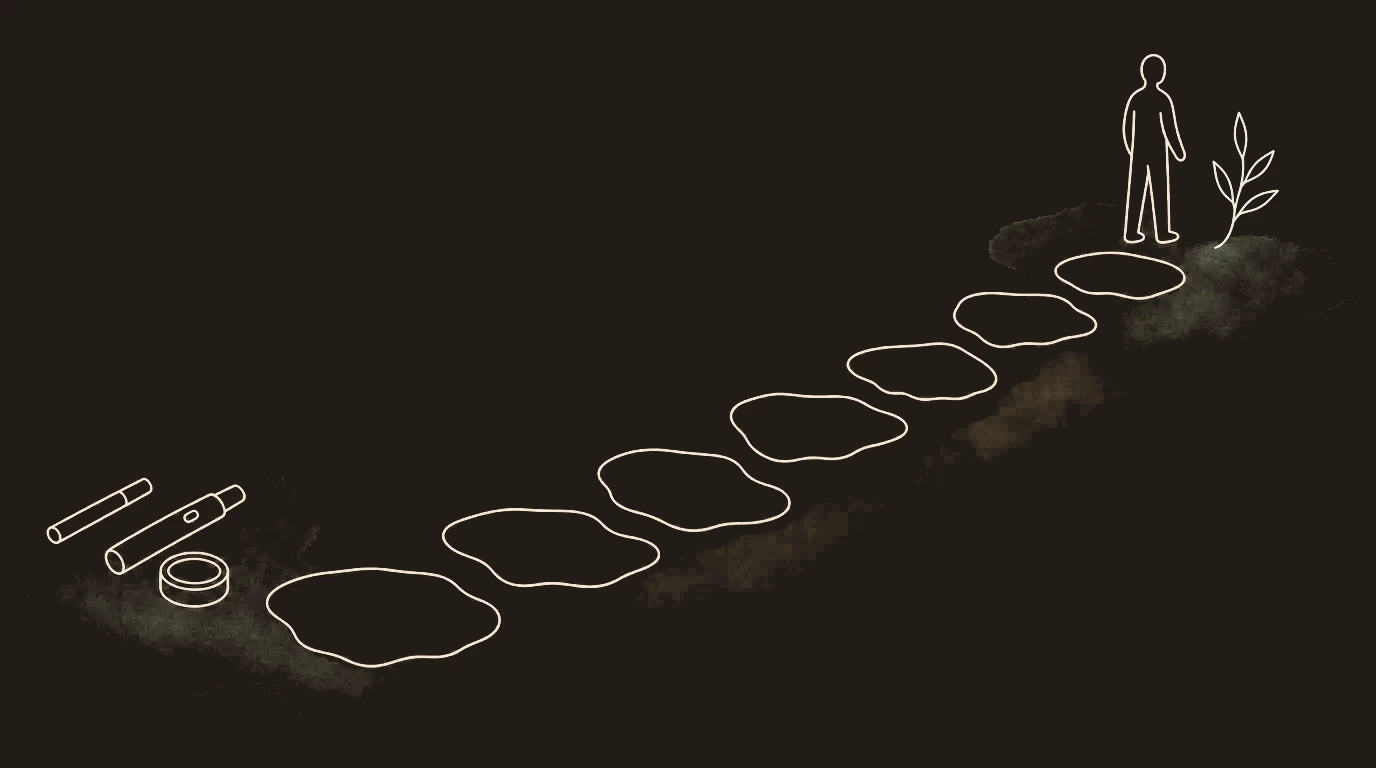
The first 7 days without nicotine often contain the greatest concentration of withdrawal, cravings, and familiar routines. Symptoms can begin within hours and are commonly strongest during the first few days, then change unevenly through the rest of the week (McLaughlin et al., 2015).
Each day in this guide is a planning checkpoint. Symptoms move continuously across calendar days. Product type, previous nicotine exposure, dependence, quit treatment, sleep, stress, and daily cues can all change the experience.
Key takeaways
- Days 2 and 3 are a common withdrawal peak, while your strongest period may arrive earlier or later
- A simple daily structure reduces the number of decisions made during cravings or low concentration
- Days 4 through 7 can remain uneven as routines and social cues become more noticeable
- Nicotine access, other people using, alcohol, and negative mood can increase lapse risk during the first week
- One use calls for an immediate response and a practical plan change
How the first week tends to change
Nicotine withdrawal can affect irritability, restlessness, anxiety, mood, concentration, sleep, appetite, and cravings. Each symptom can follow its own course. One may ease while another remains active, and a quiet period can be followed by a strong cue-driven craving.
Studies of the first week show substantial variation between people and within the same person. In one real-time study of 300 women using nicotine patches during a smoking quit attempt, early lapse was associated with stronger background cravings, stronger negative mood during tempting situations, and greater fluctuation in cravings (Cofta-Woerpel et al., 2011). A changing day is therefore expected, and the rest of recovery may feel different.
The nicotine withdrawal guide provides the complete symptom map, usual duration, product differences, and signs that need medical support. This article focuses on what to arrange each day.
Day 1: follow the quit-day schedule
Use the plan you prepared before stopping. Keep nicotine products out of easy reach and make them harder to buy, follow any quit treatment as directed, and make the first morning, meals, breaks, commute, and evening as predictable as possible.
Day 1 may bring cravings, restlessness, lower concentration, or very little discomfort. First-day intensity offers limited information about the remaining week. Record the times and settings connected to cravings so tomorrow's plan can reflect your actual pattern.
The hour-by-hour first-day plan covers quit day from waking through bedtime. Use that schedule today, then return here for the rest of the week.
Day 2: protect the basic routine
Withdrawal may be building, and a second day can expose routines that the busyness of quit day temporarily covered. Keep the day easy to execute:
- eat at regular times
- keep water and a simple oral or hand replacement available
- write down tasks if concentration is lower
- take your usual breaks in a nicotine-free place
- confirm when and how you will contact support
- keep any quit treatment on its instructed schedule
Avoid using the way you feel this morning to forecast the full week. Focus on the next known cue. If the first nicotine use of the day was tied to coffee, driving, arriving at work, or checking your phone, change the place or sequence before the cue begins.
Day 3: prepare for symptoms to peak
Within the broad timeline described above, withdrawal is often strongest around day three, although individual symptoms can peak on different days. Keep optional demands low if you can. Delay avoidable conflict, use shorter work blocks, and choose settings where leaving or changing activity is easy.
Prepare a visible craving sequence. It can be brief: move away from nicotine access, delay the decision, drink water, take a short walk or another manageable activity, and contact someone if the craving continues. Short bouts of physical activity can temporarily reduce cigarette cravings, with effects observed across several activity levels (Haasova et al., 2013). Keep movement as one response within a wider plan.
If day three feels calmer than expected, continue the same protections. The week still contains familiar routines that may not have appeared yet.
Day 4: review the cues that repeat
By day four, you have several days of useful observations. Review each strong craving using five short details:
- the time
- the place
- who was present
- the feeling or activity immediately before it
- the response that followed
Look for one repeated sequence. It might be finishing a meal, entering the car, taking a work break, drinking alcohol, seeing another person use nicotine, or moving from stress into relief. Your own record identifies which contexts deserve attention first.
Choose one adjustment for tomorrow. Change the location, route, timing, company, or first action attached to that sequence.
Day 5: strengthen one weak point
Use day five to make one recurring part of the plan easier. If nicotine remains available at home, in the car, at work, through another person, or through a quick purchase route, reduce that access. If a routine repeatedly creates a long internal debate, decide the replacement before the routine begins.
This is a practical test of the plan. In a first-week study of unassisted smoking cessation, stimulus control was associated with lower lapse risk and lower cravings (Brodbeck et al., 2013). A useful change might be moving coffee to another room, carrying a replacement before the commute, taking a break with someone who does not use nicotine, or removing a stored payment method from a delivery account.
Keep the adjustment narrow enough to repeat. One dependable change is more useful this week than a complete schedule overhaul that becomes difficult to maintain.
Day 6: plan around people and places
Review the people and settings you expect to encounter next. Decide where nicotine may be visible, who might offer it, whether alcohol is involved, and how you will leave or change the situation if a craving grows.
Being around smokers predicted lapse in a real-time study of self-quitters during their first week (Bolman et al., 2018). The same planning principle can apply to vapes, pouches, smokeless tobacco, or any other nicotine product that is present and easy to obtain.
Use a direct request when needed: ask someone not to offer nicotine, keep products out of sight, or join you in a different place. If the setting has little room for those boundaries, shorten the visit or choose another plan for now.
Day 7: review the week before moving on
Set aside ten minutes to review the full week. Record:
- the cues that appeared most often
- the times when cravings were strongest
- the responses you could use quickly
- any part of the day that still needs more protection
- the support or treatment questions that remain
- one routine to continue during week two
Early abstinence is associated with later outcomes. Across three smoking-cessation medication trials, more consecutive abstinent days during the first week predicted abstinence at the end of treatment and at six months (Ashare et al., 2013). This finding describes group-level prediction in clinical trials. Your review has a simpler purpose: preserve what helped and improve what repeatedly failed.
Mark the week in a modest way that fits your recovery. Then prepare day eight with the same practical detail you used earlier in the week.
A simple routine for all seven days
Use the same three checkpoints each day when the rest of the schedule changes.
Morning
- follow any treatment instructions
- identify the first likely cue
- place a replacement and support contact within reach
- choose one nicotine-free destination for a usual break
Middle of the day
- eat and drink on a regular schedule
- notice whether tiredness, stress, or social exposure is changing the plan
- move away from easy nicotine access before a craving becomes a longer debate
- adjust the evening plan using what has already happened
Evening
- record the strongest cue and the response you used
- prepare tomorrow's route, meals, breaks, and supplies
- reduce optional exposure when you are tired
- keep bedtime realistic if sleep has changed
This routine provides continuity while symptoms and schedules vary. It also creates a short record that can guide support from a clinician, pharmacist, counselor, quitline, or someone you trust.
If the first week includes nicotine use
End the episode as soon as you can. Move away from the product, remove the remaining access, and contact support. Record the sequence immediately before use while the details are still clear.
Make one change that affects the same situation next time. That may involve a different route, a direct request to someone nearby, earlier support, fewer purchases, or a prepared response for a specific feeling.
Return to the next planned decision. You decide what the event means for your ResetHive counter. The nicotine slip or relapse guide can support a deeper review; the immediate first-week task is to shorten the episode and restore the plan.
When the first week needs more support
Contact a clinician or pharmacist when withdrawal symptoms are severe, keep worsening, interfere substantially with daily functioning, or may be related to treatment or another condition. Seek urgent help for chest pain, major breathing difficulty, fainting, signs of a stroke, severe confusion, or another symptom that feels medically dangerous. Thoughts of suicide or self-harm need immediate local emergency or crisis support.
If cravings repeatedly exceed the plan you prepared, ask for support now. The nicotine quit-plan guide can help you review access, treatment, triggers, support, and your response to cravings. Updating the plan during the first week is part of using the information you have gathered.
What to carry into week two
Continue the routines that reduced access and shortened cravings. Keep recording repeated cues, especially any that did not appear during the first seven days. Review support and treatment questions while the week is still easy to remember.
The end of day seven concludes the day-by-day guidance in this article. Week two can still include withdrawal, cravings, and unfamiliar situations. Use the same daily checkpoints, adjust them from your own record, and allow the timetable to vary.