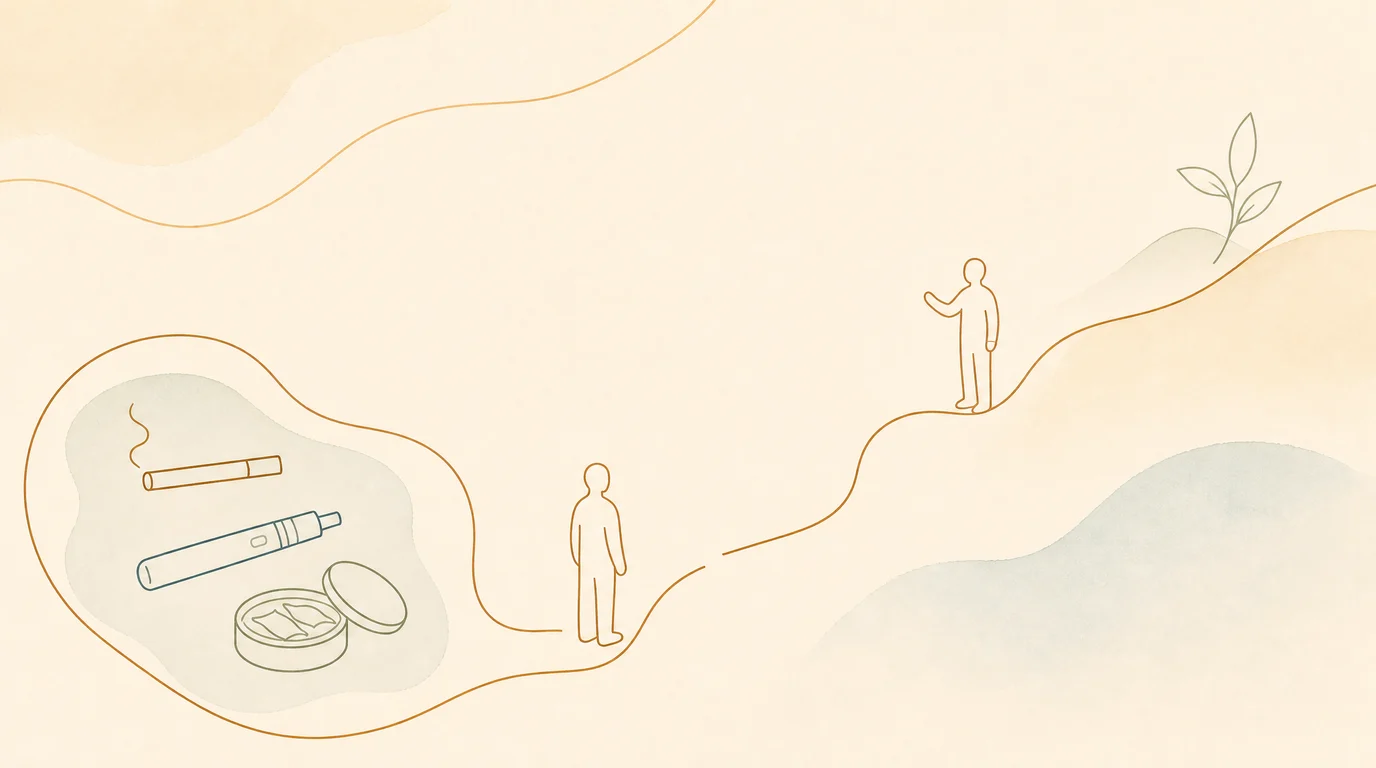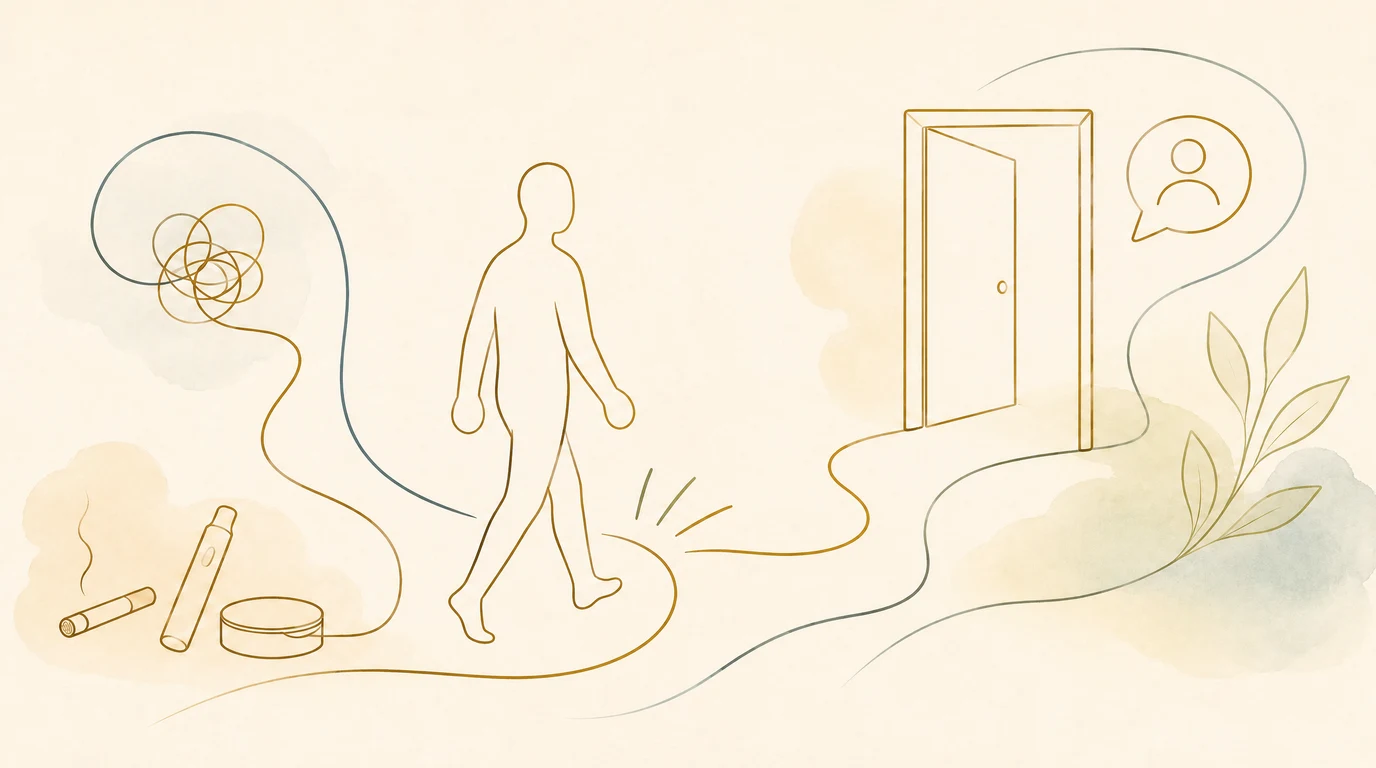
A nicotine slip can be one puff, one cigarette, one pouch, or a short return to another nicotine product after you had stopped. The minutes and hours that follow are a useful time to limit access and decide what happens next.
Research terms vary. Your ResetHive counter remains member-controlled under every label. This guide gives you immediate steps after one or a few uses. A sustained return over weeks or months needs a broader new quit plan.
Key takeaways
- Slip, lapse, and relapse have different definitions across research, treatment, and everyday language
- End the current episode and close the exact route that supplied the nicotine
- Protect the next part of the day with a specific place, activity, and support contact
- Record a few immediate facts so you can change one weak point in the plan
- You decide whether and when to change your ResetHive counter
Slip, lapse, and relapse describe different patterns
People often use slip, lapse, and relapse interchangeably. Smoking studies usually use more specific research definitions. An updated review of smoking-cessation trial measures defines a lapse or slip as a smoking event after initial cessation that stays below the study's relapse threshold. The same review defines relapse as a return to regular smoking, often seven consecutive days in a trial (Piper et al., 2020).
Those thresholds serve research measurement. Other studies use different amounts, time periods, or definitions of regular use. A 2023 systematic review found that relapse definitions varied widely across real-time smoking studies, including threshold-based definitions, a return to regular smoking, any smoking, and stopping the attempt to abstain (Perski et al., 2023).
The evidence base also focuses heavily on cigarettes. A puff from a vape, one pouch, or a brief use of smokeless tobacco may fit the ordinary idea of a slip. Dose and context differ across products. Use a plain description first: what product you used, how much, and over what period.
One use deserves a prompt response because it can raise the chance of another use. In a controlled study of 54 daily smokers, participants assigned to smoke one cigarette after two days of abstinence had 2.5 times the risk of smoking during the next 24 hours compared with the control group. Recovery after the lapse still occurred for some participants (Muench et al., 2020).
End the current episode and close access
Begin with the nicotine that is present now. Put down the product, leave the place where use is continuing, and create distance from any remaining supply. If you control the supply, dispose of it safely or place it with someone who can remove it from your access. Follow local battery and hazardous-waste rules for vape devices and liquids.
Then close the route that made this use possible. The route may be:
- a cigarette pack, vape, pouch can, or tobacco tin still within reach
- an open delivery order or saved shopping cart
- a store you can enter within a few minutes
- a person who offered or supplied the product
- a backup kept in a bag, car, drawer, or workplace
Change the route you encountered today. Cancel the order, leave the store area, ask the person to take the product away, or arrange safe removal of the backup. The complete nicotine product and cue removal guide can support a broader inventory later.
Access deserves attention because the episode can continue while the product remains nearby. In a study of 133 people who recorded their first smoking lapse within minutes, restorative coping after the lapse was associated with a lower likelihood of another lapse on the same day (Shiffman et al., 1996). This observational, cigarette-specific finding supports a prompt response. Individual outcomes remain uncertain.
Protect the rest of the day
Look at the next likely use point, which may be the next few minutes, the trip home, the next break, the end of a meal, or the evening. Choose a destination and activity that reduce access until that point has passed.
A short plan can include:
- Place: go somewhere the product is unavailable or use is prohibited
- Activity: begin a defined task that lasts through the next decision point
- Body needs: eat, drink water, rest, or take prescribed medication according to its instructions
- Contact: tell one supportive person what happened and what you are doing next
- Exit: decide how you will leave if another product or offer appears
Keep the plan tied to the current day. You can review the larger quit strategy after immediate access is closed. If a strong craving appears, the 5 Ds for nicotine cravings provides one brief response sequence.
Avoid an unplanned treatment change during the immediate reaction. If you use nicotine replacement, varenicline, bupropion, or another cessation treatment, follow the instructions you received and contact a pharmacist or clinician when you are unsure what to do after a use. Research on continuing nicotine patches after a smoking lapse has produced mixed findings, and the answer can depend on the treatment and individual situation (Hughes et al., 2018).
Record the immediate facts
Capture the short sequence while it is still clear. This is a compact factual record for the next plan change. A full reflection belongs in the dedicated journaling guide.
Write one line for each of these points:
- Product and amount: what you used and the best estimate of how much
- Time and place: when and where the use began
- Access: how the product reached you
- Previous event: what happened immediately before you reached for it
- Expectation: what you expected nicotine to change in that moment
- Next action: what you are doing now to end access and continue the day
Specific language gives you something to change. "Bought a disposable vape at the gas station after an argument" identifies a location, purchase route, emotional context, and product. Choose one of those points for the next action and save the full analysis for later.
Treat your record as information about this event and look for repeated patterns only when more than one entry supports them.
Choose one concrete plan change
Use the short record to change the earliest part of the sequence that you can control. Choose one action you can complete today:
- remove the remaining supply or saved order
- take a different route past the store or use location
- ask a person to stop offering or sharing nicotine
- move the next coffee, meal, break, or social activity to another setting
- prepare the brief craving response you will use at the same cue
- contact a support person, quitline, counselor, pharmacist, or clinician
- return to a cessation treatment exactly as directed, or ask the prescriber about the next dose
Name the action precisely. "Be more careful" leaves the situation unchanged. "Remove the vape from my car before I drive home" can be completed and checked.
If the use exposed several problems at once, write the others down and keep the current action small. The general nicotine quit plan can hold broader changes to your method, environment, treatment, and support once the immediate episode has ended.
When you are ready to examine the episode in more detail, the nicotine slip journal provides a private structure for the sequence, context, expected change, access route, and one plan adjustment.
If the review is turning into a judgment about your character, the guide to quitting nicotine without shame separates specific responsibility from repeated self-punishment.
Decide what the event means for your counter
ResetHive leaves the counter decision with you. The counter changes only when you choose a counter action. You can keep the current day, set another current day, or start a new Day 1 when that matches what you want the counter to represent.
Ask two practical questions:
- What behavior or products did I intend this counter to track?
- Which counter choice will give me an honest and useful record from today forward?
You can make the decision after immediate access is handled. The choice should serve your own definition of recovery. The same steps protect the rest of the day across every counter choice.
Use your own tracking definition for the counter decision. Clinical trials define abstinence and relapse according to their study outcomes. Some measures allow limited lapses, and others require continuous abstinence (Piper et al., 2020). Your ResetHive counter is a member-controlled tool.
The nicotine day-counter guide covers streak pressure, useful checking rhythms, and ways to keep the number inside a broader recovery record.
When the pattern has continued
This immediate checklist fits one or a few uses. A return to regular nicotine use over days, weeks, or months requires a wider review of current product, amount, timing, treatment, access, support, and a new stopping point. The guide to trying again after returning to nicotine builds that larger review from the current pattern.
Describe the current pattern plainly. If nicotine has returned to most days, the next action may be contacting cessation support or rebuilding a quit plan from the present level of use. A recent randomized trial of 582 people who returned to regular smoking found that repeated immediate offers to re-enter cessation treatment produced higher abstinence than quitline referral alone. Its findings apply to organized smoking treatment after relapse, with other nicotine products requiring their own evidence and individualized plans (Schlam et al., 2024).
Seek medical or crisis help promptly for chest pain, severe breathing difficulty, poisoning or liquid-nicotine exposure, serious medication concerns, or thoughts of suicide or self-harm. Contact Poison Control or the equivalent service in your country for possible nicotine poisoning.
After one or a few uses, focus on the current sequence: end access, protect the next part of the day, record the immediate facts, and complete one concrete plan change. You retain control of the counter and the next recovery decision.