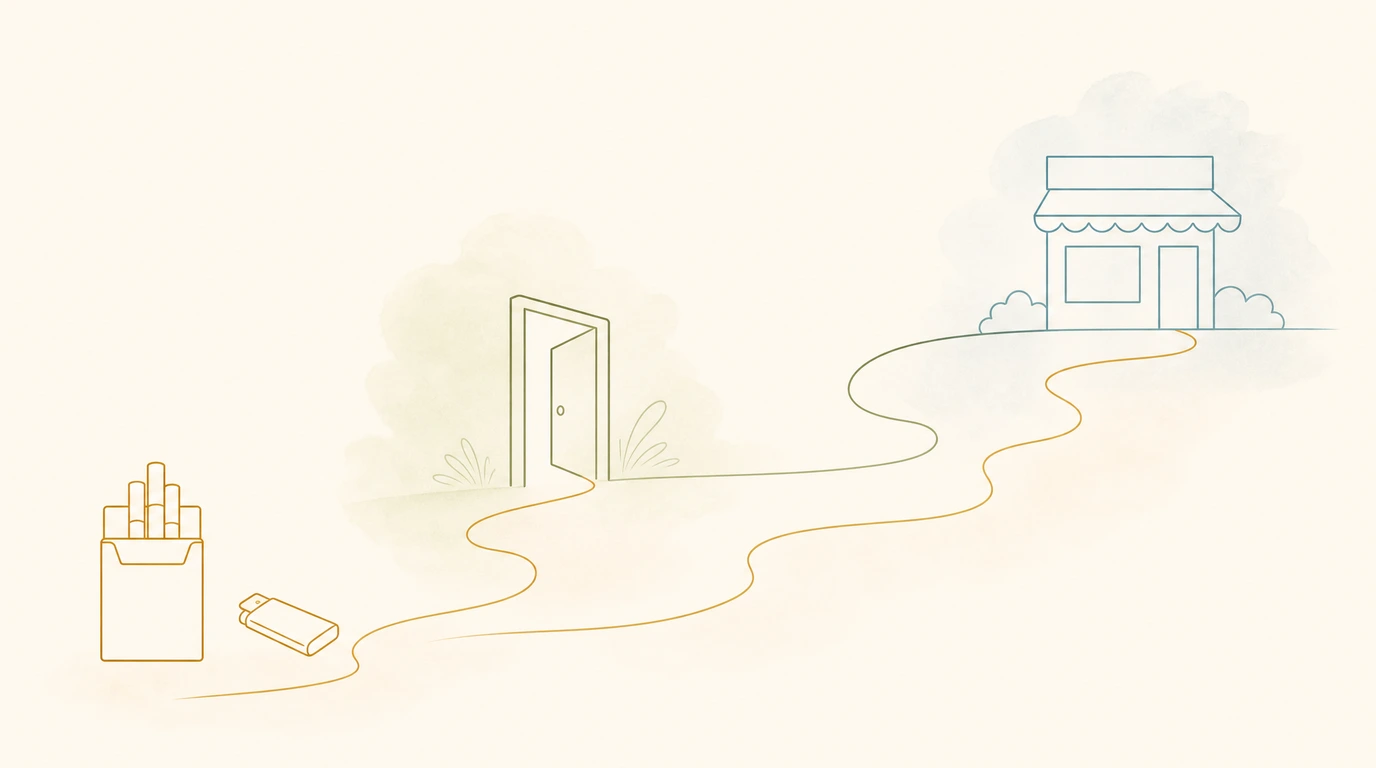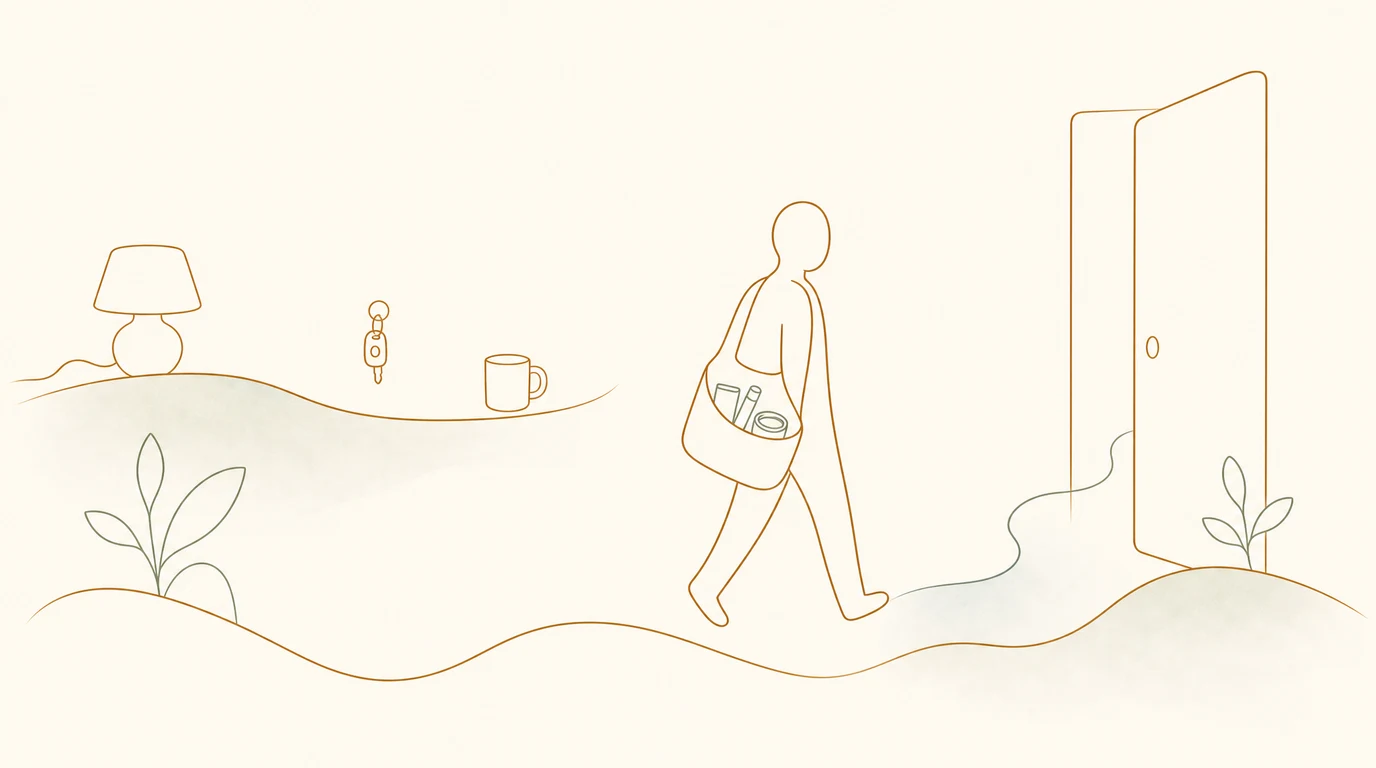
Remove nicotine products from the places where they stay available: your home, car, workplace, bags, pockets, online accounts, and regular buying routes. A complete sweep covers cigarettes, vapes, non-therapeutic nicotine pouches, chewing tobacco, dip, snus, heated-tobacco products, accessories, open supplies, and backups.
The purpose is practical. Products and familiar objects can prompt thoughts of using, while immediate access leaves very little time between an impulse and nicotine. Laboratory research with smokers found that cigarette cues and expected availability independently increased reported craving (Bailey et al., 2010). Most direct research in this area concerns cigarettes, so claims about a full environment reset across vapes and oral products should remain measured.
Key takeaways
- Inventory the active product, partial supplies, backups, accessories, deliveries, and usual purchase points
- Give every item a removal time that matches the stop or reduction plan you already chose
- Reset home, car, work, bags, and shared spaces as separate locations so hidden access is easier to find
- Use local hazardous-waste guidance for vapes, batteries, and nicotine liquid
- Review buying routes and digital access because a removed product can still be replaced quickly
Why remove nicotine products and cues
Nicotine-related cues include the product itself and the objects, places, and transactions repeatedly connected with use. A lighter on the balcony, a charger beside the bed, a pouch can in the car, or a saved delivery order can start part of the old sequence before a strong craving is present.
In a small laboratory study of 22 daily smokers, images of smoking environments increased craving, shortened the time before participants chose to smoke, and increased the number of cigarettes smoked during the session (Stevenson et al., 2017). Real-world research also points to availability. Among adults in a supported quit attempt, spending more time where cigarettes were easily available after at least one day of abstinence predicted a shorter time to the first lapse (Minami et al., 2015). These findings support treating cues and access as part of preparation. The object or room carrying the most weight can still vary by person.
Your nicotine cravings and triggers map can identify the situations connected with use. This guide takes the next concrete step by changing the products, storage, and purchasing routes within those situations. Your nicotine quit plan continues to hold the quit method, final date, treatment, support, and immediate craving response.
Build one complete nicotine inventory
Begin with the products you currently use. Write each product, brand or type, strength shown on the package, and current location. Include products used only occasionally because a forgotten backup can become the easiest option during a difficult moment.
Check for:
- open packs, partial packs, cartons, loose cigarettes, and rolling tobacco
- active vapes, disposable vapes, pods, cartridges, liquids, coils, and spare devices
- open and unopened cans of non-therapeutic nicotine pouches
- chewing tobacco, dip, snus, heated-tobacco sticks, and other tobacco supplies
- samples, promotional products, and items kept for another person
- products in deliveries that have shipped or orders waiting for pickup
Add accessories that start or maintain the use sequence. The list may include lighters, matches, ashtrays, cigarette cases, rolling papers, chargers, cables, spare batteries, empty pods, pouch tins, spit cups, and dedicated storage containers. Keep cessation medication on a separate treatment list. Follow its directions and store it safely.
Move through locations one at a time: clothing, bedside area, bathroom, kitchen, balcony, garage, car, work bag, gym bag, desk, locker, toolbox, and any place used for travel or hobbies. Check the small compartments that hold convenient backups. The goal is an accurate list, with no requirement to turn the search into a major cleaning project.
Set the removal time and disposal plan
Connect the inventory to the quit method already chosen. For a complete stop on one date, give the active product and every backup the same final removal time. If you are following a structured reduction, identify only the supply permitted by that schedule and keep extra stock outside immediate access. The all-at-once and gradual quitting comparison covers the method decision in detail.
Write what happens to each item. Options may include disposal under local rules, returning unopened items where permitted, or asking a trusted person to handle removal. Avoid passing nicotine products to a child or anyone who did not request them. If seeing the products makes removal difficult, another adult can collect the list while you confirm that each location has been cleared.
Vapes and nicotine liquid need special handling. The US Environmental Protection Agency advises consumers to keep e-cigarettes out of household trash and curbside recycling and take them to a household hazardous-waste collection site because the devices contain nicotine and lithium batteries (US EPA, 2026). Local rules vary, so check the waste authority where you live. Keep the device intact, do not pour liquid down a drain, and follow local instructions for temporary storage and transport.
Clear nicotine from your home
Use the inventory to clear each room and storage point. Remove products and accessories first. Then clean the limited areas that carry a direct cue, such as an ashtray, a drawer with loose tobacco, a chair with cigarette ash nearby, or a surface used to fill a vape. Ordinary household cleaning covers this step.
If nicotine use has been allowed throughout the home, define the new boundary clearly. A prospective cohort of smokers found that a complete household smoking ban was associated with more quit attempts and, among people already preparing to quit, a lower relapse rate. The observational design leaves causality uncertain (Pizacani et al., 2004). The practical value of a home rule is that it removes uncertainty about where use can happen.
Shared homes need a plan for products that belong to someone else. Ask that person to keep their supply and accessories in private storage, avoid using nicotine in shared rooms or vehicles, and stop offering products. Their medication or personal property remains theirs. Your request can focus on visibility, access, and shared-space rules without asking them to make the same quit decision.
Place the items from your existing quit plan where they will be used. That may include cessation medication, water, ordinary gum, a written support contact, or another planned tool. Keep the setup small and specific to the locations where nicotine used to be stored.
Reset your car, bags, and commute
Cars and bags often hold secondary supplies. Check the center console, door pockets, glove compartment, cup holders, trunk, seat-back pockets, charging cables, coat pockets, laptop bag, backpack, lunch bag, and gym bag. Remove empty packages and used products as well as active supplies, since the visible container can remain part of the routine.
Clean direct residue and change one or two physical details connected with use. Empty the ash receptacle, wipe the console where a vape rested, wash a pouch container out of a bag, or move the charging cable that was dedicated to the device. Keep the changes tied to recognizable cues.
Then examine the commute. Mark the store, gas station, drive-through, coworker, or delivery pickup connected with buying nicotine. Choose the alternate route, fuel stop, or errand order before the first nicotine-free trip. When the shop stays on your route, decide what you will buy, how you will pay, and where you will go next before entering.
Retail proximity has shown mixed but relevant associations with smoking cessation. In an Ontario cohort of 2,414 smokers, having at least one tobacco outlet within 500 metres of home was associated with greater relapse risk among people who made a quit attempt, while several other outlet measures showed no association (Chaiton et al., 2018). This observational result supports including easy purchasing in the plan, and it remains one limited association.
Clear work and other shared spaces
At work, inspect the places under your control: desk drawers, lockers, toolboxes, vehicle compartments, coat storage, bags, break supplies, and charging areas. Remove products and personal accessories at the chosen time. Workplace waste rules may differ from household rules, especially for batteries and nicotine liquid, so ask the appropriate facilities or safety contact how those items are handled.
The conversation can stay brief. You may tell a coworker, "I have stopped using nicotine, so please stop offering it to me." If you want privacy, a simple refusal is enough. The dedicated work-break and commute guide will redesign the time and activity of those routines. This reset only closes product storage, offers, and access points.
For a shared vehicle, locker room, workshop, or outdoor area, decide which items you can remove and which belong to someone else. Ask the owner to keep their supply out of your usual storage and away from your seat or work area. Focus on changes that are specific, observable, and possible within the rules of the space.
Remove online ordering shortcuts and avoid usual purchase locations
Physical removal can be undone quickly when another order takes only a few taps. Review each brand website, retailer account, delivery app, subscription, saved cart, browser bookmark, text promotion, loyalty account, and recurring payment connected with nicotine.
Use the controls available to you:
- cancel subscriptions and scheduled deliveries
- remove saved carts, favorites, and quick-order links
- delete nicotine items from past-order shortcuts
- unsubscribe from promotional email and text messages
- remove retailer apps or sign out of accounts
- change the fuel stop, convenience store, or route tied to buying
- tell people who usually sell, share, or offer nicotine that you have stopped
Check orders already in transit. Decide who will receive the package and how it will be handled under local return or disposal rules. Keep any pending delivery on your list until it has been returned or disposed of.
Check again after a few normal days
Repeat a short location check after several ordinary days, including a workday, a drive, and time at home. The second check often reveals items connected with less frequent routines, such as a spare device in travel gear, a lighter in a seasonal coat, or a can left at a desk.
If nicotine becomes available again, record the route in one line: where it came from, who or what supplied it, and which step remained open. Close that route while the details are clear. A use episode also belongs in the setback plan, while this article stays focused on access and cues.
A 2023 systematic review of real-time smoking studies found that environmental and social cues were associated with lapse, while the authors rated confidence in the pooled estimate as limited because of study quality (Perski et al., 2023). The research base is strongest for cigarettes, with much less direct evidence on a complete home, car, and workplace reset for vapes or pouches. Use the checklist as a practical preparation tool and adjust it to the products and spaces in your life.
Your finished reset should answer six questions: what is leaving, when it leaves, how it is handled safely, where someone else's supply stays, how the next purchase route changes, and when you will check again. Those answers turn a broad intention to change the environment into a set of visible actions.