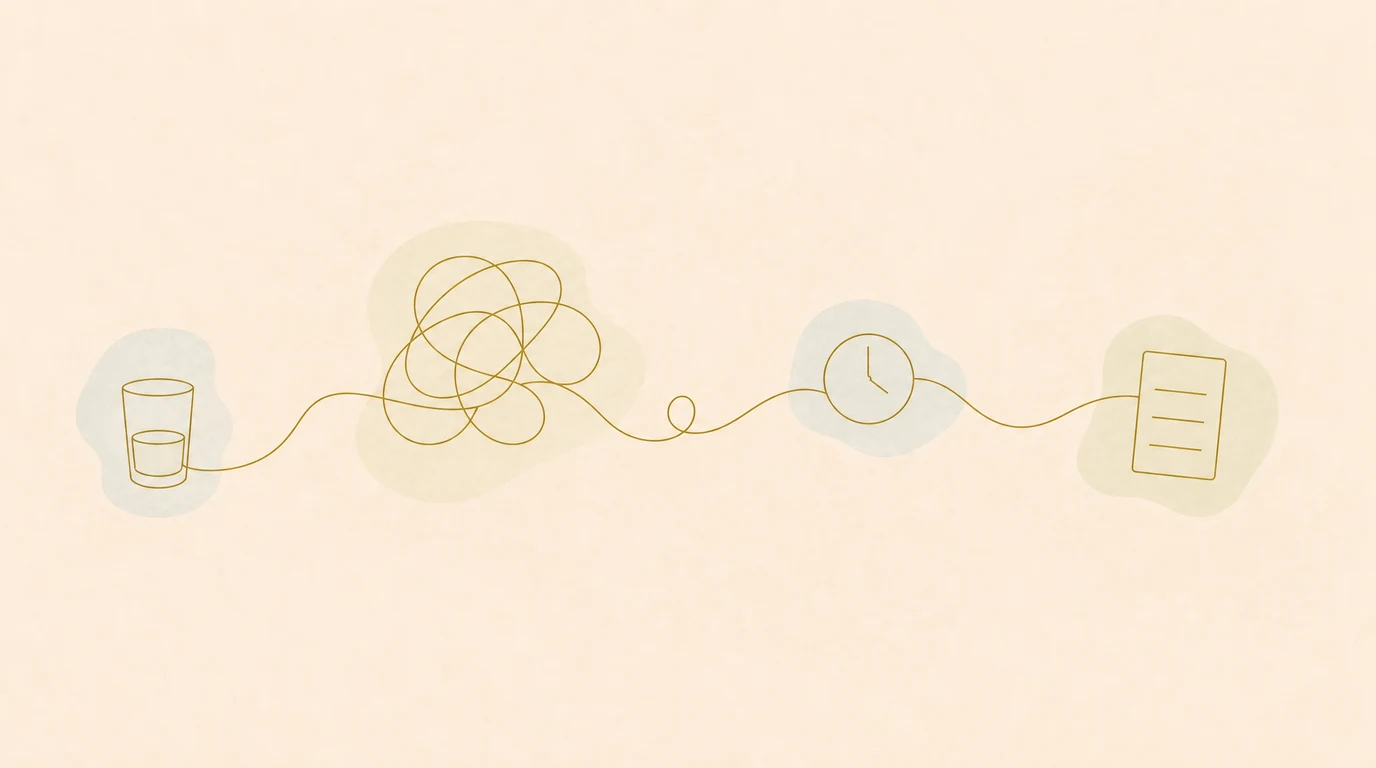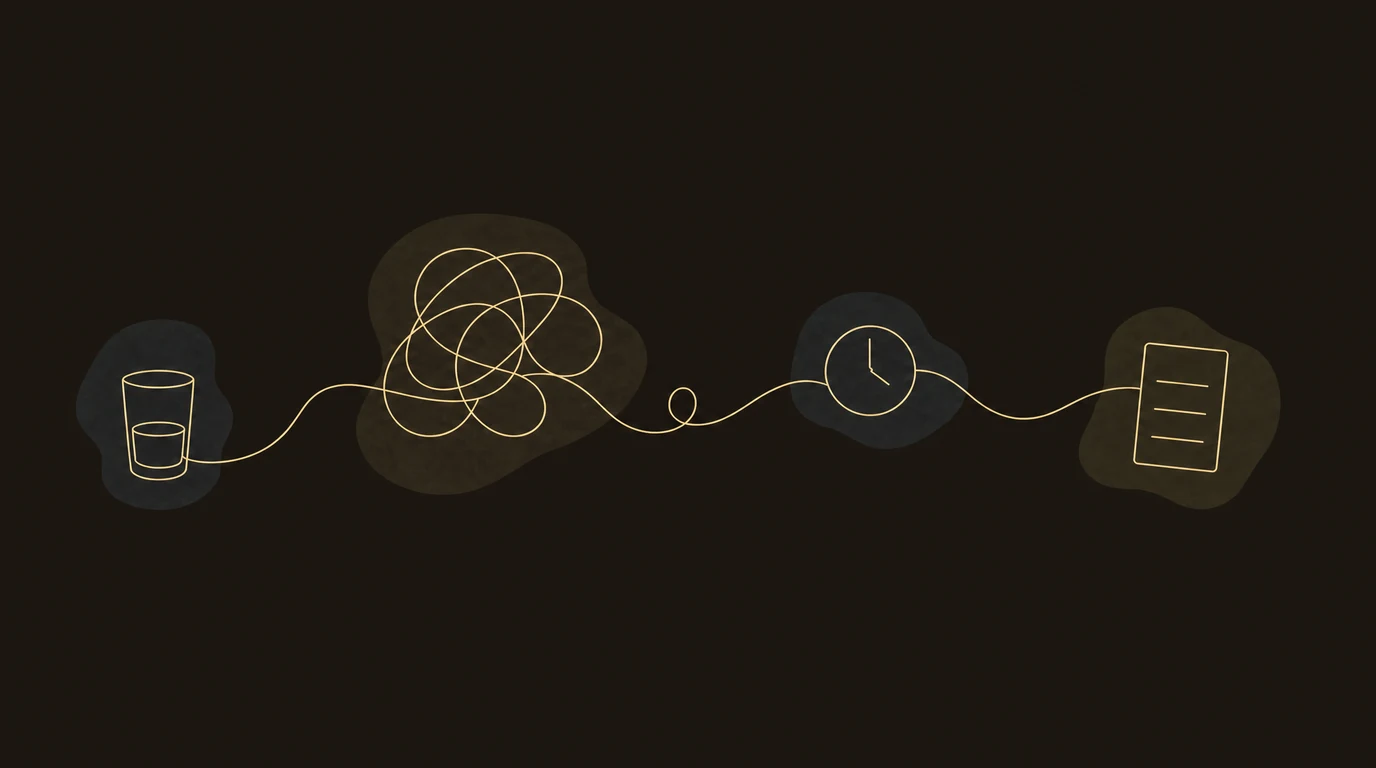
Learning how to stop alcohol cravings starts with identifying what activated the craving and making the next drink harder to reach. A craving can feel physical, emotional, visual, social, or automatic. It may arrive as a clear desire to drink, a picture of a particular beverage, restlessness at a familiar time, or a growing focus on how alcohol could change the moment.
Cravings are common during alcohol recovery, and they vary in intensity and duration. They provide information about a learned drinking pattern. They do not decide the next action for you.
Key takeaways
- Alcohol cravings can be activated by internal states, external cues, routines, expectations, and easy access
- A short response works best when it changes location, access, time, and contact with support
- Cravings have no universal duration and may return in waves
- Recording the sequence before each craving helps you change the earliest workable step
- Persistent or intense cravings may benefit from behavioral treatment, medication, or both
- Sweet cravings after quitting alcohol can be considered separately from the desire to drink
What an alcohol craving can feel like
Alcohol craving is a strong desire, pull, or preoccupation connected to drinking. It can include:
- thinking repeatedly about a specific drink
- imagining the first effect of alcohol
- scanning for a store, bar, bottle, or delivery option
- tension, agitation, or restlessness at a familiar drinking time
- a sense that the evening cannot begin or end without alcohol
- bargaining about one drink, one occasion, or a later stop date
- wanting relief from stress, loneliness, boredom, pain, or social discomfort
Craving is subjective. Heart rate or sweating may change during a cue, yet body responses and self-reported desire do not always move together. In a study of 80 alcohol-dependent patients, alcohol advertisements increased cue reactivity and craving, while the laboratory response did not reliably predict later relapse (Witteman et al., 2015). A strong moment deserves a response without becoming a prediction of what you will do.
Why alcohol cravings happen
Alcohol can become associated with a time, place, person, emotion, sensory cue, or expected outcome. Repetition strengthens the connection. Finishing work may predict a drink. Opening the fridge may reveal the usual bottle. A restaurant menu, sports broadcast, argument, payday, or Friday afternoon can activate the sequence.
Craving can also follow internal states such as hunger, fatigue, anxiety, pain, excitement, or loneliness. The same state can have a different effect in different settings. A systematic review of real-time substance-use studies found that craving often rose before use, while relationships with mood and context varied across people and substances (Serre et al., 2015).
People with alcohol use disorder in one ecological study reported higher cravings in contexts they had previously identified as especially valuable for drinking (Kuerbis et al., 2020). Your own high-value contexts may therefore matter more than a generic list.
Find the trigger behind the current craving
Write six short details:
- Time: when did the craving begin?
- Place: where were you?
- People: who was present or expected?
- Previous event: what happened immediately before it?
- Expected effect: what did you want alcohol to change?
- Access: how could you obtain alcohol within the next 20 minutes?
The expected effect is often the most useful detail. You may want a transition out of work, relief from social tension, a reward, a pause in repetitive thinking, a way to join other people, or help falling asleep. A useful response addresses that immediate job while closing the alcohol route.
Look for sequences across several entries. One record describes a moment. Repetition identifies a pattern.
Use a short response when the craving is active
Use these steps in order:
- Move: leave the alcohol aisle, kitchen, bar area, or usual drinking chair.
- Close access: put distance between you and alcohol, payment, delivery apps, car keys, or a person offering drinks.
- Delay: set a ten-minute timer before any alcohol decision.
- Contact: message or call a person who knows your goal.
- Begin: start one prepared activity that has a visible endpoint.
The activity can be brief: walk around the block, shower, prepare food, take public transit home, clean one surface, play one game round, or watch one episode in another room. Choose an action that can actually begin under pressure.
Distraction is one valid short-term tool. In a simulated-bar experiment with 84 heavy drinkers, a distraction instruction reduced cue-related craving and distress more than a brief mindfulness instruction or no strategy during that laboratory session (Murphy and MacKillop, 2014). This small experiment does not establish one best method for recovery. It supports having a concrete attention shift ready.
Match the response to the trigger
Different triggers need different corrections.
Time and routine
Start the alternative routine before the usual drinking time. Change rooms, begin dinner earlier, schedule a call, leave work by another route, or plan an activity outside the home.
Stress or difficult emotion
Reduce the immediate demand. Step away from the conflict, write the next necessary action, use a brief regulation skill, or contact support. Keep treatment for ongoing anxiety, depression, trauma, or pain separate from the craving response.
Social setting
Hold an alcohol-free drink, prepare one refusal sentence, arrange your own transport, and decide the exit time. Tell one person before the event when possible.
Seeing alcohol or other people drinking
Change sight lines and proximity. Move seats, leave the alcohol aisle, mute promotional accounts, avoid the bar counter, or choose an alcohol-free venue during the early period.
Easy access
Remove stored alcohol, cancel recurring deliveries, delete saved checkout details, change the shopping route, and ask people at home to keep alcohol out of shared view.
The practical plan to stop drinking covers broader changes to routines, access, and support. This page stays with the craving itself and the sequence around it.
How long alcohol cravings last
There is no universal craving clock. A craving may crest and ease within minutes when the cue disappears. It may return several times during an evening. It can remain lower but persistent when alcohol stays visible, a conflict continues, or the person remains in the drinking setting.
Avoid using a promised duration as a test of whether you are doing recovery correctly. Track your own pattern instead:
- start time
- intensity from 0 to 10
- trigger
- response used
- intensity ten minutes later
- whether alcohol remained available
The record shows which responses change intensity or protect behavior even when the feeling remains. A craving can still be present while you leave the setting, eat dinner, call someone, or go to bed alcohol-free.
Food, sugar, and supplements
If you are also craving sweets, the guide to sugar cravings after quitting alcohol covers meal routines and the mixed research on using sugar to reduce alcohol cravings.
Hunger, irregular meals, and low energy can make a difficult period harder. Eating a normal meal or snack may remove hunger from the sequence. An alcohol-free drink can also preserve a familiar sensory or social ritual.
No specific food, vitamin, herb, or over-the-counter supplement reliably switches off alcohol cravings. Be cautious with products marketed as a detox or natural craving cure. Supplements can interact with medication, affect the liver, or contain inconsistent ingredients.
Ask a clinician about nutrition when drinking has displaced meals, weight has changed substantially, vomiting is present, or deficiency is possible. Medical care for alcohol withdrawal or nutritional risk belongs outside a home supplement experiment.
When medication or treatment may help
Persistent cravings can be addressed with behavioral treatment, medication, or both. A 2023 systematic review and meta-analysis of 118 trials found evidence supporting oral naltrexone and acamprosate as first-line medications for alcohol use disorder alongside psychosocial care, with different outcomes and side-effect considerations (McPheeters et al., 2023). Availability and approval vary by country.
A clinician can consider your drinking goal, liver and kidney health, opioid use, pregnancy, current medication, previous treatment, and access. Avoid borrowing medication or using someone else's dose.
Consider more support when:
- cravings repeatedly lead to drinking
- alcohol remains easy to access despite your plan
- you are spending much of the day managing desire to drink
- cravings are linked to severe anxiety, depression, pain, or trauma symptoms
- a return to drinking is becoming longer or more dangerous
- you need alcohol to avoid withdrawal symptoms
Craving treatment is part of ordinary alcohol care. It does not require waiting for a crisis.
Build a reusable craving card
Write this on your phone or a small card:
- My most common trigger is: ______
- Alcohol is easiest to reach through: ______
- The first place I will move is: ______
- The person I will contact is: ______
- My ten-minute activity is: ______
- If I still feel at risk, I will go to: ______
Review it before the usual drinking time. Update it after a real craving reveals a missing step.
During the first seven days without alcohol, record which times and settings repeat. If drinking happens, the alcohol slip or relapse guide helps you end the episode and use the information without automatically deciding what the event means for your counter.
Cravings become easier to plan for when they are attached to real contexts. Identify the sequence, reduce access, use a short response, and add treatment when the pattern keeps exceeding the current plan.