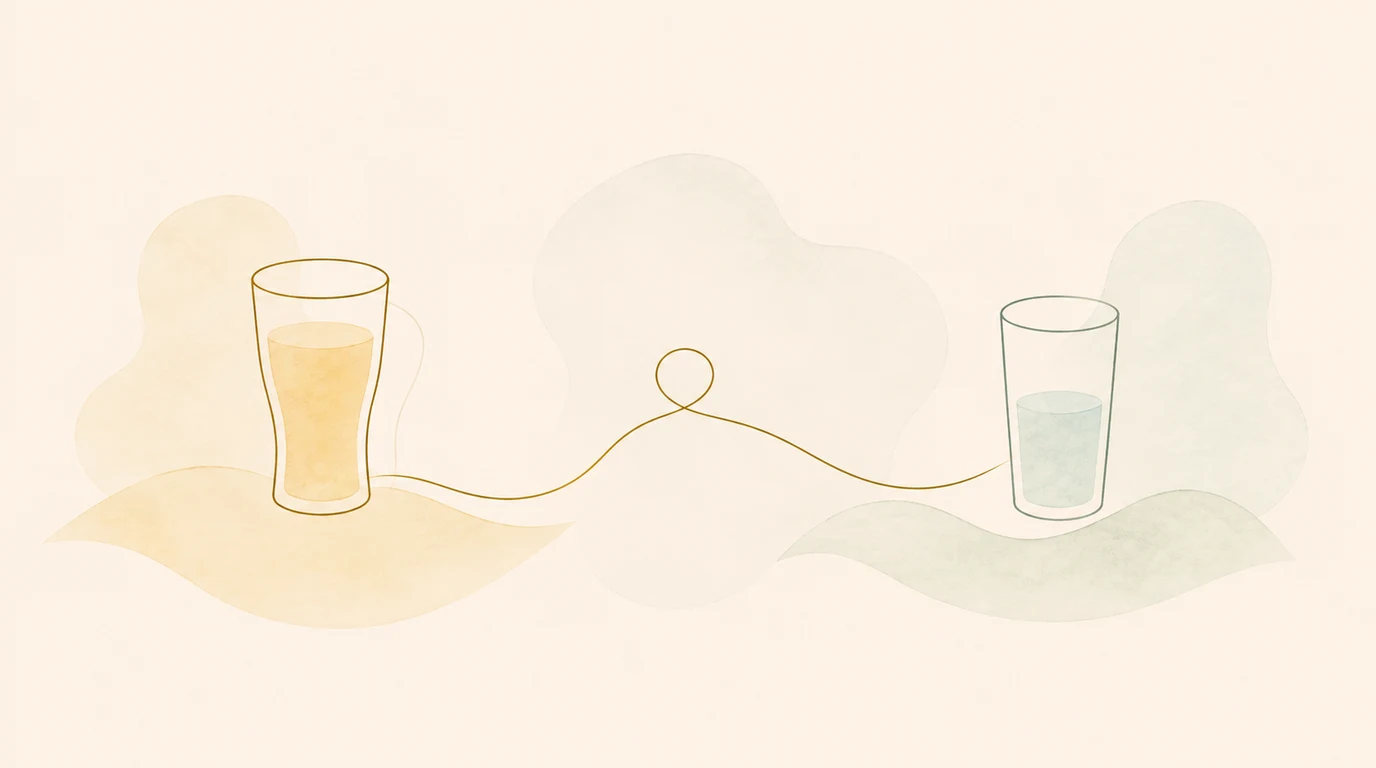
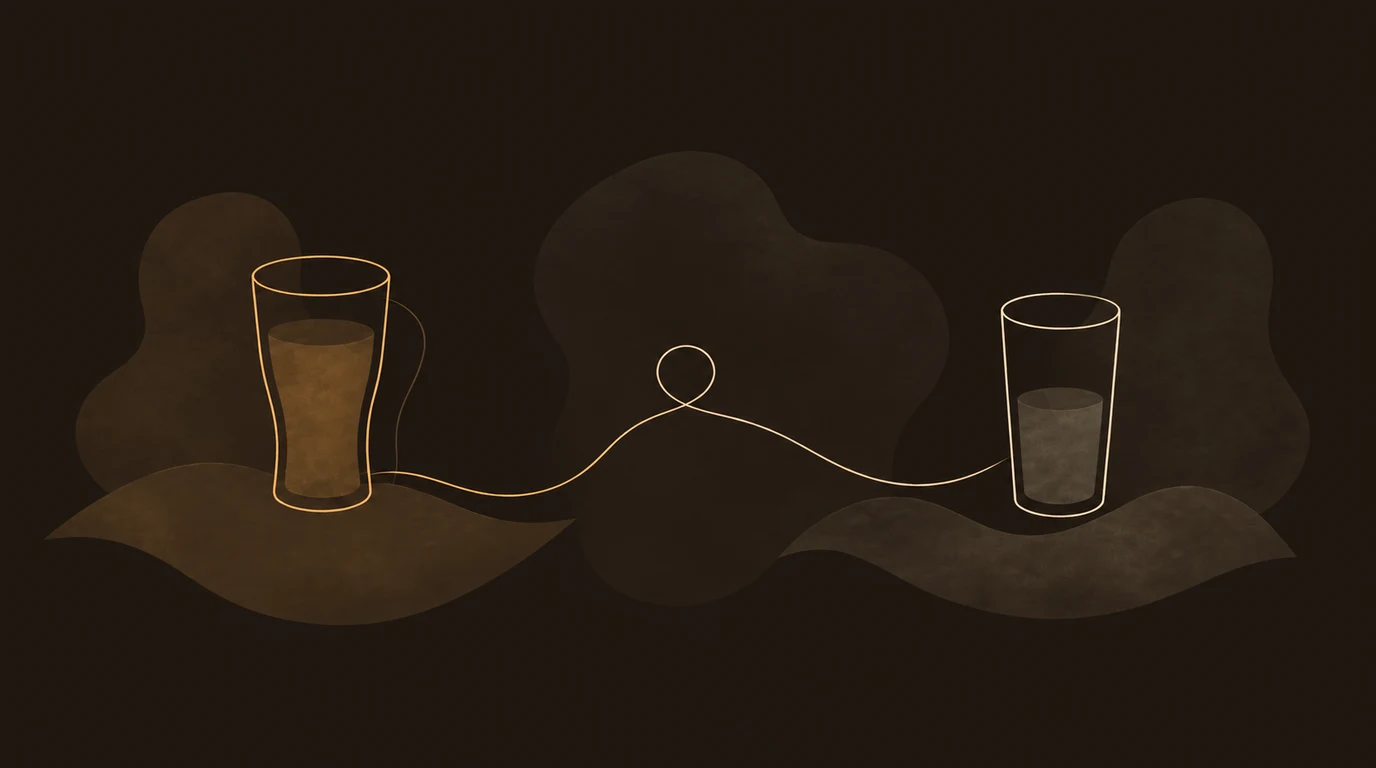
Can alcoholics drink non-alcoholic beer? Some people in recovery use it comfortably, and others find that it reactivates associations with the taste, ritual, or expectation of drinking. Research remains limited, so a universal rule would overstate what is known.
The decision has two parts: what the product contains and what the experience does to you. Beer, wine, spirits, and mocktails marketed as alcohol-free can differ in alcohol content, sensory similarity, serving ritual, and personal meaning.
Key takeaways
- Read the exact alcohol by volume because "non-alcoholic" and "alcohol-free" labels vary by product and country
- Taste, smell, packaging, glassware, and setting can act as alcohol cues for some people
- Research in people with alcohol use disorder is limited and gives mixed reasons for caution and possible benefit
- Judge the drink by its effect on cravings, thoughts, behavior, and recovery routines
- A product that feels activating can be replaced without testing it again
What non-alcoholic can mean
Labels vary across countries and product categories. Some drinks marketed as non-alcoholic contain trace alcohol, often up to 0.5% alcohol by volume. Products marked 0.0% are intended to have essentially no alcohol, although local rules and testing tolerances differ.
Check:
- the ABV on the package
- serving size
- whether the product says 0.0%, alcohol-free, de-alcoholized, or low alcohol
- local labeling definitions
- whether fermentation can continue after packaging
A systematic review of low- and no-alcohol drinks in people with heavy drinking or alcohol use disorder emphasized inconsistent definitions, limited clinical evidence, and the need to distinguish alcohol content from alcohol-like cues (Caballeria et al., 2022).
Trace alcohol may matter for pregnancy, certain medications, liver disease, religious practice, monitoring requirements, or a personally defined zero-alcohol goal. Ask a clinician or pharmacist when the amount has medical importance.
Does non-alcoholic beer break sobriety?
There is no single authority that defines sobriety for every person. Your goal may be:
- no intoxication
- no standard alcoholic drinks
- no ethanol at all
- no products that imitate alcohol
- adherence to a treatment, monitoring, religious, or mutual-help rule
Write the goal before choosing the product. If your recovery program or monitoring agreement has a rule, follow that rule or clarify it with the relevant professional.
A drink can meet a numerical alcohol limit while feeling incompatible with your recovery. It can also resemble beer without creating difficulty. Consider both the stated rule and your own response.
Why an alcohol-free drink can trigger cravings
Alcohol cues can include the smell, taste, bottle, can, glass, brand, opening sound, location, time of day, and people present. These cues can activate learned expectations even when the drink contains little or no alcohol.
Laboratory studies show that people with alcohol use disorder can respond differently to alcohol-related images and drinking actions than to neutral beverage cues (Fukushima et al., 2020). Another experiment found that perceived alcohol availability changed cue-related craving among heavy drinkers (MacKillop and Lisman, 2005). Neither study tested modern non-alcoholic beer directly, so they support caution about cues without proving that a particular product will cause relapse.
Possible warning signs include:
- craving full-strength alcohol during or afterward
- drinking the product quickly or in the old quantity
- searching for stronger versions
- recreating the exact time and place of previous drinking
- feeling preoccupied when none is available
- using it to manage every difficult emotion
- bargaining about trying regular alcohol next
The alcohol cravings guide can help you respond if the product activates a craving.
Why some people find it helpful
An alcohol-free drink can provide taste, variety, something familiar to order, or an option at events where others are drinking. It may help someone avoid standard-strength alcohol in a specific setting.
Evidence for this use is still developing. A 2026 prospective study of young adults found that use of alcohol-free or low-alcohol beverages was associated with a slightly higher probability of later alcohol abstention, while it was not significantly associated with most other alcohol outcomes (Mann et al., 2026). Participants were young adults who drank alcohol, not a treatment sample with established dependence.
Trials that provide non-alcoholic drinks have found reduced alcohol consumption in some adult drinkers, but several exclude people with alcohol dependence. Those results cannot establish safety for people in recovery from severe alcohol problems.
What the recovery-specific evidence shows
The evidence directly involving alcohol dependence is small and mixed.
A 2026 prospective study followed 198 Japanese men after inpatient treatment for alcohol dependence. Use of non-alcoholic beer was associated with higher risk of drinking lapse and sustained relapse over one year, even after adjustment for several factors (Yokoyama et al., 2026). The study was observational, involved only men from one treatment setting, and cannot prove that non-alcoholic beer caused the outcomes. People at higher risk may have been more likely to choose it.
An older study of 98 inpatient and former-patient problem drinkers found varied attitudes and some increases in craving after low-alcohol drinks, with stronger responses among people with greater dependence severity (Long et al., 1989). Products and treatment contexts have changed since then.
The evidence supports individualized caution. It does not support declaring the product safe or dangerous for everyone.
Run a careful personal check
If you choose to try an alcohol-free product, make the first use easy to observe:
- Check the label and choose the alcohol content that fits your goal.
- Avoid a high-risk event for the first trial.
- Tell one support person what you are testing.
- Buy a single serving for the first trial.
- Drink it slowly with food or an ordinary activity.
- Record craving, thoughts, pace, and mood before, during, and for several hours afterward.
- Remove the remaining product if it activates the old pattern.
Avoid using the test as proof that regular alcohol will also be manageable. The products and effects are different.
Choose options that do not imitate alcohol
If alcohol-like drinks feel activating, choose a beverage with a different taste, container, and ritual:
- sparkling water with citrus
- flavored seltzer
- iced or hot tea
- coffee or decaf
- juice diluted with soda water
- ginger beer labeled alcohol-free
- a simple fruit or herb drink
- a mocktail served without alcohol-brand substitutes
At a social event, order early and keep the drink with you. The socializing without alcohol guide covers venue, refusal, transport, and exit planning.
Special situations need a stricter answer
Ask a clinician, pharmacist, treatment provider, monitoring program, or religious authority when relevant. Particular caution applies to:
- pregnancy
- disulfiram or another medication affected by alcohol
- severe liver disease
- transplant requirements
- alcohol testing or legal monitoring
- a history of rapidly escalating after cue exposure
- an explicit zero-ethanol treatment goal
For disulfiram, product labels and medical advice matter because even small alcohol exposures may cause a reaction.
Review the effect and the label
After using the drink, ask:
- Did interest in full-strength alcohol rise?
- Did I drink it in the old pattern?
- Did it make the event easier?
- Did I keep thinking about it afterward?
- Did I hide or minimize the choice?
- Does it fit the recovery goal I wrote down?
If the response is quiet and consistent, the product may fit your plan. If it produces craving, bargaining, secrecy, or repeated use that feels compulsive, stop using it and choose another drink.
Choose the beverage that supports the life and alcohol goal you are building. The effect on your recovery matters more than winning an argument about the label.