Nicotine withdrawal symptoms can begin within hours after regular nicotine use stops. Irritability, restlessness, anxiety, low mood, concentration problems, sleep disruption, increased appetite, and cravings are among the most established symptoms. The mix and intensity vary, and one person's timeline will not predict another person's experience exactly.
The guide to irritability, anxiety, and brain fog during nicotine withdrawal gives practical detail for that acute cluster.
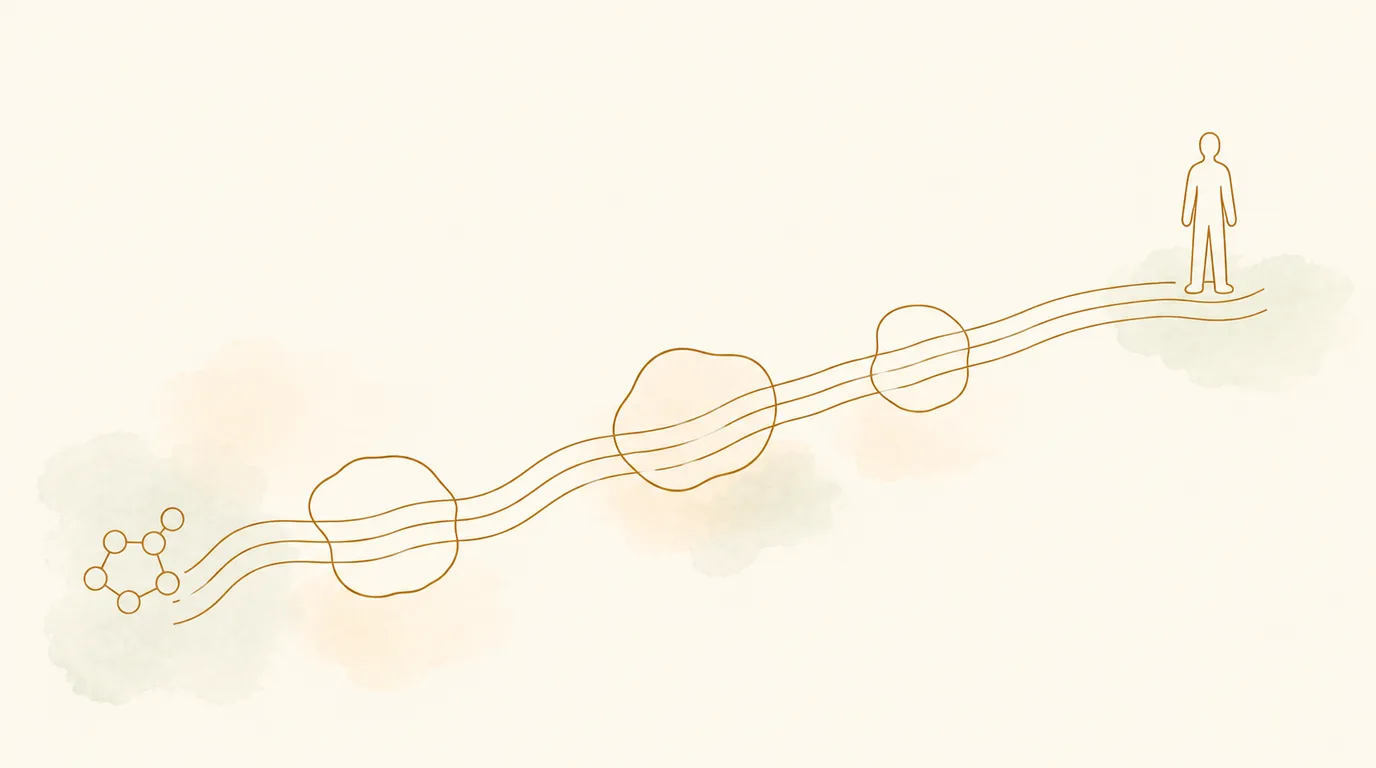
Research reviews place the usual onset about 4 to 24 hours after the last nicotine use, with symptoms often peaking around the third day and easing over the next three to four weeks (McLaughlin et al., 2015). This is a broad withdrawal timeline. It cannot identify the cause of every new physical or emotional symptom that appears after quitting.
Key takeaways
- Nicotine withdrawal often starts during the first day and is usually strongest during the first few days or first week
- Irritability, anxiety, low mood, restlessness, concentration difficulty, insomnia, increased appetite, and cravings form the core symptom pattern
- Most established symptoms ease over two to four weeks, while appetite changes and cue-triggered cravings may last longer
- Quitting nicotine-containing vapes can produce the same core withdrawal pattern
- Severe, unusual, or worsening symptoms need separate assessment
Common nicotine withdrawal symptoms
Nicotine withdrawal affects mood, attention, sleep, appetite, and the feeling that you need nicotine. A major review of tobacco abstinence research identified anger, anxiety, depressed mood, difficulty concentrating, impatience, insomnia, and restlessness as valid withdrawal symptoms (Hughes, 2007). Craving and increased appetite are also central parts of the experience, even though that review assessed them separately from its core diagnostic list.
You may notice several symptoms at once or only a few. Symptoms can also move independently. Sleep may improve while cravings remain active, or concentration may return before appetite settles.
Irritability, frustration, and restlessness
Ordinary interruptions can feel harder to tolerate. You may feel tense, impatient, unable to settle, or more likely to snap at someone. This cluster often arrives early because it belongs to the established nicotine withdrawal syndrome.
Notice the effect without treating every feeling as a reliable instruction. Delay decisions that would create unnecessary conflict, take brief space when possible, and tell people close to you that your patience may be lower for a while. Practical communication belongs alongside withdrawal management because the symptom can affect relationships even when it is temporary.
Anxiety and low mood
Anxious feelings, dysphoria, or a temporary drop in mood can occur after quitting. Their severity matters. Mild or moderate changes that follow the expected early timeline may ease as withdrawal settles. Persistent depression, a sharp decline in functioning, or thoughts of self-harm need prompt professional support.
Nicotine use may previously have ended brief periods of withdrawal discomfort throughout the day. Removing that rapid relief can make anxiety or low mood feel more visible at first. Longer-term stress, anxiety, and depression still deserve their own assessment because withdrawal cannot explain every emotional difficulty.
Difficulty concentrating and brain fog
Concentration difficulty is one of the best-established cognitive symptoms. Reviews also describe temporary problems with sustained attention, working memory, and reaction time during early abstinence (Simmons and Gould, 2014). In everyday life, that can feel like slower thinking, forgetfulness, or "brain fog."
Reduce avoidable cognitive load during the peak period. Write down small tasks, use reminders, and break work into shorter blocks. This is a poor time to judge your permanent concentration or productivity.
Sleep changes and vivid dreams
Insomnia is an established symptom, and sleep can become fragmented after quitting. Some people also report more vivid dreams. A review of sleep during smoking cessation found that objective studies often detected sleep fragmentation, while also noting that quit treatments can affect sleep in their own ways (Colrain et al., 2004).
Tiredness may follow a rough night, a disrupted routine, or changes in caffeine use. Research is less consistent about fatigue as a direct withdrawal symptom. The guide to sleep, fatigue, and vivid dreams after quitting nicotine covers practical adjustments and signs that need more help.
Increased appetite and digestive changes
Increased appetite is part of the established withdrawal pattern and can persist after other symptoms improve. Food may also become more rewarding as taste and smell change after stopping smoking, and eating can fill time previously occupied by nicotine use.
Constipation and other digestive discomfort have been reported as possible abstinence effects, although they are less central than appetite change. Regular meals, fluids, and ordinary movement can support the adjustment. Severe pain, persistent vomiting, blood in the stool, or prolonged digestive symptoms require medical advice.
Cravings
Cravings can feel physical, mental, or strongly tied to a situation. Early cravings often overlap with the withdrawal peak. Later cravings are more likely to arrive around learned cues such as coffee, driving, breaks, alcohol, stress, or seeing a familiar product.
A craving can return after the continuous discomfort has eased because a learned cue may still predict nicotine. The guide to nicotine cravings and triggers covers those patterns and techniques separately.
Headaches, dizziness, cough, and other physical complaints
Headaches are frequently reported by people who quit, but research reviews do not place them among the most firmly established diagnostic symptoms. Dizziness, constipation, cough, vivid dreams, nausea, sore throat, and mouth ulcers have all appeared as possible abstinence effects in the literature, with less consistent support than the core mood, sleep, appetite, and concentration symptoms (Hughes, 2007).
Product changes can complicate the picture. A cough after stopping cigarettes may relate to the respiratory effects of stopping smoke exposure, while someone stopping pouches will not share that same combustion history. A severe headache, chest pain, major breathing difficulty, fainting, one-sided weakness, confusion, or another alarming symptom should receive urgent assessment on its own.
Nicotine withdrawal timeline
The clearest evidence describes broad time ranges. Dependence level, frequency, dose, delivery method, previous quit attempts, sleep, stress, and treatment can all change the experience.
The first 4 to 24 hours
Cravings, irritability, restlessness, anxiety, and concentration difficulty may begin as nicotine exposure falls. Some people notice a change sooner, particularly when they previously used nicotine frequently throughout the day.
The first hours can also contain habit-driven cravings. Reaching the time of a usual cigarette, vape, or pouch can create a craving before withdrawal is at its strongest.
Days 2 and 3
Within the broad pattern described above, withdrawal is often strongest around the third day. This is when several symptoms may overlap: cravings, irritability, restlessness, low mood, concentration difficulty, sleep disruption, and appetite change.
"Peak" refers to the period when symptoms are often most intense across groups. Individual symptoms can reach their maximum at different times, and day four may still feel difficult.
The rest of the first week
The first week remains the most intense period for many people. Older longitudinal research found distinct courses for different symptoms (Cummings et al., 1985). A difficult evening after a calmer morning still fits an improving overall trajectory.
Weeks 2 to 4
Irritability, depressed mood, concentration difficulty, and restlessness generally move back toward baseline during this period. In a four-week study of abstinent smokers using nicotine gum, those symptoms peaked during the first week or two and returned to baseline by week four, while hunger was more persistent (West et al., 1989).
Improvement may be uneven. Sleep, appetite, and cue-triggered cravings can remain active after the strongest continuous symptoms have eased.
After the first month
Ongoing daily distress deserves a closer look because another explanation or source of support may be relevant. Some people continue to experience intermittent cravings, especially around strong cues. Appetite or weight changes can also follow a longer course.
At this stage, ask whether the symptom is steadily improving, triggered by specific situations, affected by treatment, or better explained by another health or mental-health issue. A clinician or pharmacist can help separate those possibilities.
Does the product change nicotine withdrawal?
The core syndrome follows dependence on nicotine, so cigarettes, nicotine vapes, pouches, and smokeless tobacco can all create withdrawal. Delivery patterns still matter. Frequent access or higher nicotine exposure may produce a different experience from occasional, time-limited use.
Vaping-specific evidence is smaller than the cigarette evidence base, but it supports the same core pattern. In a clinical abstinence study of 109 former smokers who vaped daily, stopping e-cigarettes increased all seven DSM-5 withdrawal symptoms and cravings. Among participants who met the study's abstinence criteria, symptoms followed the expected rise-and-fall pattern, and the first two days were the main comparison period (Hughes et al., 2020).
Quit treatment can change the timeline too. Nicotine replacement therapy is designed to reduce physiological and behavioral withdrawal while a person stops smoking, so someone using it as directed may not follow an untreated timeline (Hartmann-Boyce et al., 2018). Other cessation medicines can also affect symptoms or sleep. Questions about side effects, interactions, pregnancy, or the right option for you belong with a clinician or pharmacist.
What can make the peak more manageable?
Planning for the short peak window makes each response easier to carry out.
- Reduce optional demands during the first few days when possible
- Keep regular meals, water, and simple replacements available
- Use written reminders and shorter work blocks if concentration drops
- Plan brief movement for restless periods or cravings
- Tell a support person what kind of contact would help
- Keep nicotine products, devices, and buying routes out of immediate reach
- Use cessation treatment according to its directions and ask a professional about troublesome side effects
Short bouts of exercise can temporarily reduce cigarette cravings and some withdrawal symptoms, although studies do not establish one ideal intensity or prove that exercise alone improves long-term quitting (Roberts et al., 2012). A walk or another manageable activity can therefore be one response, without carrying the whole quit attempt.
The nicotine quit plan helps place the withdrawal window inside a wider plan for triggers, access, support, and the first response to a craving.
When to seek medical or mental-health support
Contact a clinician or pharmacist when symptoms are severe, keep worsening, interfere substantially with daily functioning, remain intense beyond the expected early period, or are difficult to distinguish from medication side effects or another condition.
Seek urgent help for chest pain, major breathing difficulty, fainting, signs of a stroke, severe confusion, or other symptoms that feel medically dangerous. If low mood includes thoughts of suicide or self-harm, contact local emergency or crisis support immediately.
New health problems still require attention during withdrawal. Quitting can cause a recognizable temporary syndrome, and symptoms outside that pattern deserve proper care.