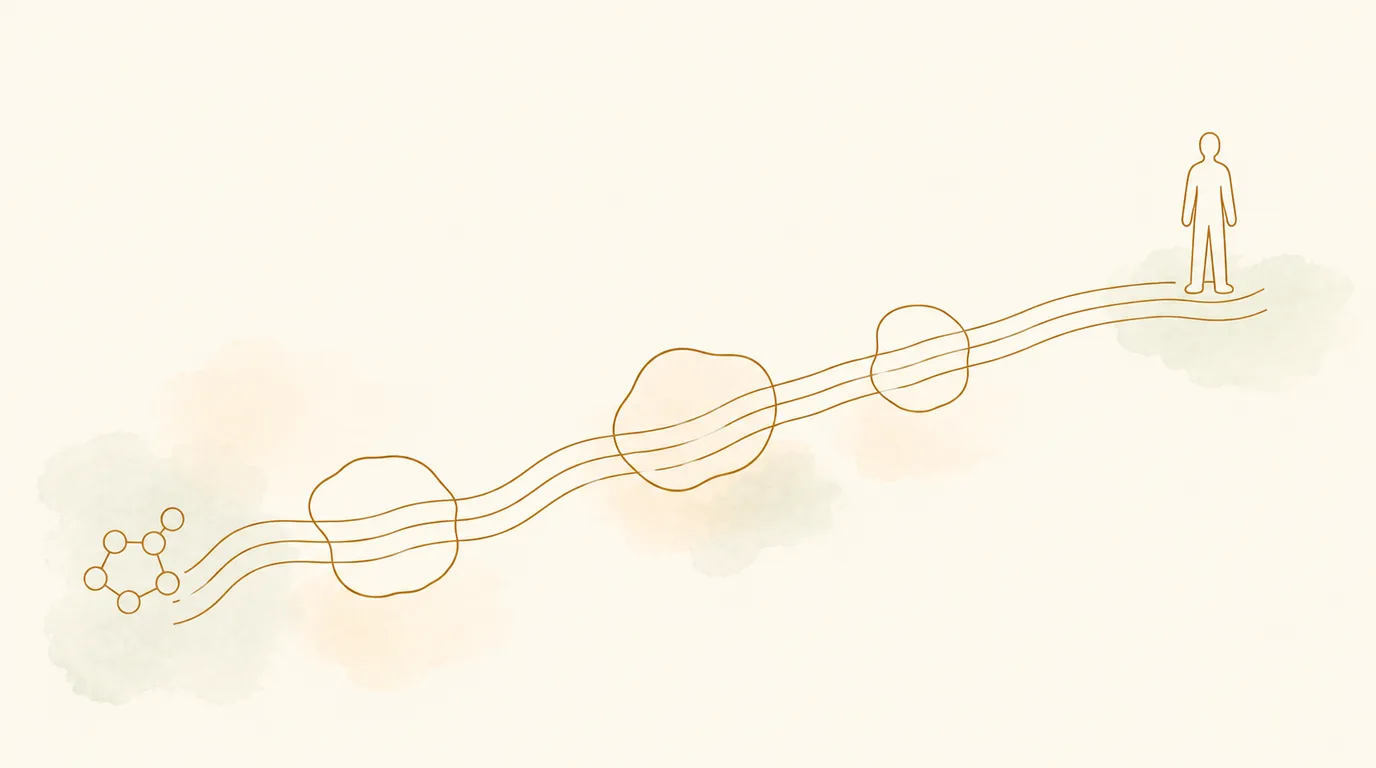

A nicotine recovery timeline can help you understand the stretch after the first seven days. Acute withdrawal often eases across the first month. Routines, cue-driven cravings, and confidence can continue changing for much longer.
The dates below are broad orientation points. Nicotine dose, product type, frequency of use, previous quit attempts, treatment, sleep, stress, and daily context can all shift the timing. Most long-term studies have followed people quitting cigarettes, so recovery from vaping, pouches, or smokeless tobacco may follow a different course.
Key takeaways
- Week two often brings lower overall withdrawal pressure, with uneven sleep, appetite, mood, or concentration still possible
- During weeks three and four, familiar cues can stand out more clearly as continuous withdrawal settles
- Months two and three give new routines more chances to become familiar across work, travel, social events, and stress
- Later cravings can appear after quiet periods, especially in situations strongly connected to past nicotine use
- Physical, behavioral, and motivational changes move on separate timelines
Where this nicotine recovery timeline begins
This guide starts with week two. The first 7 days without nicotine guide covers the daily orientation from quit day through day seven. The complete nicotine withdrawal guide covers individual symptoms, usual onset, and reasons to seek medical support.
Recovery after the first week has several moving parts. Physical withdrawal may be declining. A work break, commute, meal, or social setting may still feel closely tied to nicotine. Motivation can also rise and fall as the immediate effort of quitting gives way to ordinary life.
In a four-week study of people who had stopped smoking, irritability, low mood, concentration difficulty, and restlessness generally returned to baseline by week four. Hunger lasted longer for some participants (West et al., 1989). Another real-time study found substantial variation between individuals and reported several withdrawal symptoms remaining elevated for about three weeks (McCarthy et al., 2006). These group patterns leave room for a wide range of personal experiences.
Week 2: the overall pressure may start to change
During the second week, many people notice gaps between periods of discomfort. Irritability, restlessness, concentration problems, sleep changes, appetite changes, and desire for nicotine may still fluctuate. The most difficult part of the day can also shift as the quit attempt moves through different routines.
The useful change during week two is often increased visibility. You may begin to tell the difference between a broad withdrawal feeling and a response linked to a specific situation. A sudden craving after lunch may reflect a repeated meal routine. A difficult commute may reflect product access, traffic stress, or the place where nicotine was usually used.
Keep treatment on its instructed schedule and continue the parts of the first-week plan that reduced easy access. This is also a good point to review any recurring problem with a clinician, pharmacist, counselor, or quitline. A plan can be adjusted during recovery.
Weeks 3 and 4: patterns become easier to identify
Across weeks three and four, continuous withdrawal often becomes less prominent. In a prospective smoking-cessation study, mood, withdrawal symptoms, and desire to smoke declined from acute abstinence to one month. Measures of pleasure and reward response also improved and then remained broadly stable through the three-month assessment (Dawkins et al., 2009). The study involved a small group of people quitting cigarettes, so it does not establish a timeline for everyone quitting nicotine.
Cue-driven episodes may still feel sharp. Their timing can become more specific: the end of a meal, an evening drink, a conversation with someone who uses nicotine, an unfinished task, or a familiar shop. The nicotine cravings and triggers guide can help you map those sequences when they become clearer.
By the end of the first month, review three practical questions:
- Which physical changes have eased, stayed steady, or grown stronger?
- Which situations still create a reliable pull toward nicotine?
- Which parts of the plan are easy enough to keep using?
This review gives you a current picture without requiring every symptom or routine to be resolved.
Months 2 and 3: ordinary life supplies new repetitions
The second and third months often contain situations absent from the first month. Travel, celebrations, deadlines, illness, conflict, seasonal changes, and contact with people who use nicotine can each test a different part of the recovery plan.
Every nicotine-free repetition adds experience. A commute completed several times, a meal followed by a different activity, or a stressful call handled with another response can gradually make the new sequence more familiar. Some settings need many repetitions because they are rare or have a strong connection to nicotine.
Motivation may also feel less urgent during this period. The reasons that started the quit can seem distant once the first-week pressure has passed. Keep a short, concrete reminder of the changes that matter to you. The reasons to quit nicotine guide can help you update that list as your experience changes.
Months 4 through 6: recovery becomes less central to the day
By months four through six, many people spend less time actively thinking about quitting. Routines that once required preparation may happen with little planning. The remaining difficult moments can be less frequent and more closely linked to particular cues.
Longitudinal smoking research has found that people abstinent at six months showed lower withdrawal and desire to smoke, along with more rewarding substitute activities, compared with participants who were smoking at follow-up (Schnoll et al., 2016). Individual pace remains variable. The finding supports tracking what has entered the space previously occupied by nicotine, including rest, movement, social contact, hobbies, food, or focused work.
Novel situations can still need planning. A first holiday, difficult loss, reunion, or extended trip after quitting may combine cues absent from daily routines. Prepare for the specific setting and keep the response proportionate to the situation.
Beyond 6 months: occasional cues can still appear
Later recovery is often quieter. A craving can still appear after weeks or months with very little thought about nicotine. Memory can connect a smell, place, person, season, or emotional state with past use. An isolated craving says little about your overall progress.
In a study using real-time reports around a smoking quit attempt and again one year later, participants who remained abstinent had large reductions in desire to smoke and restlessness. Average desire to smoke at one year was very low, although individual experiences varied (Schlam et al., 2012).
Behavior and identity can continue developing over longer periods. A longitudinal survey found reciprocal links between smoking behavior and smoking- or quitting-related identity, with behavior showing a particularly strong relationship with later identity change (Meijer et al., 2018). Repeated daily experience can gradually make nicotine-free living feel more established.
Why timelines differ across products
Cigarettes, vapes, pouches, chewing tobacco, dip, snus, nicotine gum used outside treatment, and other nicotine products can create different patterns of exposure and different learned routines. Dose, delivery speed, frequency, duration of each use, and access throughout the day all matter.
The evidence base also differs by product. Long-term withdrawal and recovery research is concentrated on smoking. A clinical study of former smokers who used e-cigarettes daily confirmed that six days of vaping abstinence could produce withdrawal, with meaningful variation in severity (Hughes et al., 2020). Comparable long-term timelines for newer nicotine products remain limited.
Quit treatment can change the experience as well. Someone following a nicotine-replacement schedule may have a different physical course from someone ending nicotine exposure at the quit date. Treatment use still allows behavioral recovery to develop as product access, cues, and routines change.
Track three kinds of change
A simple monthly review can separate changes that otherwise blur together.
Physical
Record the direction of sleep, appetite, concentration, mood, restlessness, and general withdrawal pressure. Use brief descriptions such as improving, stable, variable, or worsening. Persistent or concerning symptoms deserve a clinical review.
Behavioral
List the situations that have become easier and the ones that still need preparation. Include work breaks, meals, driving, social events, alcohol, boredom, stress, and product availability. A new situation may need a distinct response. Familiar routines may already feel settled.
Motivational
Notice which reasons for quitting now feel concrete. Cost savings, fewer interruptions, greater freedom of movement, improved confidence, and reduced secrecy can become more visible with time. Motivation can fluctuate during recovery.
When your timeline feels slower than expected
Compare your current experience with your own previous weeks. A difficult day can occur within an improving month. Look at frequency, duration, intensity, and recovery after each episode.
Seek professional input when symptoms are severe, worsening, difficult to explain, or disrupting sleep, work, relationships, or daily functioning. A clinician can review treatment, medication effects, mental health, sleep, and other possible causes. Thoughts of suicide or self-harm require immediate local emergency or crisis support.
If nicotine use occurs, end the episode, reduce the access that made it easy, and review the sequence promptly. The nicotine slip or relapse guide covers that review in detail. You decide what the event means for your ResetHive counter.
Use the timeline as an orientation
The first month often carries the largest changes in acute withdrawal. The following months give routines, motivation, and identity more time to develop across a wider range of situations.
Review progress in broad intervals. Keep the supports that remain useful, update the parts that repeatedly fail, and leave room for your product history and circumstances to shape the pace.