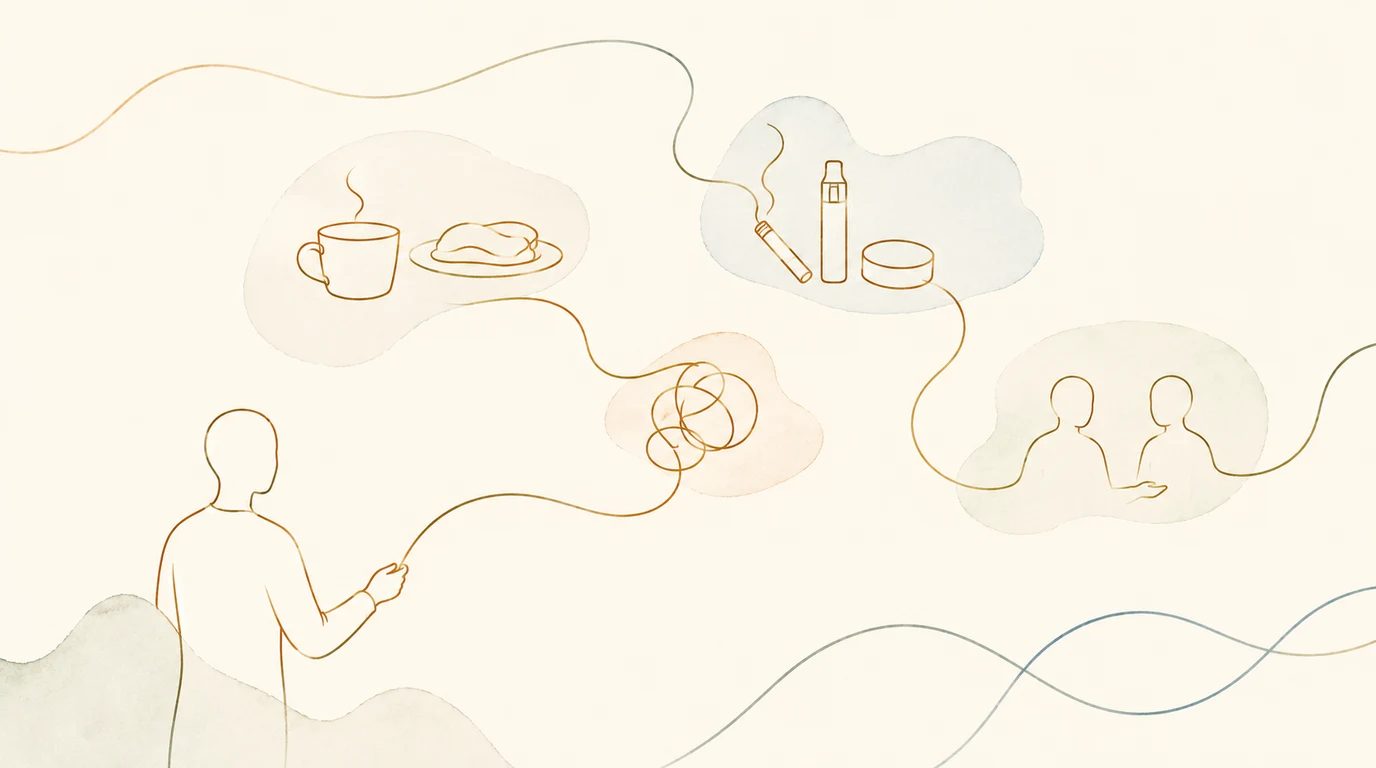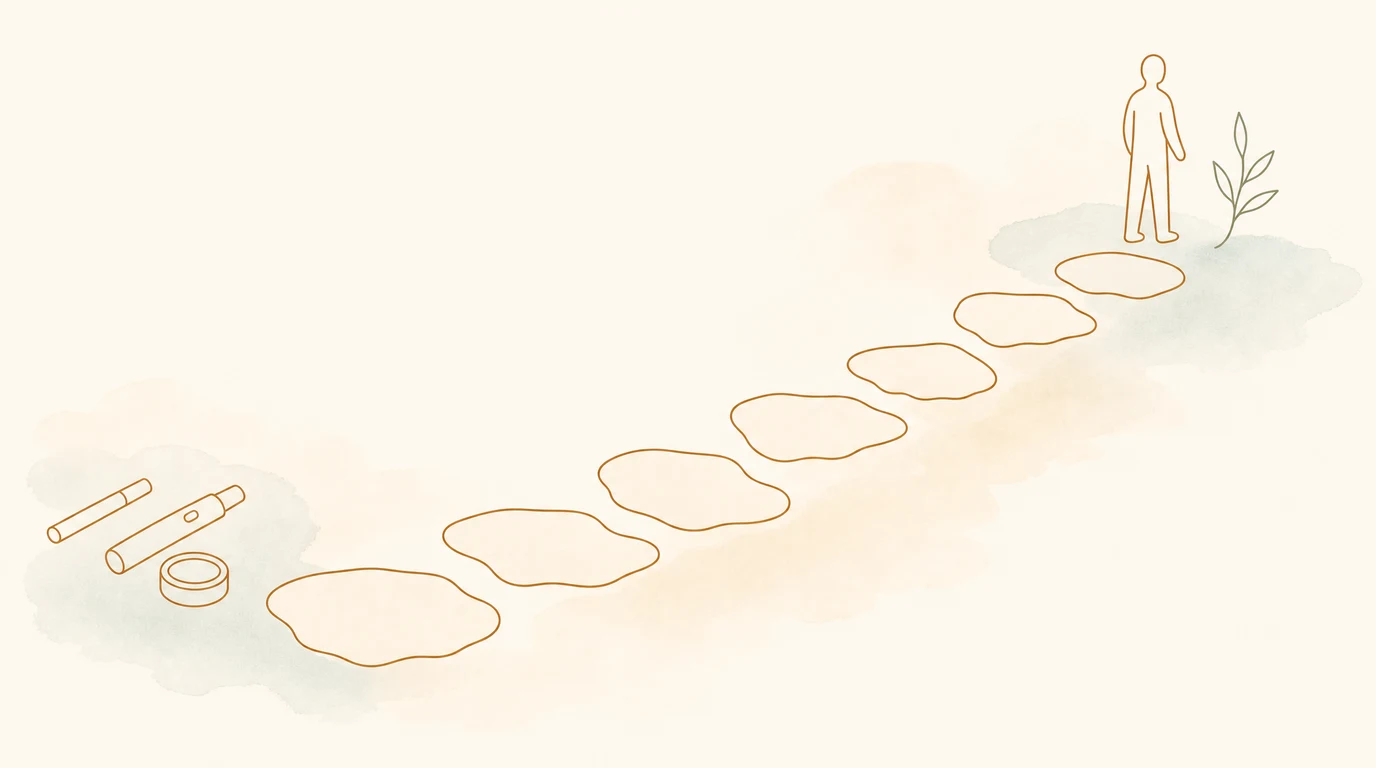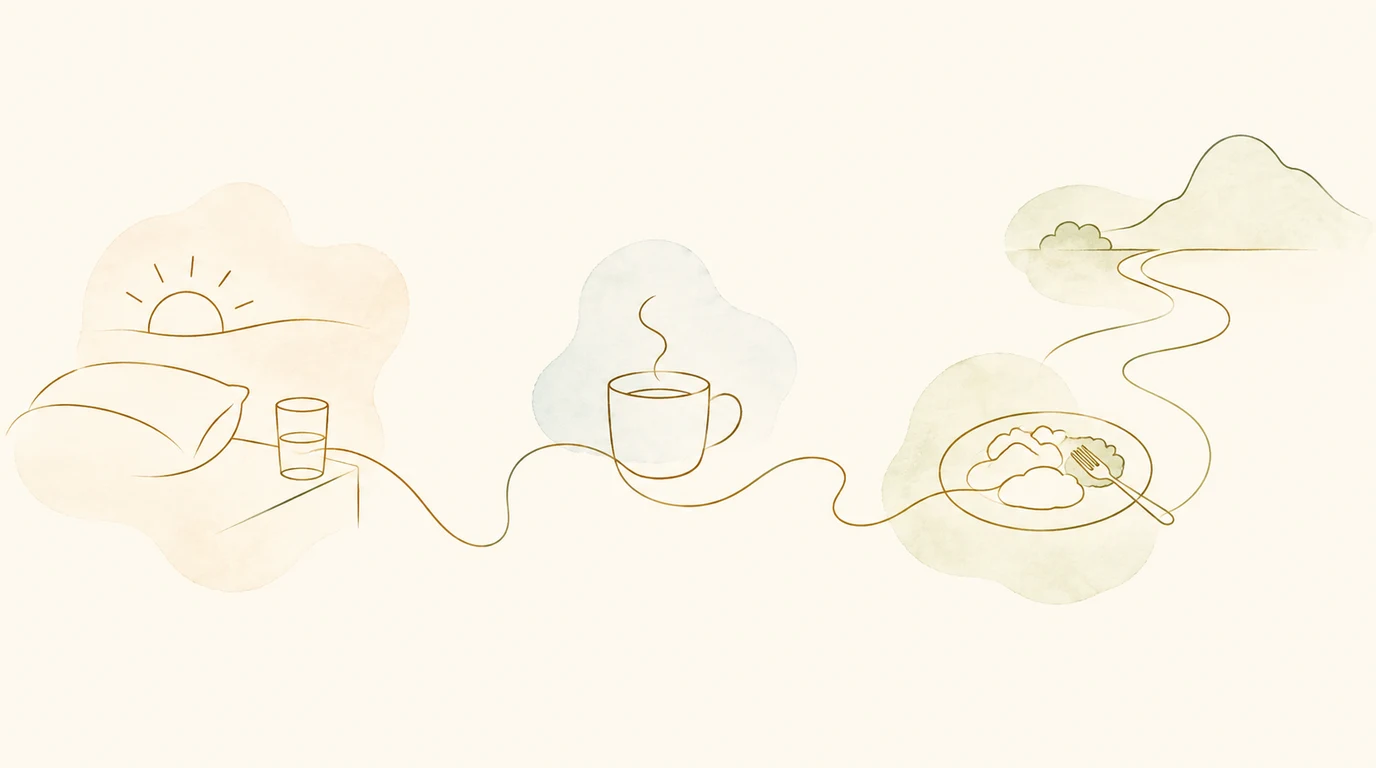
Morning, coffee, and the end of a meal can each become a reliable signal for nicotine. The impulse may arrive before you have made a conscious decision because the same short sequence has ended in smoking, vaping, or another nicotine product many times.
This guide focuses on rebuilding those three daily sequences. The broader guide to nicotine cravings and triggers explains withdrawal, cue learning, and the main trigger categories. Here, the task is practical: identify the exact point where each routine turns toward nicotine, then give that point a different, repeatable next step.
Work breaks and commutes have their own timing and access patterns. The guide to replacing work breaks and commutes covers those routines in detail.
Key takeaways
- Morning cravings can combine overnight nicotine deprivation with a highly rehearsed waking routine
- Coffee can contain several separate cues, including its smell, cup, location, timing, and usual companion activity
- The end of a meal needs a clear new finish, especially when nicotine used to mark the transition
- One specific if-then plan for each routine is easier to rehearse than a long list of possible responses
- A routine that still leads toward nicotine should be adjusted at the earliest reliable point in its chain
Find the short chain inside each routine
A routine is more precise than a time of day. "Morning" may contain an alarm, a walk to the kitchen, a phone check, a particular chair, coffee, and a nicotine product kept nearby. "After dinner" may contain the last bite, standing up, walking outside, and reaching into a pocket.
Write each routine as a short sequence. Include four parts:
- Starting event: waking, beginning coffee, or finishing a meal
- Place and objects: the room, seat, cup, phone, product, or route
- Nicotine point: the exact moment you usually reach, prepare, step outside, or use
- What follows: getting dressed, starting the day, returning to a task, cleaning up, or leaving
Keep the description factual. "I have no self-control after lunch" gives you little to change. "When I put my plate in the sink, I walk to the balcony and vape" reveals a transition, a route, and a location.
Use your sequence to prepare for the next occurrence while allowing for uncertainty about what you will do.
Rebuild the first part of the morning
Morning nicotine use can have two overlapping sources. Nicotine levels decline while you sleep, and the waking sequence itself may have become a strong cue. In a real-time study of people who smoked, craving was highest early in the morning and smoking frequency was about 45% above the daily average during the first two hours (Chandra et al., 2011). The exact pattern varies by person and product.
Start with the first point you control. If nicotine is beside the bed, beside the coffee machine, in the bathroom, or in the first bag you open, move through the morning without approaching that point. Decide where your feet go after the alarm and what your hands do first.
A new opening sequence might be:
- Turn off the alarm and stand up
- Drink the water prepared the night before
- Go directly to the bathroom or shower
- Get dressed before entering the usual nicotine area
- Begin breakfast, coffee, or the next planned activity in a chosen place
Use steps that fit your actual morning. A parent getting children ready, a shift worker waking in the afternoon, and someone working from home need different sequences. The useful feature is continuity: the plan carries you from waking to the next part of the day without an empty decision point beside the usual product.
Time to first cigarette after waking is strongly associated with cigarette dependence and cessation outcomes (Baker et al., 2007). The measure helps describe cigarette dependence at a group level, while an individual's ability to quit also depends on treatment, support, circumstances, and many other factors. If first-thing cravings repeatedly overwhelm your plan, bring that pattern to a clinician, pharmacist, quitline, or counselor when discussing cessation support.
Keep coffee and change its sequence
Coffee can become linked with nicotine at several levels. Its smell and taste may be cues. The cup may belong to a familiar place. The first sip may signal that a cigarette, vape, pouch, or other product comes next. The coffee break may also provide the time and privacy needed to use.
A 2024 cross-sectional study of Japanese adults who smoked cigarettes or heated tobacco products found that black coffee and coffee beverages were commonly reported as increasing the desire to smoke (Miyoshi et al., 2024). The study relied on self-report, involved adults aged 40 to 69 in Japan, and cannot show that coffee causes craving. It does support treating coffee as a meaningful personal cue when the pattern appears in your life.
Change two or three elements of the coffee chain for the first stretch of recovery:
- Use a different cup, preparation method, or place
- Have coffee with breakfast or another planned activity
- Sit where nicotine was never part of the routine
- Keep your hands occupied with the cup, food, a simple task, or a message to someone
- Leave the coffee area as soon as the drink is finished
Choose changes that remain realistic on ordinary days. If the coffee-nicotine link stays strong, try tea, decaf, a cold drink, or a delayed coffee for a limited period and review the result. You can return to coffee with a newly planned sequence later.
Make the last part explicit. "Drink coffee without nicotine" describes an outcome. "When I finish my coffee, I rinse the cup and walk to the shower" tells you what to do at the moment the old sequence usually continued.
Give every meal a clear new ending
The last bite can act like a starting signal for nicotine. In an ecological study, craving was higher for cigarettes smoked while participants were eating or drinking, and the authors noted earlier evidence of a high probability of smoking after eating (Dunbar et al., 2010). This evidence concerns cigarettes, while meal-linked routines can also develop with vaping, heated tobacco, pouches, and other nicotine products.
Choose a finish that begins immediately after the meal. Useful options include:
- Clear the table and begin washing dishes
- Brush your teeth or use mouthwash
- Make a nicotine-free drink and move to another room
- Take a brief walk on a prepared route
- Call or message someone while you leave the eating area
- Begin one small household task that already has a clear end
Match the action to the setting. At home, dishwashing may work. At a restaurant, paying and leaving by a different route may be more useful. At someone else's home, helping clear the table can carry you through the transition.
Plan the environment around the new ending. Put walking shoes near the door, leave the toothbrush ready, choose the person you can message, or decide which task comes next. Preparation reduces the number of choices you face when the meal ends.
Some meals may be much stronger cues than others. Record the meal, location, people, flavor, and usual access to nicotine. A cross-sectional food study found that cue reports varied across foods and tobacco products, so build the plan around the pattern you observe in your own life (Miyoshi et al., 2024).
Write one if-then plan for each chain
An if-then plan links a predictable event with a prepared action. Write one sentence for each routine:
- Morning: If I turn off my alarm, then I will drink water and go straight to the shower
- Coffee: If I make coffee, then I will drink it at the table with breakfast and rinse the cup when I finish
- Meal: If I finish eating, then I will clear my plate and walk around the block
Use your own actions and locations. The response should begin quickly, fit the setting, and get you through the point in the routine where you used nicotine before.
Implementation intentions have been tested in smoking behavior research. In a field experiment, the effect varied with habit strength: if-then planning reduced smoking among participants with weak or moderate smoking habits, and the researchers detected no reduction among those with strong habits (Webb et al., 2009). Treat the plan as one practical component. Strong dependence or repeated difficulty is a reason to add appropriate treatment and support.
Adjust the earliest point that keeps failing
Review each routine separately after several attempts. Record only what helps you revise the chain:
- Where did the old sequence begin?
- Which object, location, or transition pulled you toward nicotine?
- Did the planned action start soon enough?
- Was nicotine still immediately available?
- What is the earliest step you can change next time?
If the after-meal walk begins too late because you already reach for nicotine while clearing the table, move the intervention earlier: stand up with a glass in your hand, ask someone else to clear the nicotine area, or leave through another door. If coffee in the usual chair keeps restarting the chain, move the coffee before changing the drink.
New routines become familiar at different rates. Repeat the revised version consistently until you can recognize the sequence and begin it with little debate.
The first day without nicotine guide can place these three plans into a full quit-day schedule. Keep this routine work narrow: prepare the opening of the morning, the coffee sequence, and the end of meals. Other triggers deserve their own plans when they become relevant.
When the routine plan needs more support
A well-designed routine can still feel difficult during withdrawal or strong dependence. Add support if first-thing use remains immediate, several daily routines repeatedly lead to nicotine, or cravings interfere with eating, sleeping, work, or basic responsibilities.
A clinician, pharmacist, counselor, or quitline can help you review treatment and behavioral support. Bring the three short chains and note where each one breaks. Specific information about timing, product, access, and repeated cues makes the conversation more useful.
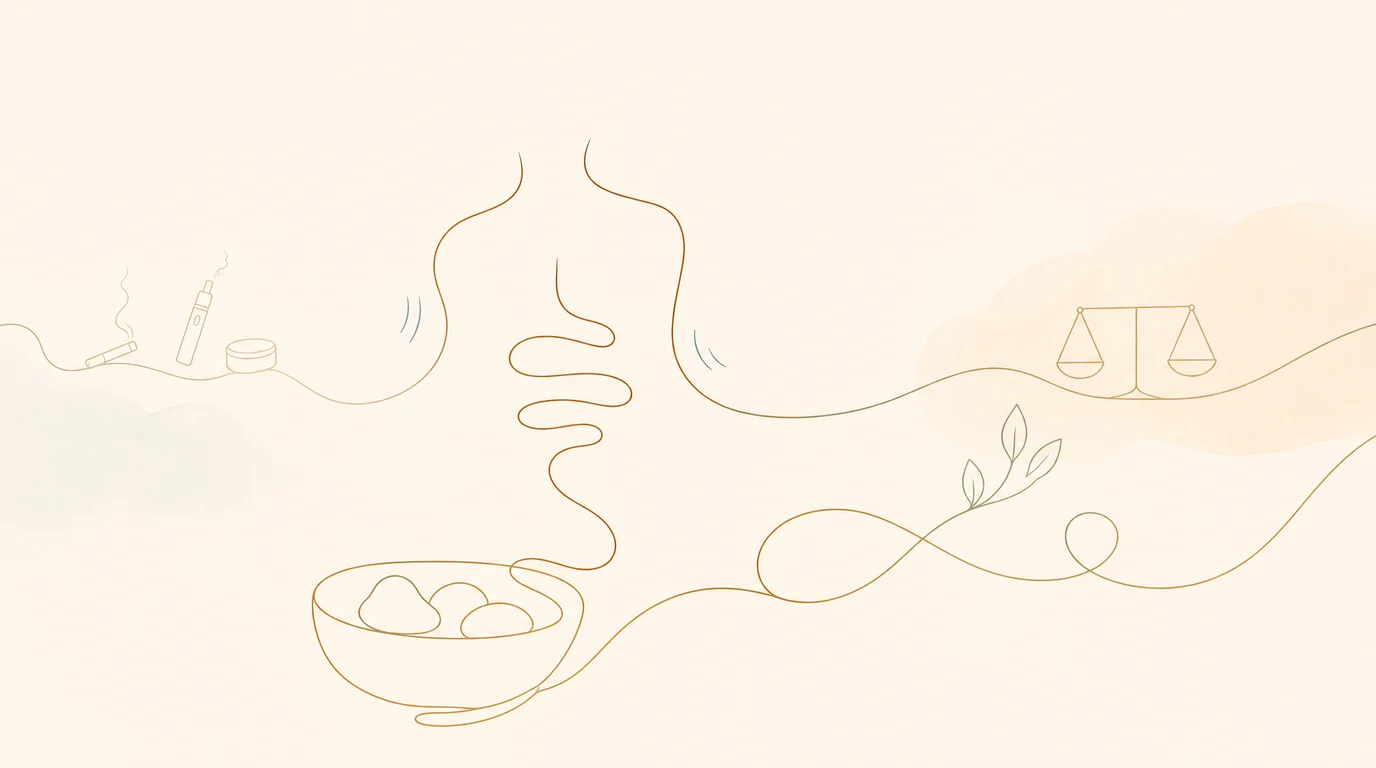
Morning, coffee, and meals occur often, which gives you many opportunities to rehearse the new sequence. Change one reliable point, prepare the next action, and revise the chain when the same weak spot appears again.