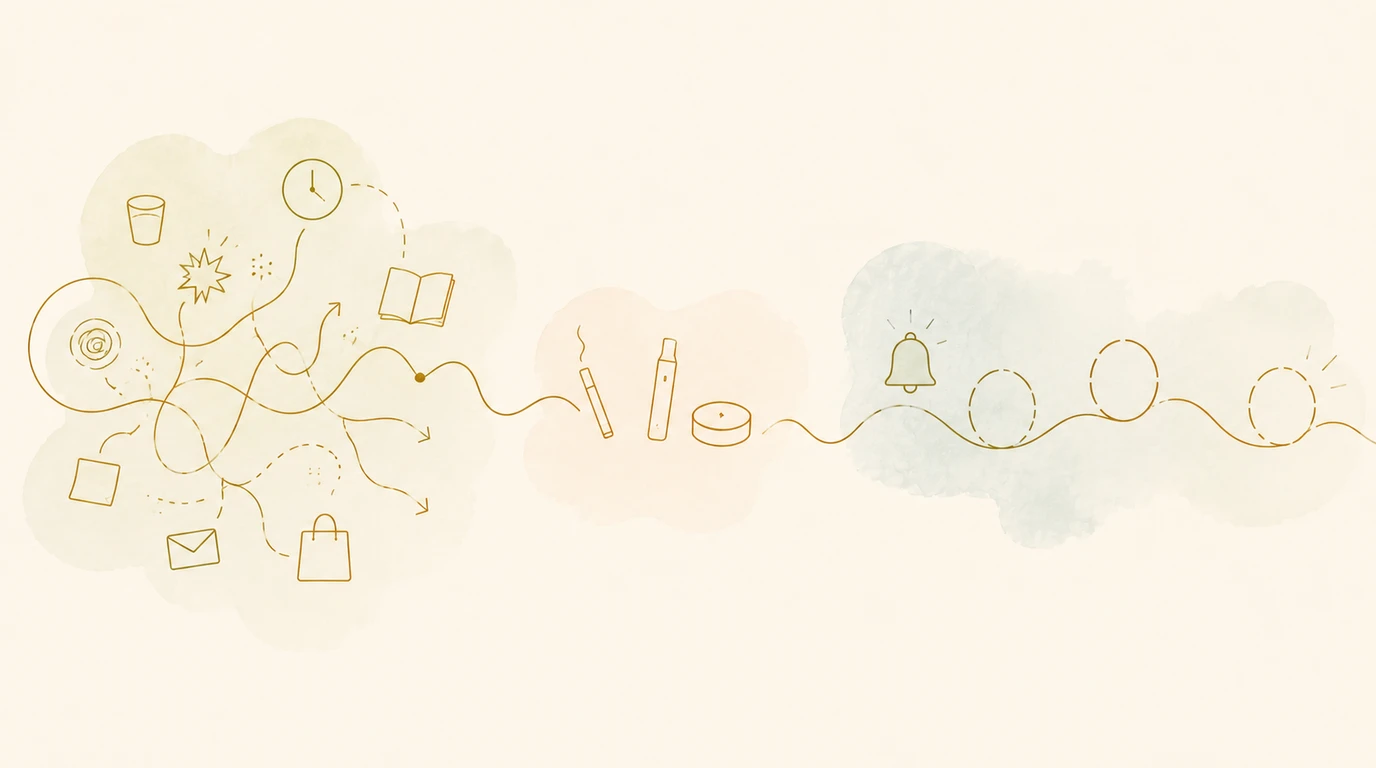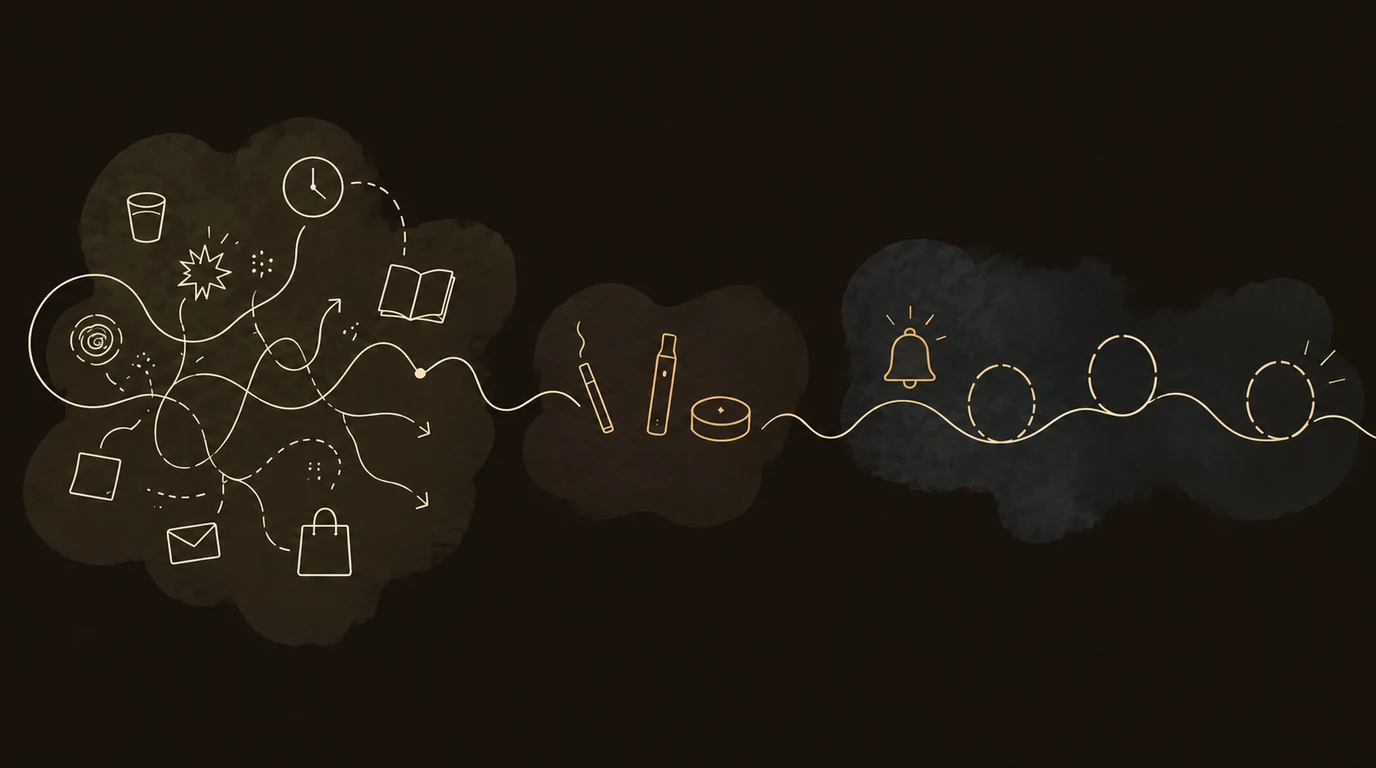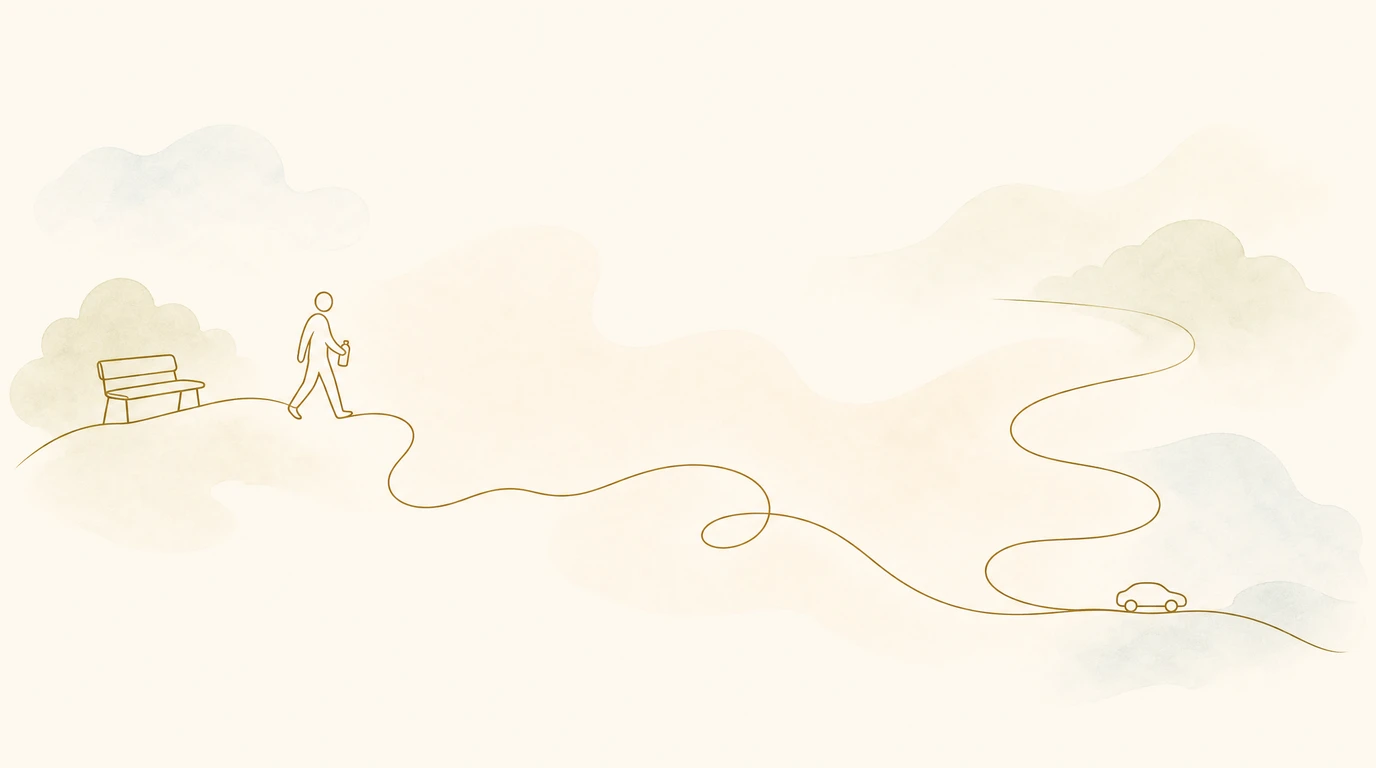
Work breaks and commutes repeat in the same places at similar times. If nicotine has marked those transitions for months or years, arriving at the break room, starting the car, leaving a shift, or reaching a station can bring on a craving before you have considered what to do.
This guide focuses on two routines only: breaks during work and travel between work and home. The broader guide to nicotine cravings and triggers explains withdrawal, cue learning, and other trigger categories. Here, you will map each routine, preserve the useful parts, and build a specific route through the moments that used to end in nicotine.
Key takeaways
- A work break can still provide rest, movement, privacy, or conversation after nicotine is removed
- The trip to work and the trip home often need separate plans because they serve different transitions
- A useful plan names the place, first action, and ending of each break or journey
- Office, shift, remote, mobile, and solitary work require different break designs
- Driving plans must keep attention, vision, and hands available for the road
Map the routine before you replace it
"Work is a trigger" describes a large part of the day. A usable map is shorter and more concrete. It might begin when a meeting ends, a machine cycle finishes, a coworker steps outside, a delivery route pauses, or you close a laptop tab. It might end beside a smoking area, in a parked car, or with a vape in your hand at a home desk.
Write each recurring sequence in five parts:
- Starting event: the clock time, task, person, announcement, or physical sensation that begins the break
- Route: where you stand up, walk, drive, or wait
- Usual nicotine point: the exact moment you reach, prepare, ask, buy, or use
- Function: rest, movement, privacy, conversation, a change of scenery, or a marker between tasks
- Return: the event that ends the break or journey and starts the next part of the day
Record the actual sequence. "At 10:30, I follow two coworkers to the loading entrance and vape until they go back inside" offers several possible changes. "I always fail at work" offers very little.
Real-time research supports looking closely at immediate context. In one ecological study of 78 Korean American young adults, smoking as a break occurred at work more often than in the other recorded locations, and work or study was a common activity during solitary smoking. The sample represented a small, specific group, so treat its percentages as a description of those participants. The study shows the level of detail that can make a personal pattern visible (Cerrada et al., 2016).
Keep the break and decide what it provides
Removing every break can leave you with a longer, more tiring workday. A 2022 meta-analysis of 22 study samples found that short work breaks had small positive effects on vigor and fatigue. The overall performance effect was uncertain, and results varied with the task and break length (Albulescu et al., 2022). The research concerns work breaks generally, so it cannot tell you which replacement will help with nicotine recovery.
Ask what the old break reliably gave you:
- Physical pause: sit, stretch, walk, refill water, or spend a few minutes outdoors in a nicotine-free area
- Distance from work: move away from the screen, workstation, customer area, or current task
- Privacy: use a quiet permitted space, take a short solo walk, or complete a personal task with a defined end
- Conversation: meet a coworker in another area or walk together
- Transition: use a timer, a short audio track, a change of location, or a prepared return ritual
Choose one main function for each break. A long menu creates another decision when the craving arrives. One prepared sequence is easier to begin: stand up, fill a bottle on another floor, walk one loop, and return when the timer ends.
Some jobs give little control over timing or location. In that case, design the part you can control. You may be able to choose which door you use, where you stand, what you carry, who you join, or what you do during the first minute. A small repeatable change can separate the break announcement from the old route.
Build a break plan for your work setting
The same advice will fit poorly across an office, construction site, hospital, store, vehicle, factory, restaurant, and home workspace. Start with the limits of the job, then choose a plan that remains possible on an ordinary busy day.
Office or shared workplace
Pick a destination outside the old nicotine route. If the smoking area is beside the main exit, use another permitted doorway or remain inside for the first few breaks. Arrange any water, headphones, walking shoes, or small task before the workday begins. Give the break an end point, such as one lap, one song, or a set return time.
Shift, site, service, or mobile work
Breaks may be announced suddenly and tightly timed. Prepare one compact sequence that requires little setup. Use an allowed nicotine-free area, carry the item you need, and decide how you will respond if the usual group heads toward nicotine. If you spend the day driving between locations, treat each stop as its own short transition and keep every driving response hands-free.
Remote work
Nicotine use can blend into the work task when the product stays beside the keyboard. Create visible work blocks and defined breaks. Leave the work station, complete one planned activity elsewhere, and return at a chosen time. The guide to removing nicotine products and cues covers access and product storage in detail. This break plan begins after that environment decision has been made.
Solitary work
When no coworker or schedule marks the break, use an external marker such as a calendar alert, task boundary, or timer. Decide the destination and activity in advance. The marker should begin a real pause and also tell you when the pause is finished.
After a few workdays, compare the plans by setting. Keep the version that starts quickly and brings you back to work with fewer decisions.
Plan the trip to work
The inbound commute often prepares you for the workday. Nicotine may have filled waiting time, increased stimulation, or followed the same landmark every morning. Map the journey from the moment you leave home to the moment you begin work.
For a driving commute, prepare the route before moving. Safe options may include:
- Start a chosen playlist, podcast, or audiobook before driving
- Use a different route when it remains practical and safe
- Keep the car environment aligned with the access plan you already made
- Schedule a safe rest stop for a long journey
- Choose the first action you will take after parking
Avoid any strategy that occupies your hands, blocks your view, or pulls attention from traffic. If a craving becomes too distracting to drive safely, pull over in a legal safe place and handle the moment while parked.
For public transit, walking, or cycling, choose the waiting place, route, and arrival sequence. A specific plan might be: wait at the far end of the platform, listen to one saved episode, walk directly through the side entrance, and fill water before opening work messages. On a bicycle, keep all responses compatible with safe riding and save interactive tasks for after you stop.
The National Cancer Institute lists driving and work breaks among common pattern triggers and recommends planning changes to the route or activity around them (National Cancer Institute, 2021). Those examples focus mainly on smoking. Apply the same mapping process to vaping, heated tobacco, pouches, or another product when the commute has become paired with use.
Give the trip home its own plan
The outbound commute begins after a different cue. It can mark relief, privacy, the end of supervision, or the first unstructured part of the day. Copying the morning plan may leave this transition uncovered.
Map three points separately:
- Leaving work: what happens during the final ten minutes and which exit you use
- The journey: the landmark, delay, stop, or empty time previously paired with nicotine
- Arrival: the first action after you reach home or another destination
Choose a simple departure sequence. Close the final task, collect your things in a set order, begin the prepared audio or walking route, and leave through the planned exit. If you used to buy nicotine on the way home, the access and route changes belong in your environment reset. Here, focus on what fills the transition after the route is changed.
Plan the first two minutes after arrival. Put away your bag, change clothes, wash your hands, feed a pet, start dinner preparation, or step into another scheduled activity. A clear arrival action prevents the commute plan from ending at the door with an open decision.
Prepare for coworkers and shared break areas
Coworkers can be part of a valued break even when the shared routine includes nicotine. Decide how much contact fits your current stage and workplace.
You can prepare a brief response such as:
- "I'm using a different break area for a while."
- "I'm skipping nicotine. I'll catch up with you inside."
- "I'm going for a quick walk. Want to come?"
You control the amount of personal information you share. If one person is likely to help, make a specific request: walk another route with you, avoid offering products, or meet in a nicotine-free area. The guide to asking for support covers the wider support conversation.
If your work requires you to remain in an area where others use nicotine, choose your position, task, and exit point before the break. Keep the plan short enough to remember under pressure.
Use one prepared response when a craving interrupts the plan
A rebuilt routine reduces predictable exposure. It cannot guarantee an easy break or commute. Choose one immediate response for a craving that appears inside the new sequence.
The 5 Ds for a nicotine craving offers a complete short-response method. Select the parts that fit the setting before work begins. A driver, a person serving customers, and someone on a private remote-work break have different safe options.
Write the response into the routine:
- "When the break announcement happens, I will take my bottle to the back stairwell and walk one floor."
- "When I start the car after work, I will begin the saved playlist before leaving the parking space."
- "When my remote-work timer rings, I will leave the desk and stretch by the window for five minutes."
A small workplace randomized trial found that people asked to form implementation intentions were more likely to report quitting at two months, with stronger results among participants who already had more motivation to quit. The study included 90 people and relied on a brief worksite intervention, so it supports specific planning without establishing a universal effect (Armitage, 2007).
Review the plan after a real workday
Use the first attempts as information. Review each break and each direction of travel separately:
- Which starting event brought nicotine to mind?
- Did the new action begin before the old automatic response started?
- Did the break provide the rest, movement, privacy, or conversation you needed?
- Did the return or arrival point leave an open decision?
- Which single change would make tomorrow's sequence easier to start?
If the new break feels like extra work, simplify it. If it ends beside the old nicotine area, change the destination. If the trip home becomes difficult at one landmark, start the prepared activity earlier. If overtime removes the usual break, make a second compact plan for delayed or shortened breaks.
Repeat the revised version across several ordinary workdays. Familiarity develops at different rates, and irregular schedules may require more than one version. The goal is a small set of routes you can recognize and begin with little preparation.
Work and travel take up a large part of many days. Rebuilding these routines gives each break and commute a clear structure while leaving morning, meals, social events, and other triggers for their own plans.