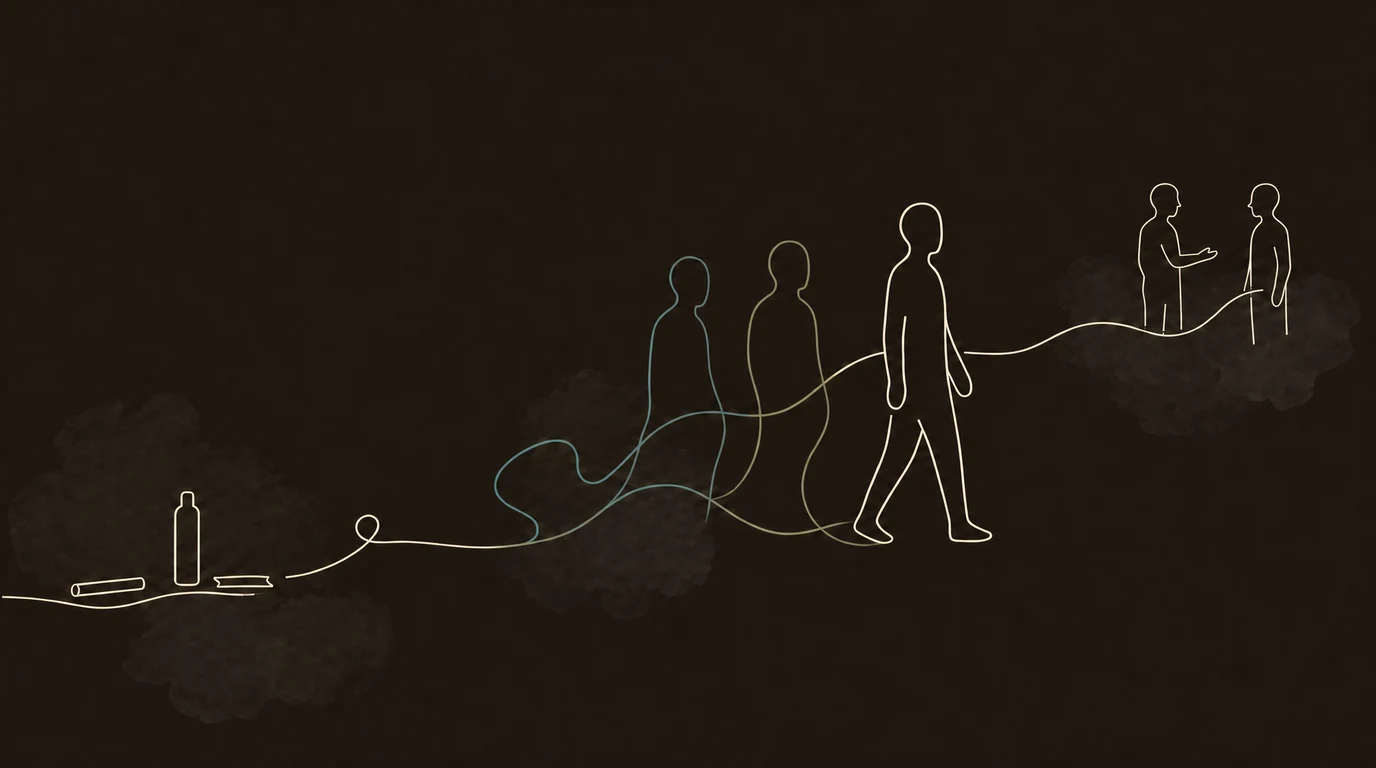

ADHD can change how a nicotine pattern fits into the day. A vape may stay within reach through every task. A cigarette may mark each transition. Nicotine pouches may be easy to use while working, studying, driving, or scrolling. When access is immediate and using requires almost no planning, the intention to quit can be easy to forget.
Research consistently links ADHD with higher rates of smoking and nicotine dependence, while the reasons remain varied. Attention, impulsivity, learned routines, social context, genetics, and expectations of relief may all contribute. A 2018 systematic review found support for several possible pathways and emphasized that the popular self-medication explanation still awaits decisive longitudinal confirmation (van Amsterdam et al., 2018). Nicotine therefore remains an addictive substance. ADHD treatment decisions belong within established clinical care.
This guide adds ADHD-specific planning to a quit attempt. The complete how to quit nicotine guide covers the core quit plan. Here, the focus is remembering and following that plan during distractions, task transitions, impulsive moments, and shifts in attention.
Key takeaways
- ADHD can increase the number of moments in which nicotine access, cues, and rapid decisions matter
- Research on smoking and ADHD supports an association, while individual patterns vary and evidence for newer nicotine products is thinner
- External reminders, fewer decision points, and added friction around access can keep a quit plan available
- Task starts, task switches, boredom, and unfinished work deserve specific preparation
- ADHD medication decisions belong with the prescribing clinician, since cessation findings are mixed
- Early nicotine withdrawal can overlap with ADHD experiences, so timing and function provide useful context
Why ADHD can change a nicotine pattern
ADHD is diverse. Some people experience frequent distraction, some experience impulsive decisions, some need more stimulation to stay engaged, and many move between these patterns depending on the task and setting. A diagnosis alone offers little prediction of how quitting will feel.
Nicotine use also differs. Smoking creates defined breaks and product limits. Vaping can continue in small doses across long stretches of the day. Pouches can remain discreetly available during tasks. Each product creates a different mix of access, timing, sensory cues, and social context.
The overlap becomes practical when a nicotine action requires only a brief pause. A product within reach can turn a passing cue into use before the quit plan returns to attention. A difficult task can create repeated opportunities to step away. A forgotten charger, spare pack, or usual shop can also pull a person into a familiar buying sequence.
These patterns show where you can change the environment or prepare a different next action. They say nothing about your willpower, character, or whether an ADHD diagnosis is valid.
Why nicotine can seem present all day
One small ecological study asked 17 adults with ADHD who smoked to record smoking and nonsmoking moments during everyday life. Smoking was more likely alongside cravings, boredom, stress, worry, restlessness, caffeine or alcohol, being outdoors, seeing others smoke, and being in a bar or restaurant (Mitchell et al., 2014). The sample was small and cigarette-specific, yet it shows how many separate contexts can become attached to nicotine.
Create a cue map with ordinary moments:
- waking and getting out of bed
- starting work or opening a laptop
- waiting for a page, call, bus, or appointment
- switching between tasks
- reaching a difficult or boring step
- finishing a meal, meeting, drive, or shift
- taking a break with other people
- settling down for the evening
Mark the moments that happen most often and the ones with the easiest product access. The complete nicotine cravings and triggers guide explains the wider trigger categories. For this ADHD-specific layer, the useful question is where attention shifts before nicotine use.
A person who vapes during almost every transition may need a different plan from someone who smokes at three predictable times. The more often the moment occurs, the more often you need a reminder or prepared response.
Make last-second nicotine use harder
A 2024 meta-analysis of 27 studies found a moderate group-level difference in stop-signal inhibitory control between adults with ADHD and controls (Senkowski et al., 2024). This finding describes average performance across research groups and has limited application to any one person's nicotine use.
It does support a practical principle: reduce the number of last-second decisions. Add friction before a familiar nicotine action:
- clear products, chargers, lighters, spare pods, and pouches from immediate reach
- remove saved carts, delivery shortcuts, and automatic reorders
- change the route past the usual shop when that route repeatedly leads to a purchase
- carry the item needed for the planned response in the same place every day
- ask a trusted person for a specific check-in during the highest-risk transition
The detailed nicotine environment reset covers home, car, work, accessories, backups, and buying routes. Choose the few changes that remove the fastest paths first.
Keep these barriers simple. A complicated barrier can become another task to abandon. Removing one shortcut or preparing one alternative may protect several moments each day.
Make the plan visible
A quit plan that lives only in memory has to compete with every active task. External structure keeps the next action available when attention moves elsewhere. Research on cognitive-behavioral and metacognitive treatment for adult ADHD supports the use of organization, planning, time-management, and problem-solving skills for ADHD symptoms. These trials examined ADHD treatment, with nicotine cessation outcomes outside their scope (Safren et al., 2010; Solanto et al., 2010). Applying these skills to quitting is a reasonable adaptation, with direct cessation evidence still limited.
Keep the external plan short:
- Current goal: the nicotine action you are changing today.
- Common moment: the next predictable task, place, or transition linked with use.
- First response: one action you can begin immediately.
- Support contact: the person, service, or professional you will contact if you keep losing track of the plan.
Place this note where the nicotine sequence usually begins. That may be the phone lock screen, the desk, the car console, or beside the keys. Use one reliable location so the reminder stays easy to find.
Reminders work best when tied to events that already happen. A prompt at login, after lunch, before the commute, or at the end of a meeting can arrive closer to the relevant transition than a general motivational alert.
Plan for task transitions and stimulation
Nicotine may become attached to starting, switching, pausing, or completing work. It can provide a reason to leave the task, a brief sensory change, or a familiar marker between activities. The underlying need can vary even when the nicotine action looks the same.
For each frequent transition, identify what nicotine has been helping you do or avoid:
- Starting: create a clear first physical action and open only the materials needed for it
- Switching: use a short written handoff that records where to resume
- Feeling stuck: ask for help, reduce the step, or set a brief timed attempt
- Seeking stimulation: add movement, sound, a temperature change, or another appropriate sensory input
- Taking a break: keep the break and change its location or activity
- Finishing: use a visible completion marker and choose the next destination before moving
Test one response in one repeated situation. A long menu adds choice at the moment when speed matters. After several real attempts, keep the response that was easiest to begin and adjust the part that created friction.
Prepare the medication conversation
Questions about ADHD medication and quitting deserve individualized review. In a randomized trial of 255 adults with ADHD who smoked, every participant received counseling and a nicotine patch. Extended-release methylphenidate improved ADHD symptoms, while prolonged smoking abstinence was similar in the medication and placebo groups (Winhusen et al., 2010). The result argues against assuming that ADHD symptom treatment automatically resolves nicotine dependence.
Bring a concise record to the prescribing clinician:
- nicotine product, strength, and typical daily pattern
- time of the first use and periods of heaviest use
- current ADHD medication and dosing schedule
- previous quit attempts, supports used, and side effects
- changes in sleep, appetite, mood, attention, or physical symptoms
- the quit date or reduction goal you are considering
Keep medication starts, stops, and dose changes clinician-guided. The guide to talking with a clinician or pharmacist helps you prepare a fuller appointment record and treatment questions. Urgent or severe symptoms need direct medical assessment.
Separate early withdrawal changes from ADHD
Early nicotine withdrawal can include restlessness, irritability, anxiety, sleep disruption, and concentration difficulty. These experiences can resemble or intensify difficulties a person already associates with ADHD.
A 12-day abstinence study of 40 adult smokers found greater withdrawal severity in the ADHD group, particularly during the first five days (McClernon et al., 2011). The small, cigarette-specific sample came from outside treatment, so it offers a limited signal with wide individual variation.
Record three details when a change appears: when it started relative to nicotine reduction, which function became harder, and whether it is easing across days. The guide to irritability, anxiety, and brain fog during nicotine withdrawal covers the acute symptom cluster and escalation guidance.
Contact a healthcare professional when changes are severe, keep worsening, continue beyond the expected withdrawal period, or interfere substantially with safety and daily functioning. Seek urgent local help for thoughts of self-harm, inability to stay safe, severe confusion, or another possible emergency.
Review what worked in real situations
An ADHD-adapted plan improves through short, concrete review. Set a regular time once or twice a day and answer four questions:
- Which nicotine moment arrived?
- Did the reminder appear before the action?
- Was the prepared response easy enough to begin?
- What single change would make the next attempt simpler?
Look for the part that failed. The reminder may arrive too late. The product may still be within reach. The alternative may require too many steps. The support person may need a clearer request. Change one part and test it in the same situation.
Progress can include noticing the sequence earlier, adding a pause, following the plan once, or returning after unplanned use. This tells you which forms of support remain useful in real situations.
Quitting with ADHD may require a more visible structure and more frequent reminders. Keep the plan short, place it near the relevant transitions, and discuss clinical questions with qualified professionals. The aim is to make the next step easy to find when your attention moves elsewhere.