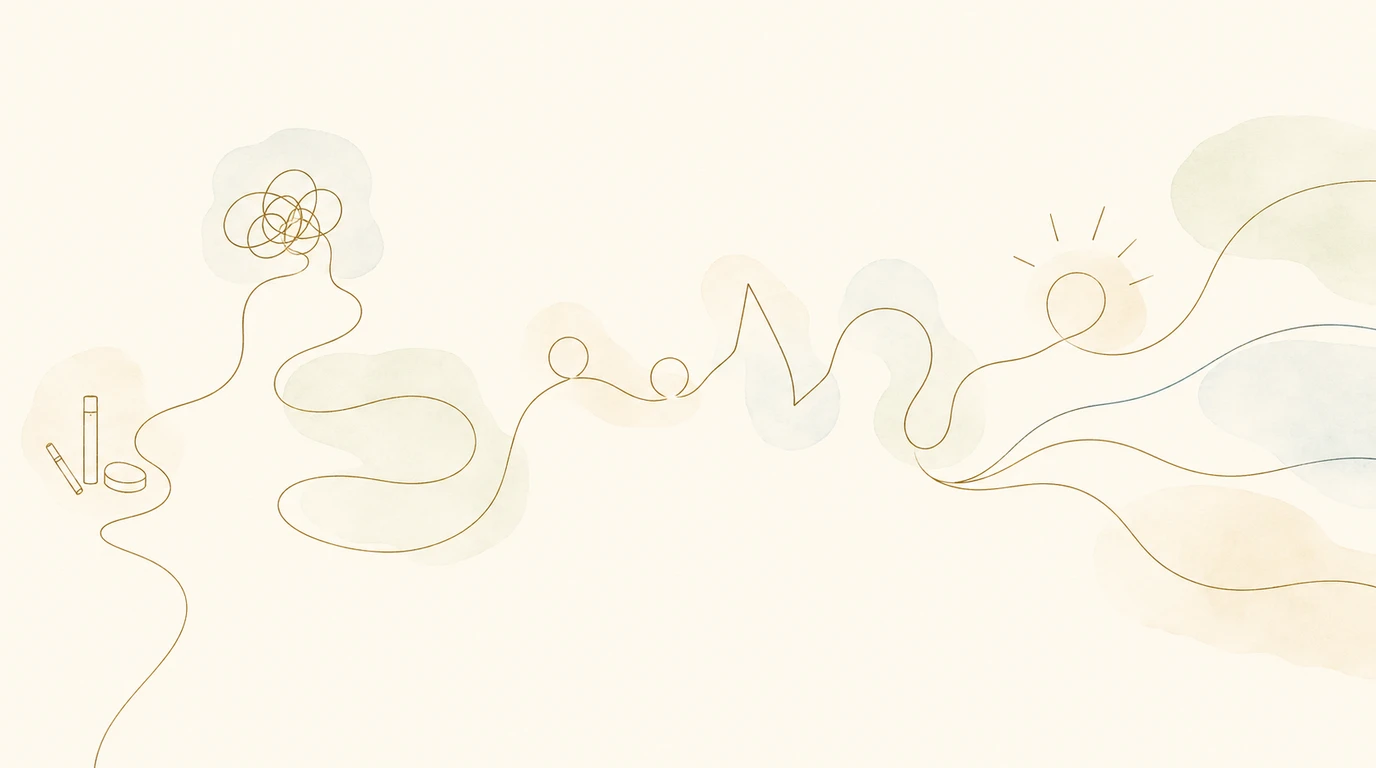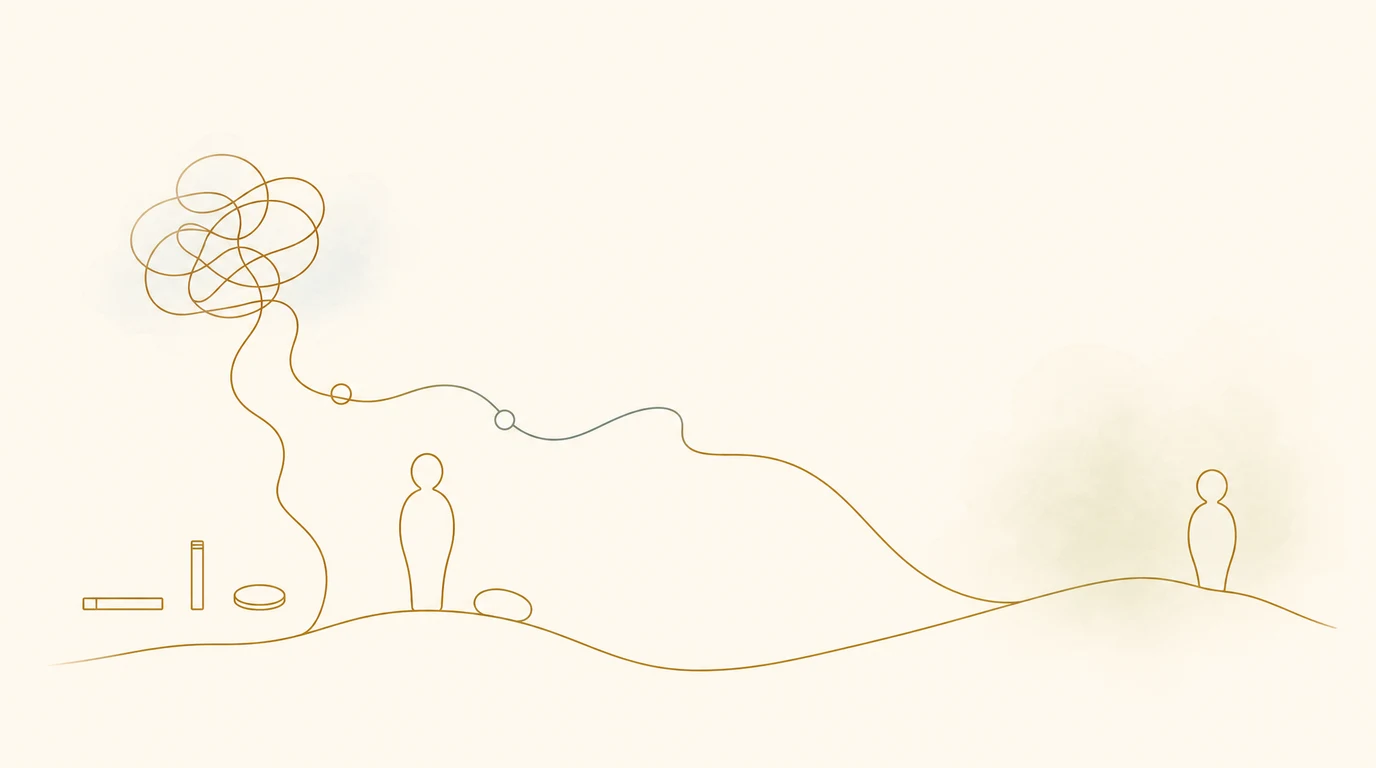

Nicotine cravings can return weeks or months after quitting, sometimes after a long stretch with very little desire to use. The episode may begin in a familiar place, during a social event, after a stressful change, or when you see a product that has been absent from daily life. Its arrival can feel surprising because the rest of recovery has become quieter.
The broad pattern still moves toward fewer and weaker cravings. A late episode often happens in an old situation that you have rarely experienced without nicotine. Identifying that situation and preparing for the next time gives it a useful place in your maintenance plan. The complete guide to nicotine cravings and triggers covers the wider trigger map.
Key takeaways
- Nicotine cravings usually decline sharply over time, and occasional episodes can continue for months or longer
- Acute withdrawal and late cue-driven cravings follow different time courses
- Rare places, people, emotions, smells, products, and routines may reappear after a long gap
- One strong craving gives information about one situation and says little about your average recovery week
- A maintenance response should name the cue, close access, use one prepared action, and update the plan afterward
- Direct long-term evidence focuses mainly on cigarettes, so product-specific claims for vaping and pouches remain limited
Why nicotine cravings can return months after quitting
Long-term cigarette research shows a steep overall decline in craving with room for individual variation. A longitudinal study followed 452 people quitting smoking and found that craving strength fell rapidly over 52 weeks. Among the smaller groups who remained in the study and abstinent, 13% reported strong cravings at six months and 34% reported some craving at twelve months, although none reported a strong craving at twelve months (Ussher et al., 2013). Participant numbers became much smaller at the later assessments, which limits the precision of those estimates.
Another survey included 403 former smokers who had stopped one to ten years earlier. Fifty-nine percent reported some desire to smoke during the previous year, and 11% met the study's definition of clinically significant prolonged craving: a strong desire occurring at least monthly (Hughes, 2010). The online survey relied on memory and included few people beyond five years of abstinence. It shows that occasional desire can persist and that frequent strong craving belongs to a smaller group.
These results describe cigarette smoking. They also separate two useful observations: recovery can improve substantially, and an individual craving can still appear later. The nicotine recovery timeline provides the broader month-by-month orientation.
Acute withdrawal and late cravings follow different courses
Nicotine withdrawal begins after nicotine levels fall and commonly affects mood, attention, sleep, appetite, and craving. Reviews generally place its peak in the first week, with many symptoms easing over two to four weeks (Hughes, 2007). Treatment and individual use patterns can change that course.
A late craving often appears as a more specific event. It may arrive when you enter a former smoking area, see a vape at a party, open a bag that once held pouches, drive an old route, or feel an emotion that was repeatedly followed by nicotine. The timing and setting become more informative than the number of days since quitting.
Use three questions to distinguish the immediate pattern:
- What changed in the minutes before the craving? Include place, people, emotion, smell, object, activity, and product access.
- Are several withdrawal symptoms present across the day? A broad cluster deserves a wider review, including treatment changes and other health explanations.
- Did the craving begin after one recognizable cue? A narrow cue-response plan fits that pattern.
New, persistent, or concerning physical and emotional symptoms deserve appropriate medical assessment. Only an appropriate assessment can determine their cause.
Cue memory can remain quiet until the context returns
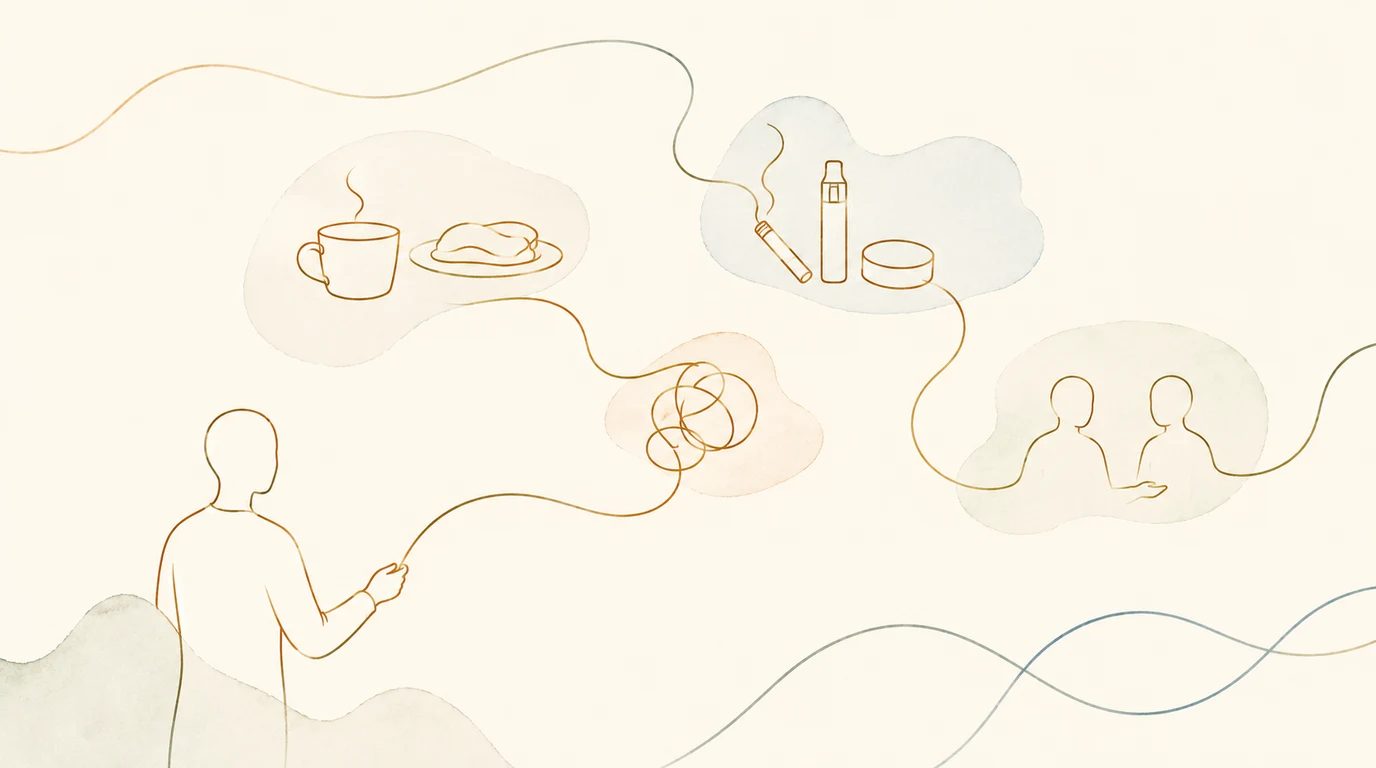
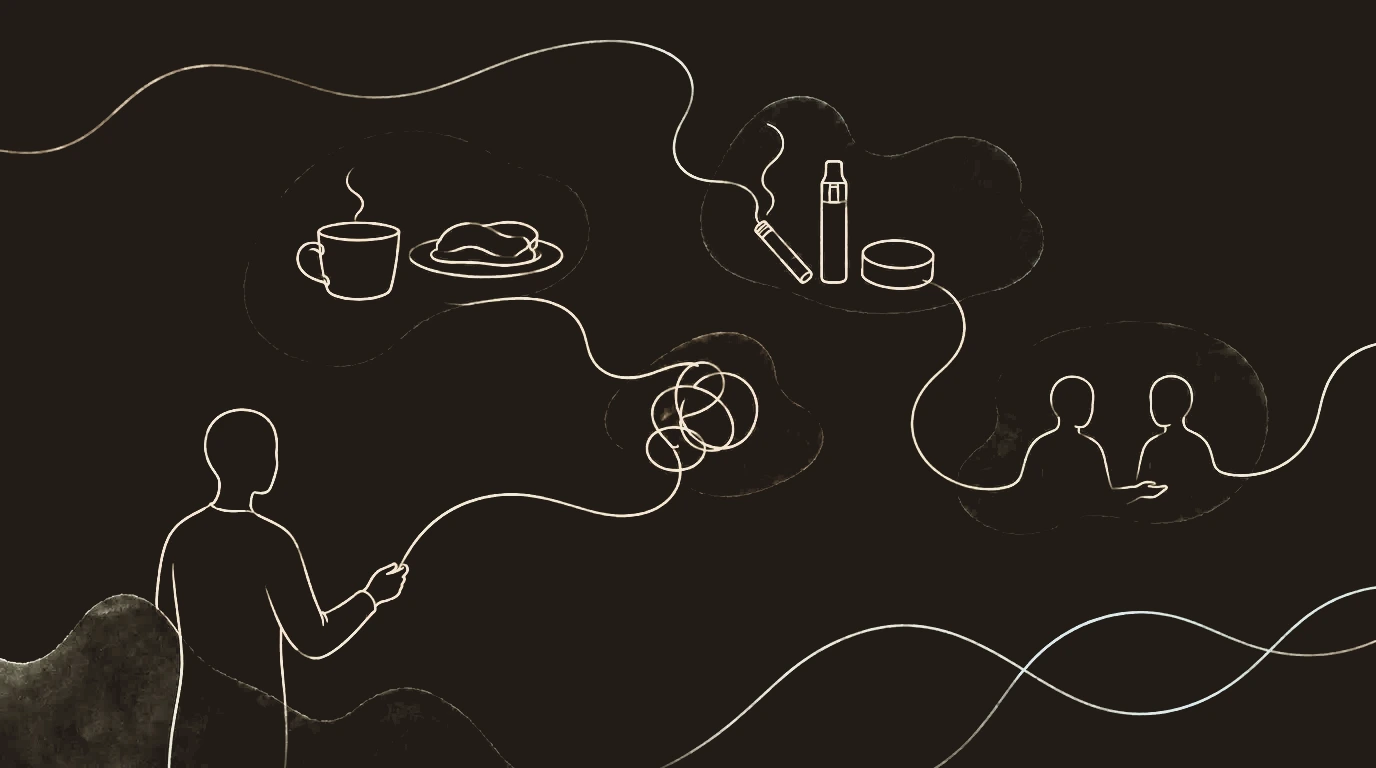
Nicotine use repeats in context. The same product may appear with coffee, driving, work breaks, alcohol, gaming, certain friends, or relief after conflict. Through repetition, details around the use can begin to predict the next nicotine dose.
The context can carry weight even when the product is out of sight. In a laboratory study, personalized smoking environments increased craving among people who smoked, and the authors discussed how responses can return when someone encounters an original use setting after learning different responses elsewhere (Conklin et al., 2010). This study involved current smokers in controlled conditions. It supports context-specific learning and leaves the exact long-term course uncertain.
Former smokers also show some continued response to smoking cues. A laboratory study comparing 20 former smokers, 30 current smokers, and 38 people with no smoking history found a modest increase in self-reported craving among former smokers after smoking-related videos. Their physiological response differed from that of current smokers (Balter et al., 2015). The sample was small and concerned visual cigarette cues.
A rare cue can therefore feel new to your current recovery even when it is old in your use history. Seasonal events, travel, reunions, grief anniversaries, a previous workplace, and the first warm day on a familiar patio may return only after many quiet weeks. Daily routines have already accumulated nicotine-free experience. In a rare context, you have had fewer chances to build new associations without nicotine.
Why one late craving can feel unusually strong
Surprise changes how an episode feels. Early in recovery, cravings may be expected and the response plan stays close at hand. Months later, nicotine may occupy very little attention. A sudden craving stands out against that quiet baseline.
One intense episode says little about the average week. In a study that collected real-time reports during a quit attempt and again one year later, 215 people who remained abstinent showed a large decline in average cigarette craving. Only 0.5% had an average score in the study's significant-craving range at one year (Schlam et al., 2012). An occasional spike can exist alongside a low average.
The craving may also include recognition. A smell, movement, or social scene can bring back a detailed expectation of nicotine use. That recognition can feel immediate and still leaves the next action open. Allow a few minutes for the current situation to become clear before drawing conclusions about the whole recovery.
Find the cue that had been missing
Record the late craving soon, with the details still available. Keep the entry short enough to use:
- Date and time: when it began
- Place: the room, route, venue, vehicle, or outdoor area
- People: who was present and who was using or discussing nicotine
- Activity: what you were doing immediately beforehand
- Internal state: stress, excitement, grief, boredom, fatigue, confidence, or alcohol effects
- Sensory detail: smell, flavor, hand movement, vapor, packaging, lighter, tin, or device sound
- Access: how quickly nicotine could have been obtained
- Intensity and change: the highest level and what happened over the following minutes
- Response: the action that created the most useful distance
Look for the element that has been absent since quitting. A familiar restaurant may be manageable until the group moves outside. A yearly trip may revive a driving routine. A difficult phone call may recreate an old relief sequence. The missing cue gives the maintenance plan its target.
When alcohol, offers, or other people's use are central, use the dedicated plan for alcohol and social nicotine triggers. That guide owns event geography, refusal language, transport, and planned exits.
Build a short maintenance response
Prepare one sequence that can run with little deliberation:
- Name the cue. Use a concrete sentence such as, "This is the old patio and alcohol cue."
- Close immediate access. Move away from the product, seller, shared supply, or usual buying route.
- Start one brief response. Choose a familiar action such as paced breathing, water, movement, a prepared distraction, or contacting a support person.
- Change the context. Move rooms, change seats, end the route, step away from the conversation, or leave the event when needed.
- Check again after the first response. Repeat the safe action or use the next part of your existing plan.
- Update the record later. Add the cue and the response that helped to your maintenance list.
The 5 Ds for nicotine cravings provides one ready-made brief sequence. Use it as written or choose another established response from your quit plan. This article's job is to connect that technique to the newly identified late cue.
Let ordinary nicotine-free repetitions update the pattern
Every encounter with a former cue has its own conditions. Some contexts become easier after several ordinary nicotine-free experiences. In analyses of two real-time smoking-cessation studies, repeated encounters with available cigarettes during continued abstinence were associated with a lower probability of lapse during later episodes (O'Connell et al., 2011). The studies were observational, cigarette-specific, and conducted during quit attempts. The effect of deliberate exposure remains uncertain.
Deliberately testing yourself with an available product adds avoidable risk. Let ordinary life provide manageable repetitions, and keep distance or leave when the setting exceeds your plan. Afterward, record what changed. The useful evidence is your actual response across repeated encounters.
Some rare contexts may remain infrequent. A plan can stay attached to them across long gaps: arrange your own transport for one annual event, avoid one shop during a yearly trip, or ask one friend to keep a device away from your seat.
Product differences and evidence limits
Most long-term craving research concerns cigarettes. Studies often examine smoke, packs, ashtrays, other people smoking, and places where cigarettes are available. Direct long-term evidence after stopping exclusive vaping, commercial nicotine pouches, or smokeless tobacco is much thinner.
The learning framework can still guide observation across products. A vape may be linked with a hand movement, flavor, device sound, charging location, gaming setup, or constant pocket access. A pouch or oral-tobacco craving may be linked with a tin, mouth sensation, work task, driving, or discreet social use. These examples are practical possibilities drawn from product routines. Cigarette studies remain the only well-developed source for long-term timelines.
Track the form the craving takes and the cue that preceded it. Product-specific details make the response more precise and avoid imposing a universal timeline.
When recurring late cravings need more support
Occasional cravings and frequent disruptive cravings call for different levels of response. Consider additional support when cravings:
- occur most days or become more frequent
- repeatedly bring you close to obtaining nicotine
- appear alongside sustained low mood, severe anxiety, or other concerning symptoms
- follow a change in medication, nicotine treatment, substance use, sleep, or health
- are difficult to manage with your current plan
- have already led to repeated nicotine use
A clinician, pharmacist, counsellor, or quitline can review current symptoms, treatment, product history, and support options. The nicotine quit-aids guide maps the main treatment and behavioral-support categories. Your choice can then reflect your health and circumstances.
If nicotine use has already happened, the nicotine slip or relapse guide covers immediate next steps. The late-craving plan applies during your response to the craving and preparation for the next cue.
A late craving can become a specific maintenance entry: the cue, the access route, the first response, and the condition for leaving. That entry stays available even when months pass before the situation returns.