If you grew up in a faith community, you may have absorbed two messages about porn: it violates your values, and wanting it means something is wrong with you.
The second message can make recovery heavier than it needs to be. Moving from "this behavior does not reflect my values" to "I am fundamentally broken" often increases secrecy, despair, and the urge to escape.
Religious guilt can motivate change when it leads to repair. It stops being useful when it becomes a judgment about who you are.
Key takeaways
- Religious guilt becomes destructive when it shifts from "I did something wrong" (conviction) to "there is something wrong with me" (shame)
- The shame-relapse cycle is intensified by faith contexts because the perceived moral stakes feel higher
- Prayer and spiritual discipline are valuable recovery tools, but they work best alongside practical strategies, not as replacements for them
- Your faith tradition almost certainly teaches both moral standards and compassion for failure; recovery requires holding both
- Talking to a faith leader or therapist who understands compulsive behavior can break the isolation that shame creates
Conviction and shame
This distinction matters in faith-based recovery, and it echoes a broader psychological truth about shame and guilt in recovery.
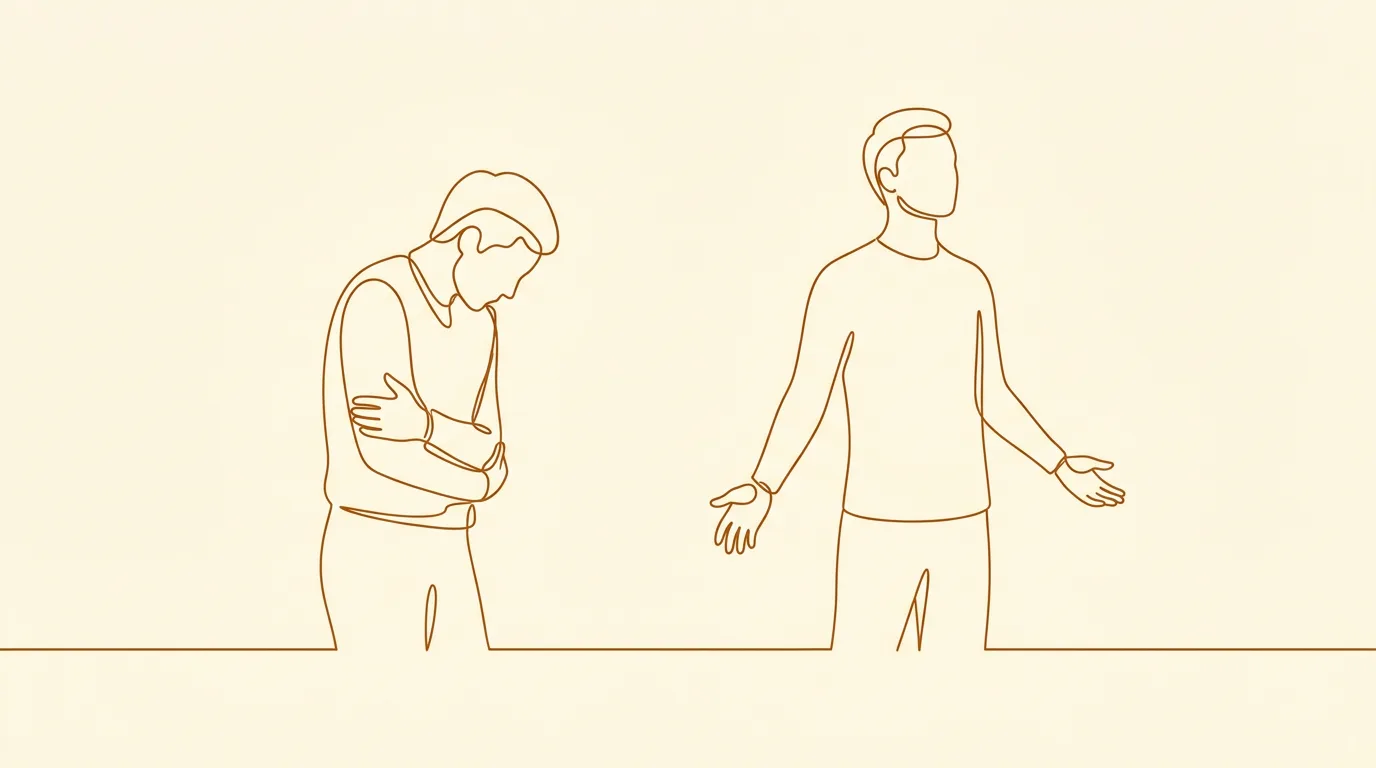
Conviction says: "That behavior doesn't align with my values or my faith. I want to do differently."
Shame says: "I am dirty, beyond help, and disappointing to God. I keep failing because something is deeply wrong with me."
Conviction looks forward. It identifies a gap between behavior and values, and it motivates closing that gap. It's uncomfortable, but it's productive.
Shame looks inward and downward. It identifies the person (not the behavior) as the problem. And when the person is the problem, change feels impossible, because you can't escape yourself.
Most people in faith-based recovery experience both, often within the same hour. The work is not eliminating guilt entirely. Your moral convictions are yours to keep. The work is learning to notice when conviction tips into shame and choosing a next step before the spiral takes over.
Why faith contexts intensify the shame cycle
The shame-relapse cycle (relapse, shame, emotional pain, urge to escape, relapse) can affect anyone dealing with compulsive porn use. Faith contexts can add specific pressure points.
Higher perceived stakes
If you believe porn use is a moral and spiritual failure, each relapse may carry more weight than a health or habit concern alone. A nationally representative study found that religiosity and moral incongruence were among the strongest predictors of self-perceived pornography addiction, independent of actual use frequency. That distinction also matters clinically because moral distress and behavioral loss of control need separate assessment. The emotional load matters because intense distress often creates a stronger urge to escape.
Purity framing
Many faith traditions use purity language around sexuality: pure or impure, clean or contaminated. After a relapse, that binary can create all-or-nothing thinking. If one slip already makes you feel "fallen," the distance between one relapse and five can feel smaller than it really is. This overlaps with the what-the-hell effect: once a rule feels broken, the brain is more likely to abandon the rule completely.
Community expectations
In many faith communities, sexual sin carries particular weight. The fear of being discovered, of losing standing, of being judged by people whose opinion you value, adds a layer of secrecy that amplifies shame. You may feel unable to confide in the very community that's supposed to support you.
Spiritual isolation
Many people interpret their inability to stop as evidence that God has abandoned them, that their prayers are not being heard, or that their faith is insufficient. That kind of spiritual isolation can be painful and destabilizing.
If this describes your experience, separate the struggle from the verdict you are placing on yourself. A compulsive pattern is still a real problem to address, but the struggle itself is not proof that you are beyond grace or help.
What faith gets right about recovery
Once shame is addressed, faith traditions can support recovery in concrete ways.
A framework of meaning
Recovery is easier when it connects to something larger than "I want to stop this habit." Faith provides a framework where your choices matter, where your character is being formed, where there's a reason to endure difficulty. That framework, when it motivates rather than condemns, is a genuine asset.
Community and accountability
At their best, faith communities offer exactly what recovery needs: people who know your struggle, check in, and encourage without judging. An accountability partner from your faith community can be valuable, as long as the dynamic is supportive rather than supervisory.
Practices of reflection
Prayer, meditation, scripture study, confession: these are practices of self-examination and honesty. They can be powerful tools for understanding your triggers, processing emotions, and maintaining commitment, when they're oriented toward growth rather than self-punishment.
The language of forgiveness
Many faith traditions have language for forgiveness, second chances, and grace after failure. This is not a loophole for careless behavior. It is a way to keep failure from becoming final. If your faith teaches forgiveness but you cannot receive it yourself, that gap is worth exploring with someone who understands both faith and compulsive behavior.
What faith communities sometimes get wrong
This section names patterns that, when present, make recovery harder.
When prayer is treated as the only tool
The advice to pray more, read scripture more, or increase devotion as the sole response to compulsive behavior is often well-intentioned but incomplete. Compulsive habits usually involve cues, access, reinforcement, emotional regulation, and repetition. Spiritual effort can matter deeply, but it may not address every part of that loop.
If prayer has been your only response and the pattern keeps returning, the response may need more tools. Understanding how porn rewires your brain can help you see why willpower and spiritual discipline, while valuable, benefit from being paired with practical strategies.
Confession without change
Some faith contexts emphasize confession (to God, to a leader, to a group) as the primary response to sin. Confession is valuable for breaking secrecy and shame. But if the cycle becomes confess, feel relieved, return to the behavior, confess again, the confession needs to be paired with a concrete next step.
When accountability becomes punitive
Accountability becomes harmful when the partner or group responds to relapse with disappointment, withdrawal, or increased monitoring instead of compassion and practical help. If your accountability structure makes you want to hide relapses rather than report them, it needs to change. Good accountability makes honesty possible.
Shame-based messaging
Some teaching on pornography relies heavily on disgust, contamination, and unworthiness as motivators. That may produce short-term compliance, but it can also produce long-term shame cycles. If the messaging you absorbed tells you that porn use makes you disgusting to God, examine that message with someone steady. Shame tends to drive secrecy, and secrecy makes change harder.
A faith-integrated recovery
The goal is to integrate your faith with effective recovery.
Hold your convictions without heavy self-condemnation
You can believe porn is wrong, that it violates your values and your faith, while also treating yourself with the compassion your tradition teaches. Those two can sit together. Your faith almost certainly teaches that people fail, that grace exists for failure, and that compassion is a virtue. Apply those teachings to yourself as readily as you'd apply them to someone else.
Combine spiritual and practical tools
Create a recovery structure that includes both. Spiritual practices (prayer, meditation, scripture, community) address meaning and motivation. Practical tools (blocking software, trigger identification, environmental design, physical resets) address access, cues, and behavior. Together, they cover more of the pattern.
Define progress by your response
If progress means never experiencing an urge, you may feel like a failure every day. Urges are neurological events; they happen. A better measure is what you do with the urge: whether you surf it, redirect, use your tools, and move forward. This matters in faith contexts where the bar can be set at total purity of thought, a standard that creates constant perceived failure.
Find the right support person
Not every pastor, priest, imam, or faith leader is equipped to help with compulsive sexual behavior. Some will offer compassion and practical wisdom. Others may inadvertently deepen your shame. If your first conversation does not go well, try a different person. A therapist who integrates faith and clinical approaches can be an excellent option.
Forgive yourself after setbacks
When a relapse happens, the response matters. If the response is shame, self-hatred, and spiritual despair, the relapse is more likely to cascade. If the response is honest acknowledgment, self-compassion, learning, and recommitment, the relapse becomes information you can use.
Your faith teaches forgiveness. Practice receiving it, not just knowing about it.
When the guilt won't let go
Sometimes, even after separating conviction from shame intellectually, the guilt keeps returning. It may show up in your body, during prayer, or in quiet moments when you are trying to move forward.
If this is where you are:
- Name the guilt specifically. "I feel guilty because..." Write it down. Vague guilt is harder to address than specific guilt.
- Ask whether the guilt is pointing forward or backward. Forward-pointing guilt says "here's what I want to change." Backward-pointing guilt says "here's why I'm terrible." Practice following only the forward-pointing kind.
- Talk to someone. A therapist, a trusted friend, a faith leader who understands compulsive behavior. Guilt that stays inside your head intensifies. Guilt that's spoken to another person who responds with grace loses much of its power.
- Feelings aren't facts. Feeling unforgiven is not the same as being unforgiven. If your faith teaches that forgiveness is real, trust the teaching even when the feeling hasn't caught up.
- Give yourself the same grace you'd give someone else. If a friend told you they were struggling with this, would you respond with the contempt you're directing at yourself? Almost certainly not. The compassion you'd offer them is the compassion you deserve.
Your faith can be part of the solution
The tension between faith and porn addiction is real, but it can be worked with. Your beliefs can provide meaning, community, accountability, and motivation that secular approaches sometimes lack. The key is making sure your faith supports repair instead of deepening shame.
That balance matters. A recovery that honors your values while treating you as a whole, worthy, imperfect person is easier to sustain.
For the foundational recovery framework, including environment design, habit replacement, and the full timeline of change, start with the complete guide to quitting porn. And if shame is the primary barrier right now, read Quitting porn without shame next.