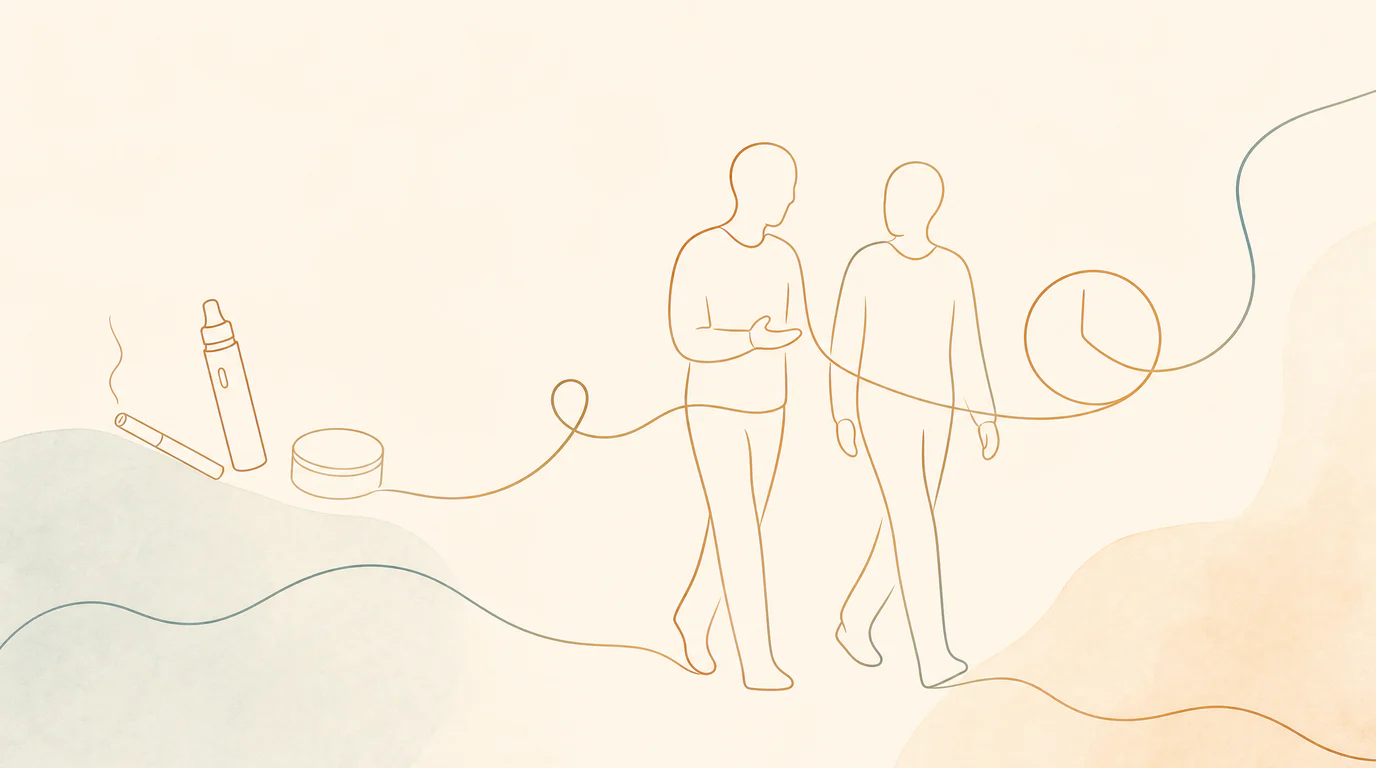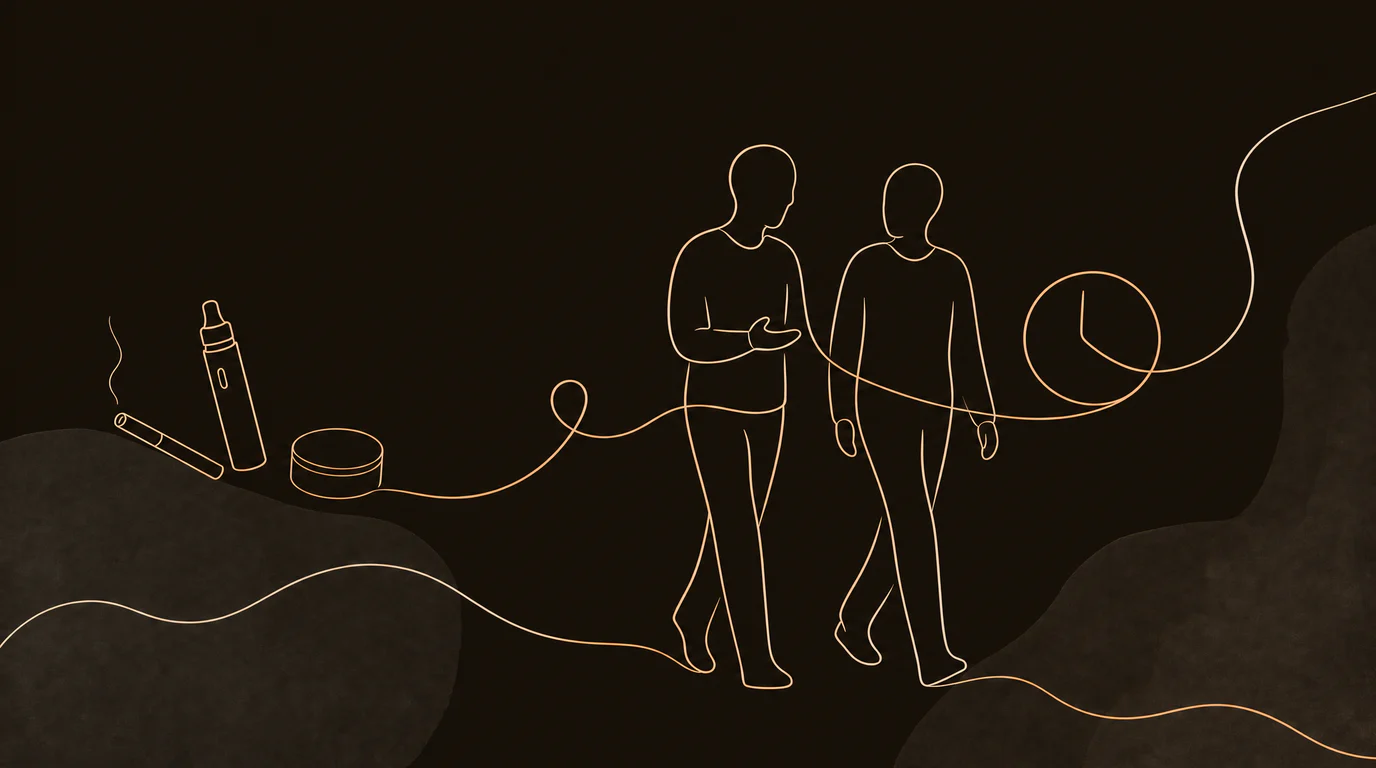
Nicotine withdrawal irritability can affect conversations before you fully notice the change in your mood. A question may feel intrusive, a delay may feel intolerable, or an ordinary disagreement may escalate quickly. The people around you may see a shorter tone, interruption, criticism, or withdrawal from contact.
The withdrawal context can explain why your tolerance is lower. You remain responsible for your words, actions, and repairs. A relationship plan makes both parts easier to hold at once by defining how you will communicate, pause, return, and respond when an interaction goes badly.
This guide stays with communication and relationship protection. The acute withdrawal mood guide covers symptom timing, anxiety, restlessness, concentration difficulty, and day-to-day management in greater depth.
Key takeaways
- Tell close people about the temporary risk of irritability and give them a specific communication plan
- Learn your earliest signs of a sharper response and begin the pause before the argument escalates
- Make every pause include a phrase, a place, a length, and a return time
- Keep clear limits around insults, threats, intimidation, property damage, and unsafe behavior
- Repair a difficult interaction by naming the behavior, acknowledging its effect, apologizing, and changing one part of the plan
Why nicotine withdrawal irritability can reach relationships
Irritability can lower your tolerance for sound, repeated questions, mistakes, delays, and competing demands. Close relationships contain many of those ordinary moments. They also contain familiar patterns, so an abrupt tone can quickly bring up older conflict.
Experimental evidence supports a withdrawal effect on mood. In a study of 96 women who smoked, participants were randomly assigned to 31 days of cigarette abstinence or continued smoking. Anger and irritability increased in the abstinence group and remained higher than in the smoking group across the study period (Gilbert et al., 2002). The sample comprised women who smoked cigarettes. Individual duration can differ from the group pattern.
Personal differences also matter. In a study of smokers during the first 24 hours of a quit attempt, higher trait anger was associated with larger increases in state anger, withdrawal symptoms, and cravings, along with earlier relapse (al'Absi, Carr, and Bongard, 2007). The study focused on cigarettes and associations among anger, withdrawal, stress response, and relapse. It supports planning around your usual anger pattern as well as the withdrawal window.
Explain the plan before the difficult window
Talk with close people before quit day or during a calm period. Keep the explanation brief and focus on what you will do.
You might say:
My patience may be lower during the early part of nicotine withdrawal. I want to protect how we speak to each other. If I notice my tone getting sharp, I will say that I need a 20-minute pause and tell you when I will return.
Include four points:
- The context: you are quitting nicotine and irritability may rise temporarily.
- Your early response: you will pause when you notice specific warning signs.
- The return: you will resume the conversation at an agreed time.
- The boundaries: both people can end an interaction that becomes insulting, threatening, or unsafe.
Ask what the other person needs during that period. They may want a clear return time, freedom to take their own pause, or a promise that major decisions wait for a calmer conversation. The guide to asking for support can help you build broader requests for encouragement, practical help, privacy, and planned contact.
Notice your early signs before the conflict grows
The useful warning signs appear before shouting or a complete shutdown. Identify the first changes in your body, speech, attention, and behavior.
Possible signs include:
- speaking faster or louder
- interrupting or repeating the same point
- tightening your jaw, shoulders, or hands
- reading a neutral question as criticism
- losing track of what the other person said
- feeling a strong need to settle the issue immediately
- using absolute language about the person or relationship
- pacing, slamming objects down, or driving more aggressively
Choose two signs that reliably appear early. Share them with the people involved. A close person can use a neutral phrase such as, "Your voice is getting louder," while you agree to treat that phrase as the start of the pause.
Research on partner interaction shows why early behavior deserves attention. In a pilot study of 21 smokers and their partners, failure to quit was associated with negative behavior from the person quitting, including interruptions, criticism, and rejection of help (Ginsberg, Hall, and Rosinski, 1991). The sample was very small and observed interaction before cessation, so it supplies a direct clue about behavior without defining a universal conflict pattern.
Build a pause with a return time
A pause works best when both people understand its structure. Leaving without explanation can feel like abandonment. Continuing the argument while highly activated can create more material to repair.
Define the pause in advance:
- Phrase: "I am getting sharp and need a pause."
- Place: another room, a short walk, a quiet outdoor area, or a parked location if you are traveling
- Length: choose a realistic period, often 15 to 30 minutes for an ordinary conflict
- Contact: decide whether messages wait until the pause ends
- Return: name the exact time or event when you will reconnect
- Extension: send a brief update if you need more time, along with a new return time
During the pause, lower stimulation and let your response settle. Walking, slow breathing, water, food, a shower, or a simple task may help, depending on the setting. Avoid rehearsing a stronger argument or sending a series of messages.
Return at the time you named. If the topic still feels too charged, agree on a later time and write down the point that needs discussion. The return keeps the pause trustworthy.
Keep clear behavior boundaries during withdrawal
People around you can understand withdrawal and still require respectful treatment. Decide the limits before conflict. Common boundaries include insults, contempt, threats, intimidation, blocking a doorway, throwing or breaking objects, reckless driving, unwanted monitoring, and repeated messages after someone has ended the conversation.
Each person can state a boundary in terms of their own action:
If the conversation includes insults or shouting, I will end it and leave the room. We can try again at the agreed time.
If I feel unable to drive safely, I will pull over or hand the driving to someone else.
Keep children outside the role of managing an adult's withdrawal. Give them a simple age-appropriate explanation if your routine changes, and arrange another adult's help when your patience is especially low. At work, use a narrower plan: postpone a sensitive discussion, take a brief break, or give a supervisor the practical information relevant to the situation.
The supporter-facing guide to helping someone quit nicotine gives the other person a separate view of proportionate support and personal boundaries.
Repair a sharp interaction specifically
A repair begins after immediate safety and activation have settled. Name what you did, describe its likely effect, and take responsibility in plain language.
A direct repair can follow four steps:
- Behavior: "I raised my voice and interrupted you several times."
- Effect: "That made it hard for you to speak and changed the tone of the evening."
- Apology: "I am sorry."
- Plan change: "Next time I will start the pause when I notice myself repeating the same point."
Withdrawal can be part of the context you share after the apology. Keep it separate from responsibility: "My patience has been lower during withdrawal. I am changing how early I take the pause."
Ask whether a practical repair is needed. You may need to restart the conversation, correct something said in anger, replace a damaged item, rearrange a task, or give the other person space. Their reaction and timeline remain theirs.
Partner research supports attention to the balance of interaction. Among 221 people assessed one month after a smoking quit date, a higher ratio of positive to negative partner behavior was associated with abstinence (Cohen and Lichtenstein, 1990). The study measured an observational association. The effect of one repair remains untested. The finding supports keeping criticism, interruption, and undermining behavior visible in the plan.
Save the underlying issue for a calmer conversation
Irritability can amplify a real concern. Money, household work, privacy, parenting, work pressure, or an older relationship problem may still need attention after your mood settles. Write the topic down during the pause so it remains available.
When you return, separate the issue from the way it was expressed:
I still want to discuss how we divide the evening tasks. I want to do that at 7 p.m. when we both have time.
Use one topic, one recent example, and one request. Major relationship decisions made during the sharpest withdrawal window deserve a later review unless immediate safety requires action. Repeated conflict that predates quitting may need its own support outside nicotine recovery.
Adjust the plan as the withdrawal period changes
Review the plan after several real interactions. Ask which warning sign appeared first, whether the pause began early enough, whether the return happened, and what repair remained unfinished.
The plan may change by week or setting. You may need more quiet after work during the early days, then less later. A work meeting may require a written note before you respond. A family routine may need another adult to cover one demanding period. Keep the changes tied to observed friction.
If ongoing stress or anxiety continues to drive sharp interactions after the acute withdrawal period, the nicotine, stress, and anxiety guide covers the longer relief cycle and steadier coping options.
When irritability needs more help
Seek timely professional support when irritability stays severe, keeps worsening, feels very different from your usual behavior, or repeatedly damages important relationships. A clinician can help assess withdrawal alongside sleep, anxiety, depression, medication changes, other substance use, and existing health conditions.
Urgent local help is appropriate when you fear you may hurt yourself or someone else, another person feels unsafe, threats occur, property is damaged, driving becomes dangerous, or behavior becomes violent. Create distance from weapons, vehicles, and the immediate conflict when you can do so safely, then contact emergency or crisis support available in your area.
The relationship plan remains simple: explain the risk early, notice your first signs, pause with a return time, respect boundaries, and repair specific harm. Those actions protect the people around you while your withdrawal experience changes.