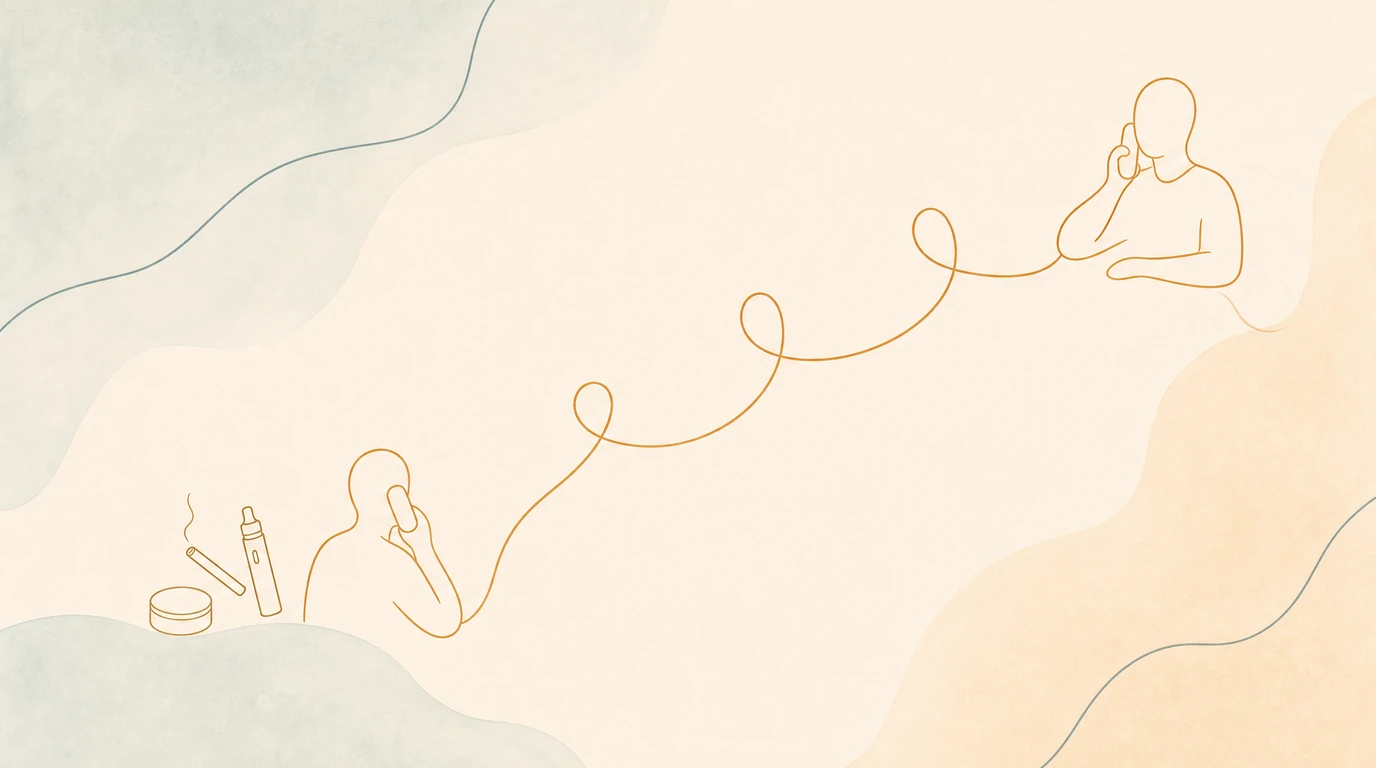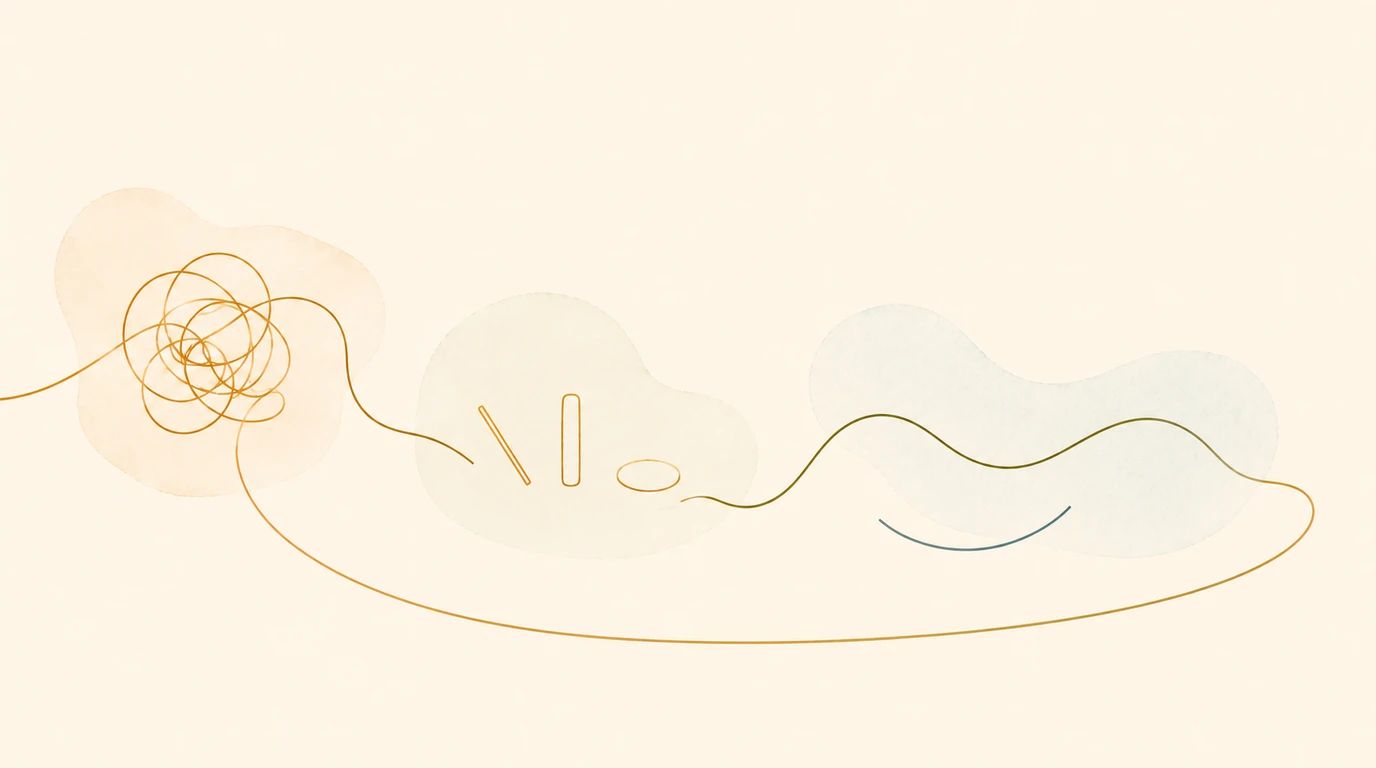
Nicotine, stress, and anxiety can become linked in a way that feels convincing. A cigarette, vape, or pouch may bring a quick sense of relief during a difficult moment. Part of that change can come from nicotine, part from easing discomfort as nicotine levels fall, and part from the familiar pause or routine around using it. The stress that existed before the dose may still be there afterward.
Understanding these layers helps you make sense of your own experience. It also opens room for coping methods that address the stressor, the body state, and the learned nicotine routine separately.
Key takeaways
- Nicotine can change mood and alertness briefly, while regular use can add withdrawal-related tension between doses.
- A repeated dose-relief pattern can teach your mind to expect nicotine whenever stress or anxiety rises.
- Work pressure, conflict, grief, uncertainty, and anxiety conditions remain real even when nicotine becomes part of the response.
- Early withdrawal can temporarily increase anxious feelings, while longer-term smoking-cessation research generally points toward improved mental health.
- Steadier coping addresses the immediate body state, the practical stressor, and the need for support.
- Persistent or severe anxiety deserves professional attention alongside nicotine recovery.
Why nicotine can feel calming
Nicotine has direct psychoactive effects. It can change alertness, attention, mood, and the sense of reward. A broad review of nicotine addiction describes pleasure, stimulation, and mood modulation among the effects people report, with anxiety and stress relief often becoming part of the subjective experience (Prochaska and Benowitz, 2019). The same dose can feel different depending on your dependence, recent use, setting, expectations, and current level of distress.
The routine around nicotine adds another layer. Going outside, stepping away from a screen, sitting in a car, taking several slower breaths while vaping, or pausing a tense conversation can change the moment. The pause may reduce stimulation or create distance from a problem. Nicotine then receives credit for the entire shift, even when the setting and ritual contributed.
Regular use also creates a third source of relief. As nicotine levels decline, some people develop restlessness, irritability, tension, difficulty concentrating, or anxious feelings. Another dose can ease that discomfort quickly. Human laboratory research found that 24 hours of nicotine deprivation increased anxiety responses during unpredictable threat among dependent smokers (Hogle, Kaye, and Curtin, 2010). Relief after using nicotine can therefore include relief from a state partly produced by dependence.
These effects can happen together. You may feel a direct shift from nicotine, receive a useful break from the situation, and ease early withdrawal at the same time. A clear explanation has room for all three.
How the nicotine relief cycle develops
The cycle often begins with a reliable sequence:
- Stress, anxious arousal, or falling nicotine levels create discomfort.
- You use nicotine and experience a change in body state, attention, or mood.
- Your mind records nicotine as the action that brought relief.
With repetition, the expectation can become strong. A difficult email, an argument, a crowded commute, an uncertain wait, or a quiet period with racing thoughts may begin to prompt nicotine automatically. The expectation itself can narrow your attention toward the product and make other responses harder to remember in the moment.
Daily mood research on smoking has long described a pattern of worsening tension between cigarettes and temporary normalization after smoking. The review that brought this pattern together concluded that nicotine dependence can add stress through repeated depletion and relief across the day (Parrott, 1999). That model is most established for cigarettes. Frequent vaping and pouch use can create their own repeated dosing patterns, although direct product-specific evidence is less developed.
Expectations can also affect quitting. In a prospective study of 1,809 daily smokers who wanted to quit, people with previous quit attempts who expected greater stress after stopping had lower odds of later abstinence (Skov-Ettrup et al., 2017). An expectation can feel like a prediction about what you can handle. Recovery gives you a chance to test it against real experience and build other ways to change your state.
For the broader physical, learned, and emotional dependence model, see why nicotine is hard to quit. This article stays focused on the stress and anxiety loop.
Stress outside the nicotine cycle is still real
Nicotine dependence can add a repeating layer of discomfort, yet it rarely explains every difficult feeling. Deadlines, unstable work, money pressure, caregiving, discrimination, relationship conflict, chronic pain, grief, trauma, loneliness, sleep loss, and uncertainty can all remain present. Some people also live with an anxiety disorder or another mental-health condition.
The relationship between nicotine and anxiety runs in several directions. A systematic review of 47 population studies found a complex, inconsistent association. Some anxiety disorders may increase vulnerability to smoking and dependence, while smoking and nicotine dependence may increase risk for some anxiety disorders (Moylan et al., 2012). Observational evidence cannot assign one simple cause to an individual person's anxiety.
This distinction changes the recovery task. Removing nicotine may reduce withdrawal fluctuations and weaken one learned response. It leaves practical and mental-health needs that deserve their own care. A workplace problem may require a boundary or a conversation. Financial stress may require a concrete plan. Persistent panic may require clinical assessment. Grief may require time and support.
You can separate the layers with three questions after a stressful nicotine episode:
- What was happening before the discomfort rose?
- What changed during the nicotine pause?
- What remained unresolved ten minutes later?
The answers can show whether the dose mainly eased withdrawal, whether the pause helped, whether the original stressor remained active, or whether several layers were present together. This is a small observation exercise, separate from the full nicotine cravings and triggers guide.
What may change after quitting
The early period can feel uneven. Anxiety, irritability, restlessness, sleep disruption, and concentration problems can rise during acute withdrawal. The complete timing and symptom boundaries belong in the nicotine withdrawal symptoms guide. A temporary increase during this period gives limited information about how you will feel later.
Beyond early withdrawal, the strongest evidence comes from people who stopped smoking. A 2021 Cochrane review found that smoking cessation was associated with greater reductions in anxiety, depression, and stress, plus improvements in positive affect and mental wellbeing, compared with continuing to smoke (Taylor et al., 2021). The authors rated certainty from very low to moderate across outcomes because most included evidence was observational.
That evidence supports cautious optimism. It cannot promise a specific emotional outcome or timeline, and it says less about exclusive vaping, pouches, or other nicotine products. Someone with an existing anxiety condition may still need treatment after nicotine withdrawal settles. Someone facing major external stress may continue to feel stressed. Quitting removes one repeating cycle and creates space to see the remaining needs more clearly.
Changes can arrive gradually. You may first notice fewer sharp shifts between feeling settled after a dose and feeling tense before the next one. Later, a familiar stressor may occur without an automatic nicotine response. Those observations can be more informative than expecting a single moment when anxiety disappears.
Build coping that matches the source of stress
A broader coping system works across three levels. You can build it gradually and keep each part simple.
Change the immediate body state
Stress can show up as muscle tension, shallow breathing, restless movement, warmth, nausea, or a racing pulse. A brief response can lower the intensity enough to choose the next action. Options include walking for a few minutes, taking a quiet pause, using slow breathing, stretching, drinking water, or reducing noise and screen input. Choose one or two options you can actually use in your common settings.
Address the practical stressor
After the immediate intensity drops, identify one action connected to the problem. You might clarify a deadline, write the first step of a task, leave an unsafe conversation, ask for help, schedule an appointment, review a bill, or protect a period for sleep. Some stressors require ongoing work, and a tiny first action can still reduce uncertainty.
Add human or professional support
Stress can narrow perspective and make an old response feel like the only available one. A trusted person, counselor, clinician, pharmacist, or quit-support service can help you plan for recurring situations. Support can address nicotine recovery while a mental-health professional handles anxiety that reaches beyond it.
A compact plan could contain one body response, one practical action, and one person to contact. Keep it available where the cycle usually begins. The goal is repeated access to several responses, allowing experience to weaken the expectation that nicotine provides the only reliable shift.
When anxiety deserves professional help
Consider talking with a healthcare or mental-health professional when anxiety is intense, keeps worsening, lasts beyond the expected withdrawal period, interferes with sleep or daily functioning, causes repeated panic, or leads you to avoid important parts of life. A clinician can assess nicotine withdrawal alongside anxiety conditions, medication effects, caffeine, sleep, physical health, and current stressors.
Seek urgent local help if anxiety comes with thoughts of self-harm, feeling unable to stay safe, chest pain, severe breathing difficulty, fainting, or another possible medical emergency. These situations need direct assessment.
Professional care and nicotine recovery can happen together. You can share which products you use, how often you use them, what happens as a dose wears off, what symptoms existed before nicotine use, and how the pattern changes during abstinence. That information helps separate a short withdrawal effect from a broader problem.
A steadier view of relief
The relief you feel after nicotine can contain several real changes: a psychoactive effect, a break from the situation, a familiar ritual, and relief from falling nicotine levels. Each part points toward a different recovery need.
Over time, the most useful question becomes specific: which part of this moment needs attention? Your body may need a pause, the stressor may need an action, and persistent anxiety may need support. Building those responses gives you more ways to handle the moment as the nicotine cycle loses strength.