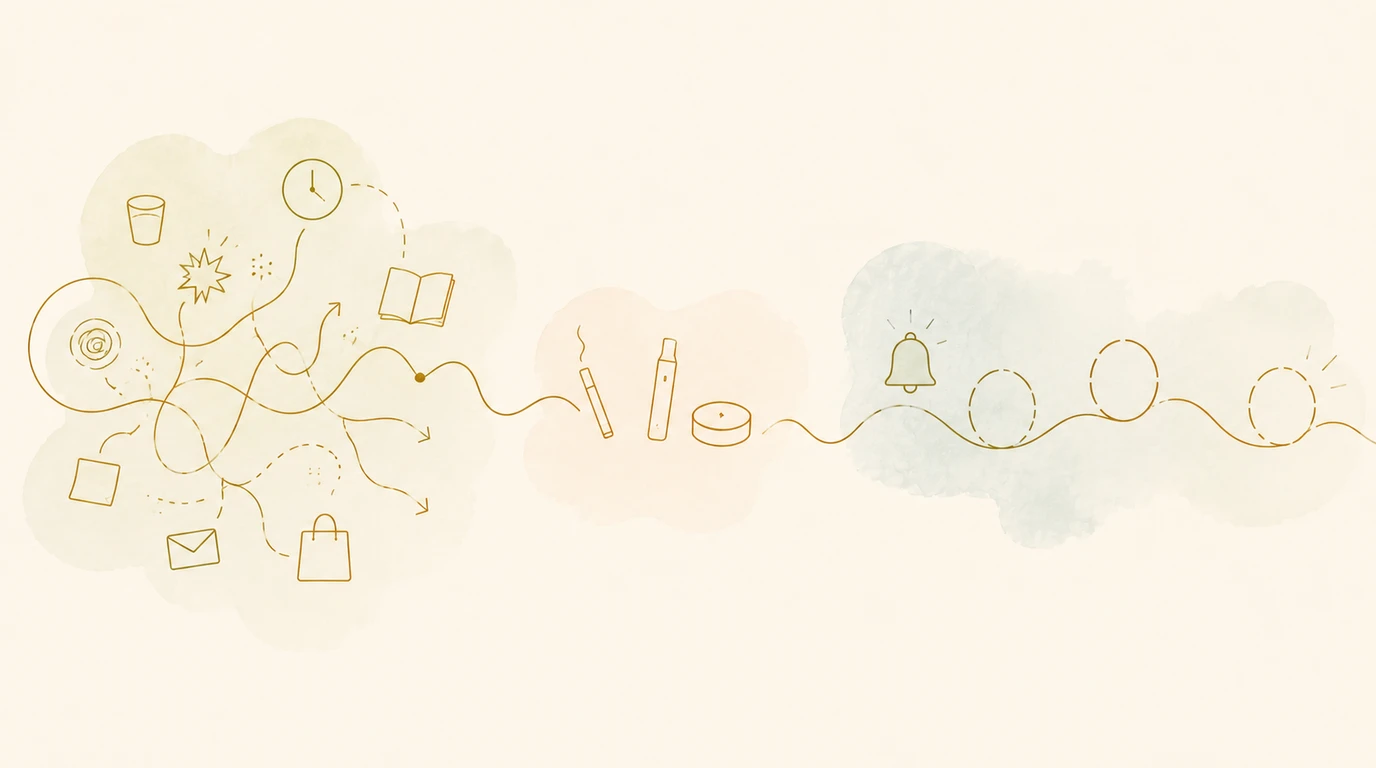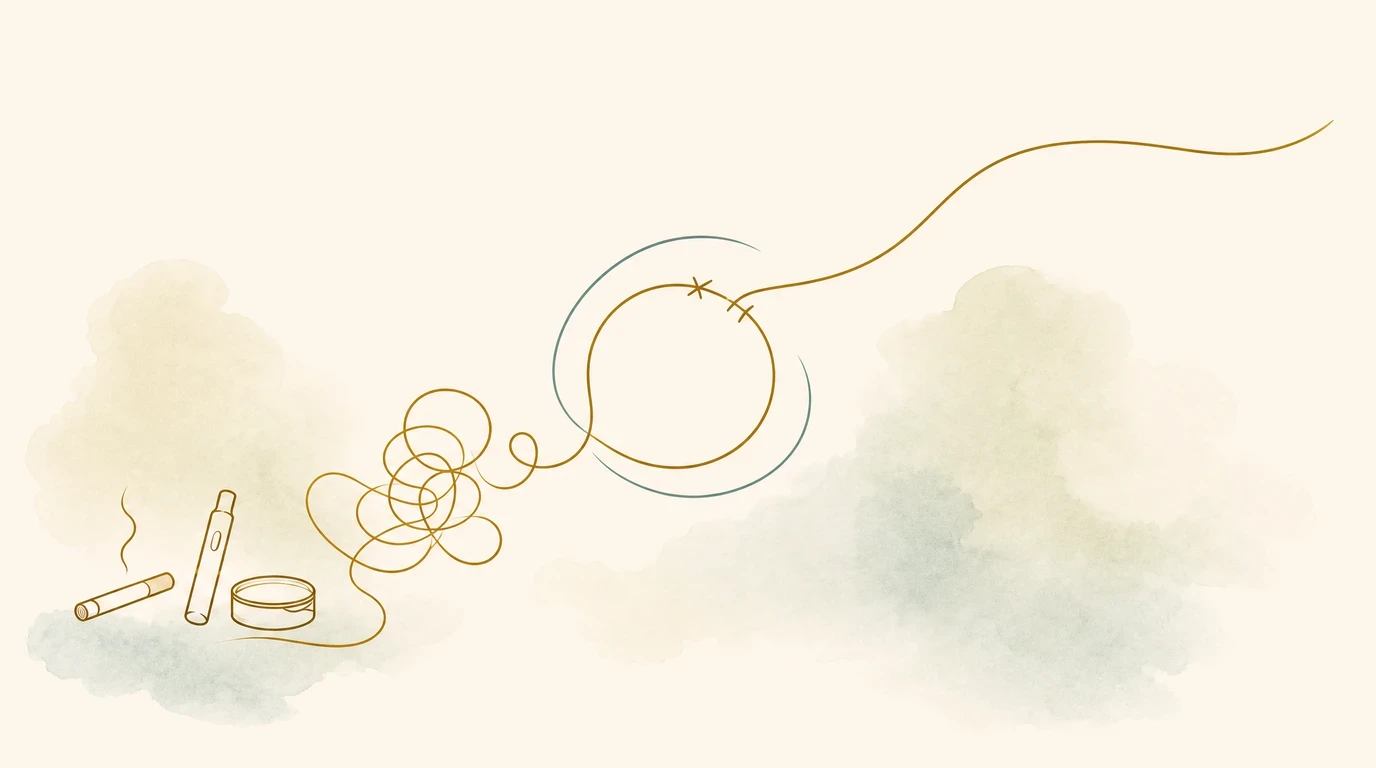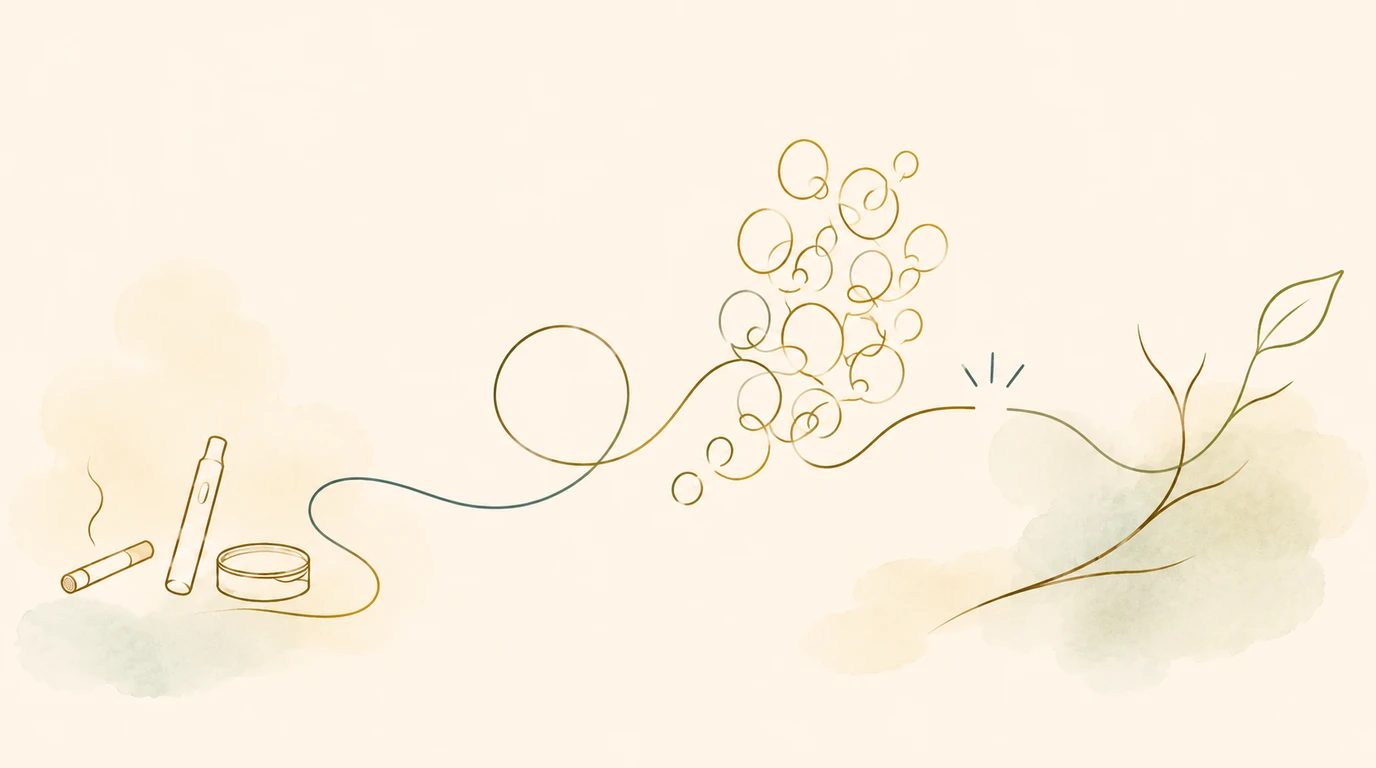

One cigarette, vape session, pouch, dip, or other nicotine use can be followed by a fast conclusion: the quit attempt is already ruined, so continuing for the rest of the day seems harmless. That conclusion can turn one event into a longer return before you have examined what actually happened.
The phrase "what-the-hell effect" is informal. Smoking research studies a closely related process called the abstinence violation effect. The central question is how a person interprets a lapse and whether that interpretation lowers confidence, increases the desire to give up, or gives the next use a sense of permission.
Key takeaways
- One nicotine use raises the risk of further use, while recovery after a lapse remains possible
- The abstinence violation effect describes changes in confidence, attribution, guilt, and commitment after breaking an abstinence goal
- Smoking studies give the strongest support to falling confidence and feeling like giving up as parts of lapse progression
- Re-exposure can also intensify craving and cue responses, adding pressure beyond the person's interpretation of the event
- A short interruption names the event, catches the permission sentence, and protects the next decision
- Most direct evidence comes from cigarette-smoking studies, with less research on vaping, pouches, and other nicotine products
What the what-the-hell effect means after nicotine use
The what-the-hell effect describes a shift in thinking after a rule or goal has been broken. In nicotine recovery, the shift may begin with one use and continue through a broad conclusion such as "the day is ruined" or "I have already failed." Continuing then feels consistent with that conclusion.
The closest research term is the abstinence violation effect, developed within cognitive-behavioral models of relapse. The model proposes that a lapse can bring self-blame, guilt, and reduced confidence in the ability to remain abstinent. These reactions may increase the chance of further use. A review of relapse-prevention theory also describes rigid, all-or-nothing views of relapse and broad personal explanations as conditions that can strengthen this response (Hendershot et al., 2011).
This model concerns the meaning assigned to an event. It differs from the immediate factual question of whether nicotine was used and from any personal decision about a recovery counter. ResetHive leaves counter changes entirely with the member. The useful focus here is narrower: which thought makes another use feel allowed?
One nicotine use can change the next hour
Cognitive interpretation is only one part of the risk. Nicotine re-exposure, familiar sensory cues, and renewed product availability can also affect what happens next.
In an experiment with 63 adult smokers, participants who had maintained 48 hours of abstinence were assigned either to smoke two cigarettes or to a control condition. The lapse group returned to regular smoking more quickly, and episodic increases in craving partly accounted for the difference (Shadel et al., 2011). A later experiment with 54 daily smokers used a single lapse cigarette after two days of abstinence. The lapse group had 2.5 times the risk of smoking during the next 24 hours, with greater risk among participants who reported lower abstinence self-efficacy or more depressive symptoms (Muench et al., 2020).
These studies used cigarettes, small samples, short abstinence periods, and controlled incentives. They show that re-exposure can raise short-term risk under those conditions. They leave uncertainty about the size of the effect after a vape session, pouch, or other product in everyday life.
The practical implication remains useful across products. Expect extra pressure after one use. Close product access, cue exposure, and the cognitive permission for another use as early as possible. The complete nicotine slip or relapse guide covers the full immediate response.
How one lapse becomes permission for another
The escalation often moves through a short sequence:
- Event: you use nicotine once or for a brief period.
- Rule violation: the event conflicts with the goal you set.
- Broad conclusion: you describe the whole attempt, day, or self through that event.
- Reduced confidence: another nicotine-free decision feels less achievable.
- Permission: further use seems acceptable until a later restart point.
- Repetition: each additional use supplies more cues, access, and evidence for the broad conclusion.
Research offers limited support for expecting every step in every person. The desire to give up and changes in confidence deserve attention. A prospective study of 133 smokers recorded their first lapse and immediate response within minutes. General abstinence-violation measures showed limited prediction, while participants who felt like giving up progressed faster to a second lapse. People who used restorative coping were less likely to have another lapse on the same day (Shiffman et al., 1996).
The sequence can happen quickly. A person may move from "I used a pouch" to "I am back where I started" without pausing at the steps between them. Slowing the sequence down makes it easier to notice the moment you give yourself permission to use again.
What smoking research says about confidence, guilt, and blame
The abstinence violation effect is a useful model, and the evidence is more mixed than a simple guilt spiral suggests. One study followed 203 smokers who had achieved abstinence and recorded 1,001 lapse episodes in near real time. Self-blame, confidence, and guilt after the first lapse failed to predict full relapse. Across recurrent lapses, lower post-lapse confidence predicted faster progression to another lapse. Guilt and self-blame showed unexpected, context-dependent associations (Kirchner et al., 2012).
That distinction matters for the response. A person can keep responsibility without manufacturing a comforting explanation. Specific responsibility can stay intact: you used a particular product, in a particular setting, after a particular sequence of decisions. A global verdict about character or future ability adds little useful information.
The research supports a measured conclusion. One use is a strong risk marker. Lower confidence and the urge to abandon the goal can make another lapse more likely. Guilt alone has behaved inconsistently across studies, so treating it as the single cause of nicotine relapse would overstate the evidence.
Catch the sentence that gives permission for more nicotine
The permission sentence turns one lapse into a reason to continue using until a later restart. Common versions include:
- "The day is already ruined, so I can restart tomorrow."
- "My streak is gone, so one more changes nothing."
- "This attempt has failed, so I may as well keep using."
- "I bought the product, so I should finish it before I stop again."
- "Withdrawal will restart anyway, so I can continue tonight."
These sentences combine an observation with a prediction or permission. Separate the parts. "I used nicotine at 3:20 p.m." is an observation. "The rest of today is lost" is a prediction. "I should continue" is permission.
Precise language keeps one lapse from becoming a judgment about the entire attempt. Record the product, amount, time, place, and immediate context if that helps you see the sequence. A full reflection belongs in a separate journaling process. For this moment, one accurate sentence is enough to expose the leap from one use to continued use.
Use a compact interruption before the next decision
Write or say three lines:
- Fact: "I used [product] at [time]."
- Permission sentence: "The thought pushing me toward more is [exact sentence]."
- Next protection: "For the next hour, I will [one concrete action]."
Choose an action that directly changes the next opportunity: leave the product behind, move away from the buying route, contact a prepared support person, or begin a brief craving response. The 5 Ds for nicotine cravings offers one short sequence when an active craving is part of the moment.
Focus on the next hour. Do not let one broad conclusion about your recovery determine what you do next. Once the immediate pressure has changed, the longer slip-response checklist can address access, the rest of the day, and one adjustment to the quit plan.
If another nicotine use has already happened
You can make the same interruption after a second or third use. Acting earlier is better, but it is not too late to stop the sequence.
Describe the current pattern accurately. A cigarette, several puffs, two pouches, a day of vaping, and a return to daily use represent different amounts of exposure and access. Each description can lead to a proportionate next step. Broad labels often hide the practical difference between them.
If use has continued and stopping again feels difficult, add support. A clinician, pharmacist, quitline, counselor, or trusted person can help you reduce immediate access and choose an appropriate route back to your plan. The nicotine quit-aids guide maps the main support categories and leaves treatment selection to you and a qualified professional.
Keep the lapse inside its actual boundaries
A lapse belongs to the time, product, and circumstances in which it occurred. The recovery also contains every nicotine-free hour, cue you passed, environment change you made, and response you practiced before that event. Those earlier actions remain part of the evidence about what you can do.
Use that evidence carefully. The previous nicotine-free period shows that abstinence occurred under real conditions. The lapse identifies a point where the current plan had less protection. Together, those facts support a specific adjustment while preserving confidence grounded in experience.
The what-the-hell effect grows when one event is allowed to define a much larger period. Accurate boundaries make the next decision visible again. One use raises risk, and the sequence can still stop with the choice that follows it.