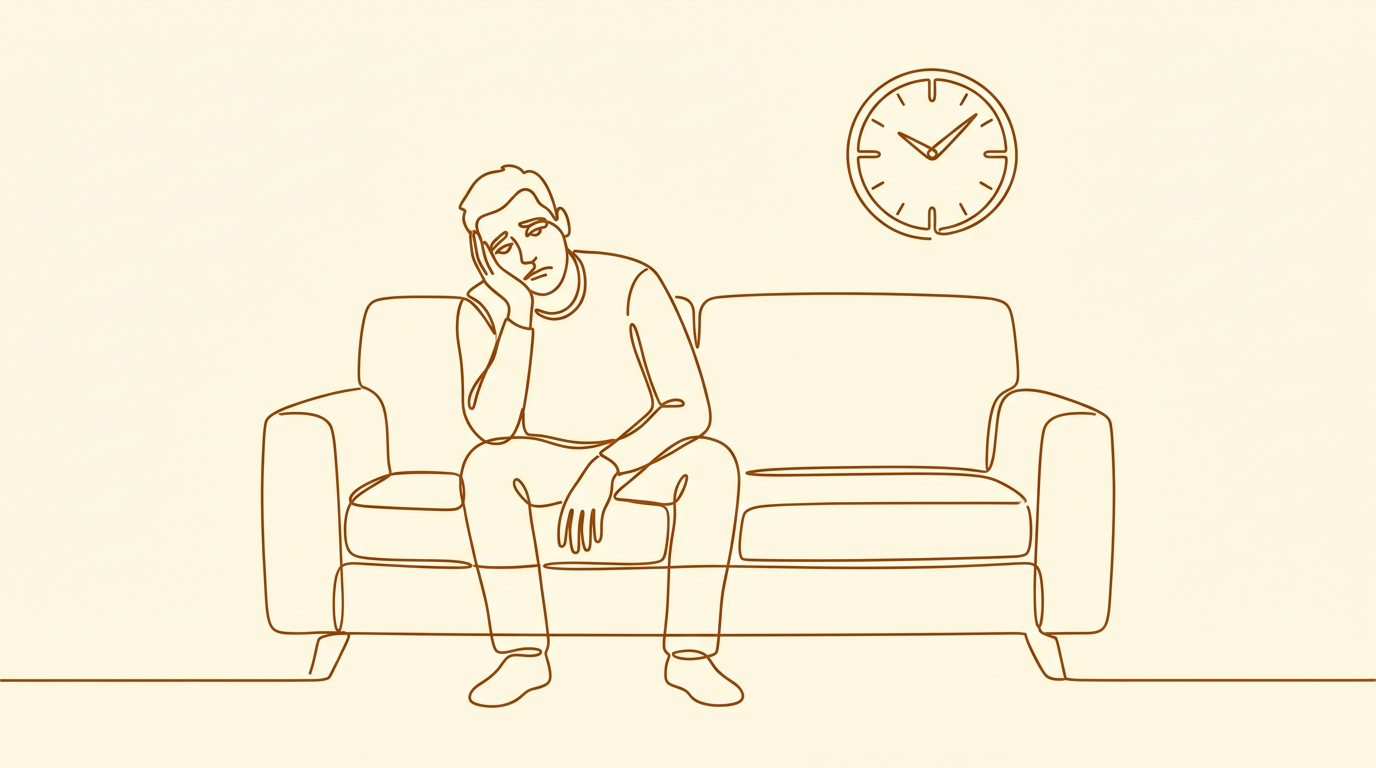
You’re sitting on the couch after a long day. You’re not even thinking about porn, and then, out of nowhere, the pull hits you. It feels urgent. It feels like the only thing that will work right now. Five minutes later you’re negotiating with yourself: just this once, just to take the edge off.
That pull is an urge. And the thing that set it off (the long day, the empty room, the stress buzzing under your skin), that’s a trigger.
If you want to quit porn and actually stay quit, understanding urges and triggers isn’t optional. It’s the foundation everything else is built on. This guide breaks down the mechanics of both, so you can stop feeling blindsided and start responding with a plan.
Key takeaways
- Urges are neurological events, not moral failures; they peak in 10-20 minutes and always pass if you don’t feed them
- The six most common porn triggers are boredom, nighttime/fatigue, loneliness/rejection, stress/exhaustion, shame, and environmental cues
- Use the 5-step response framework: name the urge, interrupt physically, ride the wave, address the real need, and log it
- Every urge you ride out without acting on it weakens the neural pathway, and the next one will be a little less powerful
- Recovery isn’t about never having urges; it’s about shifting from reacting automatically to responding consciously
What Is a Porn Urge, Really?
An urge is your brain requesting a hit of dopamine through a familiar pathway. It’s not a moral failure. It’s not proof that you’re broken. It’s a neurological event, a spike of desire created by years of repeated behavior.
Here’s what most people get wrong: they treat the urge as the enemy. But the urge itself isn’t the problem. The problem is having no plan for what to do when it shows up.
Urges have predictable characteristics:
- They peak and pass. The average urge lasts between 10 and 20 minutes at full intensity. It might feel like it will last forever, but it won’t.
- They get louder when you fight them. Trying to suppress an urge through willpower alone often makes it stronger. The more you push against it, the more mental real estate it occupies.
- They respond to interruption. Changing your physical state (moving your body, splashing cold water on your face, leaving the room) can break the loop faster than any mental argument.
- They weaken over time. If you consistently ride out urges without acting on them, the neural pathway weakens. Each time you don’t give in, the next urge is a little less powerful.
For a detailed walkthrough of the ride-it-out approach, read our urge surfing guide.
Why Porn Urges Happen: The Trigger-Response Loop
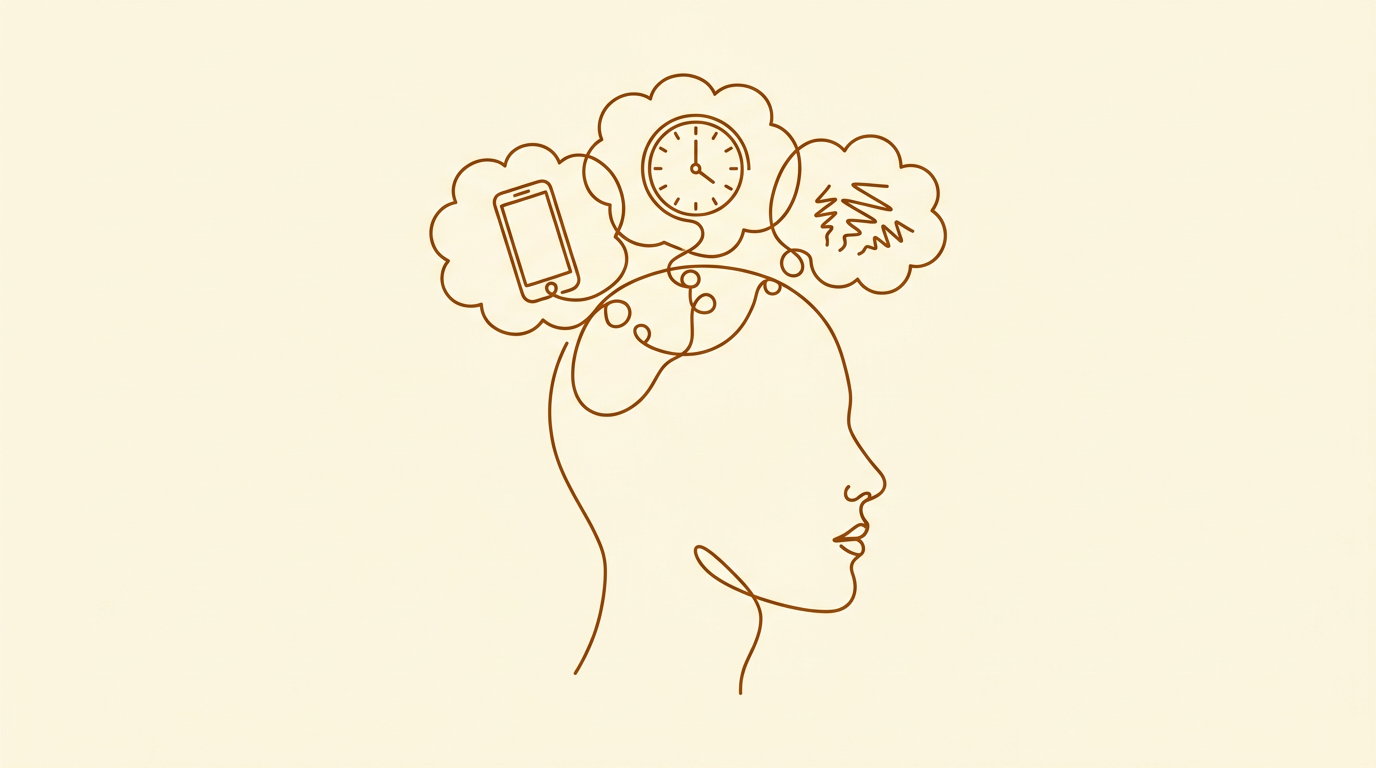
Your brain doesn’t generate urges randomly. There’s always a trigger, sometimes obvious, sometimes buried under layers of routine.
The basic loop works like this:
Trigger → Emotional discomfort → Urge → Behavior → Temporary relief → Return of discomfort
Porn doesn’t solve the original problem. It just interrupts the discomfort long enough for your brain to tag it as “the solution.” After hundreds or thousands of repetitions, this loop runs automatically. You don’t decide to crave porn any more than you decide to flinch when something flies at your face.
Recovery means interrupting this loop at the trigger and urge stages, before the behavior kicks in.
The Six Most Common Porn Trigger Categories
Triggers are personal, but they tend to cluster into recognizable categories. Knowing yours is the single most useful thing you can do early in recovery.
1. Boredom
This is the most common and most underestimated trigger. When your brain has nothing to do, it goes looking for stimulation, and porn is the easiest, most reliable source it knows.
Boredom doesn’t just mean “I have nothing to do.” It can also mean “nothing I’m doing feels meaningful.” That second kind (existential boredom) is harder to fix and more dangerous.
We’ve written an entire article on this: Boredom: The Most Dangerous Trigger.
2. Nighttime and Fatigue
Late nights are where recovery plans go to die. Your willpower is depleted, the structure of the day is gone, you’re alone, and the darkness creates a false sense of privacy and anonymity.
If you keep relapsing at night, the problem isn’t weakness; it’s that you haven’t built a nighttime plan. Read Late-Night Urges for specific evening routines and emergency protocols.
3. Loneliness, Rejection, and Emotional Pain
Porn becomes a painkiller when emotional needs go unmet. Loneliness, rejection after a date, a fight with someone you love, grief, sadness. These are all powerful triggers because porn offers simulated connection and guaranteed acceptance.
This category is especially dangerous because the emotions involved can feel too big to sit with. Loneliness, Rejection, and Emotional Triggers goes deeper.
4. Stress and Exhaustion
Chronic stress doesn’t just make you tired; it lowers every defense you have. Decision fatigue, emotional depletion, cortisol flooding your system: your brain is running on fumes and reaching for the fastest relief available.
This isn’t about “being stronger.” It’s about building recovery strategies that work even when you’re running on empty. See Stress, Exhaustion, and Lowered Defenses.
5. Shame and Self-Punishment
One of the cruelest dynamics in porn addiction: the shame you feel after using often becomes the trigger for the next use. The shame spiral works like this: you relapse, you feel disgusted with yourself, the disgust creates emotional pain, and the pain drives you right back to the only coping tool you know.
Breaking this cycle requires replacing shame with something more useful. Read Quitting Porn Without Shame.
6. Physical Cues and Environment
Your phone in bed. A specific room. A certain time of day. Even physical sensations like a full bladder or lying in a particular position. These cues become linked to the behavior through repetition, and they can fire off urges without any emotional trigger at all.
Environmental triggers are actually the easiest to address: you change the cue. Move the phone. Rearrange the room. Change your evening routine. The trigger loses its power when the context shifts.
How Long Do Porn Urges Last?
This question matters because the answer changes everything about your strategy.
A single urge, at peak intensity, typically lasts 10 to 20 minutes. The leading edge (where it ramps up) is 2 to 5 minutes. The peak is 5 to 10 minutes. Then it starts to decline, often rapidly.
This means if you can get through the first 15 minutes without acting on it, the hardest part is usually behind you.
Over weeks and months of recovery, the pattern changes:
- Days 1–14: Urges are frequent and intense. Multiple per day is normal.
- Weeks 3–6: Frequency drops. Intensity might spike during stressful periods.
- Months 2–4: Urges become less frequent and easier to manage. They still show up, but they feel more like suggestions than commands.
- Month 6 and beyond: Urges are rare and mild for most people, though certain triggers (loneliness, major stress, old environmental cues) can still produce strong ones.
The key insight: urges are temporary events in a brain that’s rewiring itself. Every one you ride out makes the next one weaker.
A Practical Framework for Responding to Porn Urges
When an urge hits, you don’t need a perfect plan. You need a plan. Here’s a framework you can use every single time.
Step 1: Name It (30 seconds)
Say out loud or write down: “I’m having an urge. It was triggered by [boredom / stress / loneliness / whatever you can identify].”
Naming the urge creates distance between you and the impulse. You shift from “I need porn” to “I’m experiencing a craving.” That’s a meaningful difference.
Step 2: Interrupt Physically (2–5 minutes)
Don’t try to think your way out. Move your body. Your nervous system responds to physical input faster than cognitive reasoning.
Options that work:
- Splash cold water on your face and wrists
- Do 20 push-ups or air squats
- Step outside and take 10 deep breaths
- Take a cold shower if you can
- Change rooms immediately
We have a full guide on this: Physical Resets That Interrupt Urges.
Step 3: Ride the Wave (10–15 minutes)
This is where urge surfing comes in. Instead of fighting the urge, you observe it. Notice where you feel it in your body. Watch its intensity rise and fall. Breathe through it.
The urge wants you to believe it will last forever. It’s lying.
Step 4: Address the Real Need (ongoing)
Once the acute urge passes, ask yourself: what was I actually looking for?
- If it was boredom → engage in something with mild challenge or novelty
- If it was connection → text a friend, call someone, go where people are
- If it was stress relief → take a walk, stretch, journal for 5 minutes
- If it was escape from pain → acknowledge the pain without numbing it
This step is what separates people who white-knuckle through recovery from people who actually build a different life.
Step 5: Log It
Write a quick note: what triggered the urge, what you did instead, how you feel now. This takes 60 seconds and it does two things: it closes the loop on the experience, and it builds a data set you can review to spot patterns.
Over time, your log becomes your most valuable recovery tool. You’ll start to see exactly when and why you’re vulnerable.
The Mindset Shift That Makes All of This Work
Here’s the thing about urges: they are not emergencies. They feel like emergencies, but they’re just sensations. Intense, uncomfortable, temporary sensations.
The shift you’re working toward is this: from reacting to urges to responding to them.
Reacting is automatic. It’s the trigger-response loop running on autopilot. Responding is conscious. It’s you noticing the urge, pulling out your framework, and doing something different.
You won’t get this right every time. Nobody does. What matters is that each time you practice responding (even imperfectly), you’re building a new neural pathway. The old one doesn’t disappear overnight, but it gets quieter.
Recovery isn’t about never having urges again. It’s about having urges and knowing exactly what to do with them.
Where to Go From Here
If you’re just starting out, focus on identifying your top two or three triggers. Read the articles that match your patterns:
- Boredom: The Most Dangerous Trigger
- Late-Night Urges
- Loneliness, Rejection, and Emotional Triggers
- Stress, Exhaustion, and Lowered Defenses
- Physical Resets That Interrupt Urges
- Urge Surfing Guide
- Quitting Porn Without Shame
Then build your own response plan. Keep it short: something you can actually remember and use in the moment. Write it on an index card or put it in your phone.
The urge will come. That’s not the question. The question is what you’ll do when it does.