After quitting porn, many people expect the first stretch to be difficult. The early days often bring cravings, restlessness, and a lot of effort spent getting through urges.
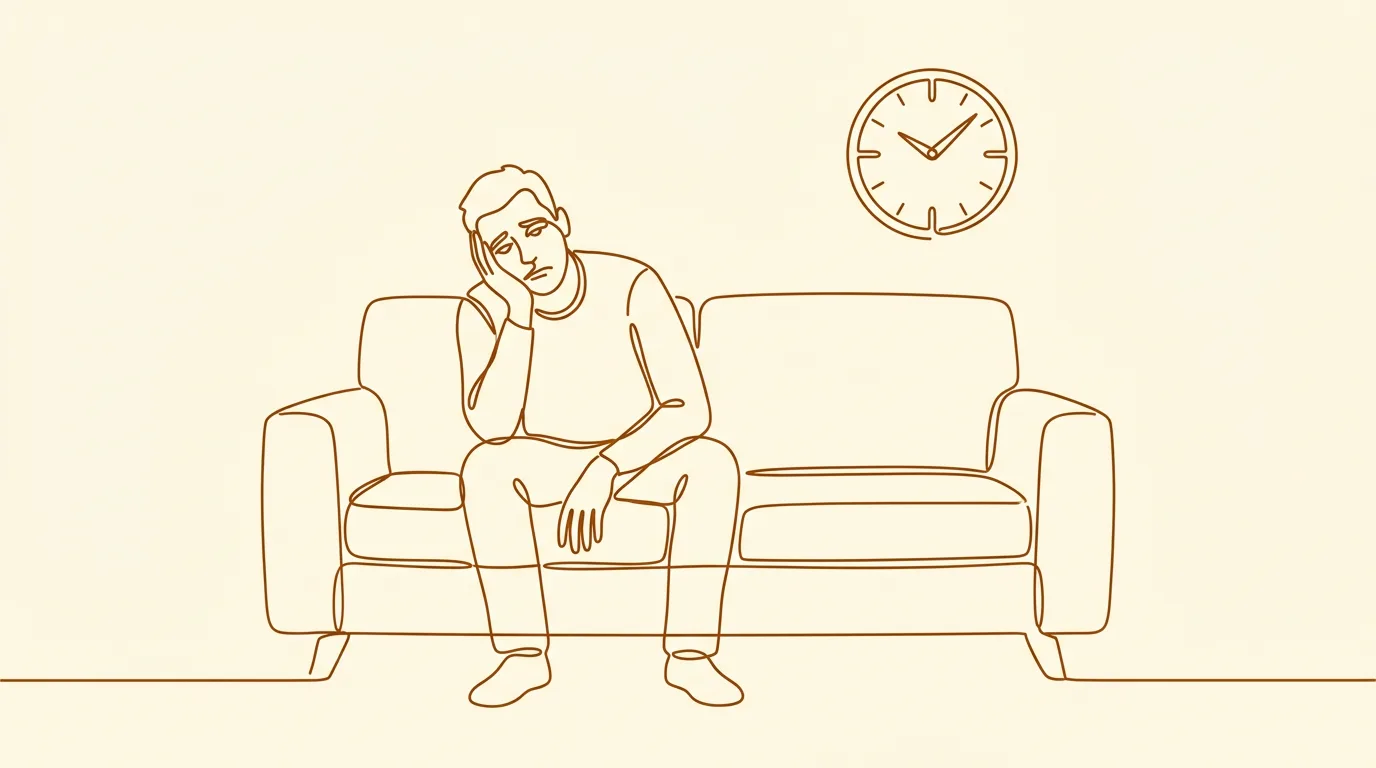
What can feel more confusing is what sometimes happens after that initial intensity passes. Progress can feel uneven. You may feel flat: low motivation, little or no libido, and little excitement about things that usually matter to you.
This is often called the flatline. It can be one of the most confusing phases of porn recovery because it appears after you have already done the hard work of stopping. If nobody told you this was coming, it can feel like proof that quitting was a mistake.
That feeling is understandable. In most cases, the flatline is temporary, well-documented, and part of the adjustment process after quitting porn.
Key takeaways
- The flatline is a period of low libido, emotional numbness, and low motivation that typically occurs 2 to 6 weeks after quitting porn
- It can happen as the brain's reward system adjusts after a long period of high-stimulation porn use
- Common symptoms include zero sex drive, brain fog, fatigue, emotional flatness, and a strong urge to "test" whether things still work
- The flatline usually lifts gradually, though duration varies from days to several weeks depending on your history
- Testing yourself with porn during a flatline can restart the loop your brain is adjusting away from
What the flatline is
The flatline makes more sense when you look at the reward system.
Porn can deliver a higher and more concentrated level of stimulation than ordinary life. The novelty, variety, and instant access create a supernormal stimulus that can push the reward system beyond ordinary levels of arousal. Over time, the brain may become less responsive to everyday rewards as it adapts to that repeated stimulation.
When you stop watching porn, the overstimulation ends before the reward system has fully adjusted. Your brain is still calibrated for a level of stimulation that is no longer coming, so everything else (food, exercise, conversation, sex) can register as dull by comparison.
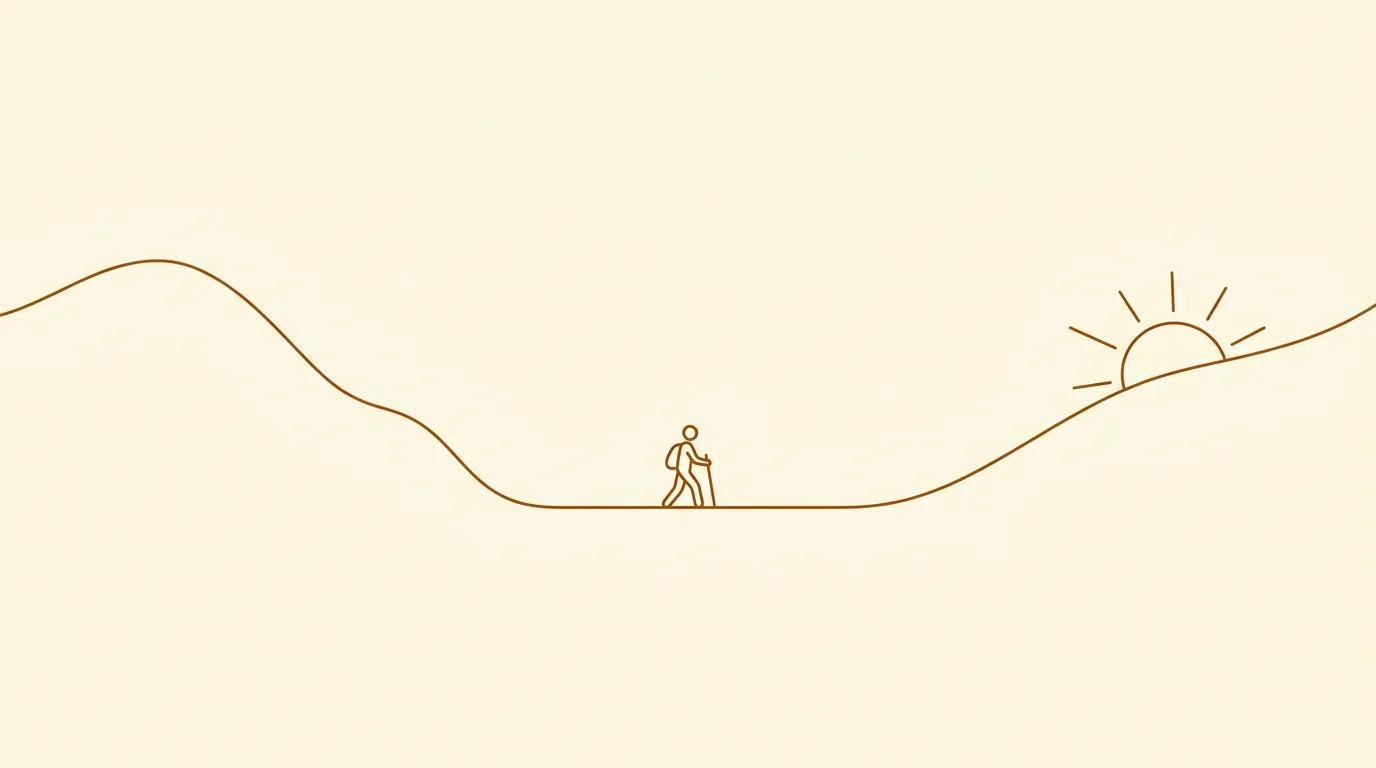
The flatline is the gap between when the overstimulation stops and when the reward system adjusts to ordinary stimulation again. During that time, libido, motivation, and emotional response can all feel muted.
For a deeper look at how this rewiring process works, read How porn rewires your brain, and for a week-by-week timeline of what actually happens in the brain when you stop watching porn, including where the flatline fits in the broader recovery arc.
What the flatline feels like
The flatline is a cluster of experiences that tend to show up together:
Low or zero libido
This is the symptom that alarms people the most. You might go from a high sex drive (even if it was porn-driven) to feeling almost nothing. No arousal, no sexual thoughts, no interest. Some people describe it as feeling asexual.
Temporary low libido during a flatline is common. Your brain may be used to responding to screen-based stimulation, and it can take time for real-world arousal and interest to return. Natural, responsive libido returns as your receptors recalibrate.
Emotional numbness
You may notice a kind of emotional flatness rather than clear sadness. Things that used to excite you (hobbies, plans, social events) don't spark anything. You're going through the motions, and nothing has much color.
This is the emotional equivalent of the libido drop. Over time, porn can become a way to manage boredom, stress, loneliness, and frustration. Without it, your brain may need time to generate positive feelings from everyday experiences again.
Brain fog and low motivation
Concentration drops. Tasks feel harder than they should. Getting off the couch requires effort that seems disproportionate. You might feel like you're thinking through cotton wool.
This happens because dopamine plays a central role in motivation. It's the neurotransmitter that makes you want to do things. When the dopamine system is in recalibration mode, everything feels effortful.
Fatigue
Even with enough sleep, you feel tired. Some people describe a bone-deep exhaustion that doesn't respond to caffeine or rest. Your body may be processing the accumulated stress and sleep disruption that porn use was masking.
Doubt and regret
This symptom can be especially risky because it makes you want to quit quitting. The voice in your head says:
- "I felt better when I was watching porn."
- "This isn't working."
- "I think I damaged myself permanently."
- "Maybe I wasn't really addicted, maybe I just needed to moderate."
These thoughts are predictable and misleading. You feel worse right now because your brain is in an uncomfortable transitional state. The discomfort can show how deeply the habit shaped your reward system, and why recalibration takes time.
When the flatline typically hits
For most people, the flatline begins somewhere between week 2 and week 4 after quitting. But timing varies:
- Light users (a few times a week, for a few years) may experience a mild flatline lasting days to a week
- Heavy users (daily, for many years, with escalation) may hit a deeper flatline that lasts 4 to 8 weeks
- Some people don't experience a clear flatline and instead notice gradual improvement
- Others get multiple flatlines, one early on and another around months 2 to 3
The recovery timeline covers the broader arc of what to expect month by month, including where the flatline fits into the bigger picture. If you're coming from a NoFap background, the NoFap flatline has community-specific patterns and timelines worth reading.
Why the flatline can be part of adjustment
This can feel counterintuitive while you are living through it. The flatline often means the reward system is adjusting to a lower-stimulation environment.
Your reward system is recalibrating. Low mood and low libido can reflect a reward system that has not yet adjusted to ordinary stimulation again. As that adjustment continues, everyday pleasures may start to register more clearly.
Your brain is learning a new baseline. It spent months or years at an artificially elevated level of stimulation. The flatline is the adjustment period between that artificial high and your natural set point. That natural set point can become more sustainable and more satisfying as the adjustment continues.
What to do during a flatline
Don't test yourself
This is the single most important piece of advice. During the flatline, you may feel an almost scientific curiosity: "Let me check if everything still works. Let me see if I can get aroused."
That urge often feels rational. It is still a craving. Testing yourself with porn during the flatline often leads back into the old loop, because the moment you get a strong reward response, the old pathway becomes active again.
Move your body
Exercise is one of the few things that reliably improves flatline symptoms. It releases dopamine and endorphins through natural channels, which helps your brain remember that rewards exist outside of a screen.
Intense workouts are unnecessary. A 30-minute walk, a light jog, or some bodyweight exercises is enough. On the days when motivation is lowest, even light movement matters.
Maintain structure
The flatline thrives on unstructured time. When you have nothing planned and nowhere to be, the numbness deepens and the doubt gets louder.
Keep a basic daily structure: wake time, meals, work blocks, exercise, social contact, sleep time. It can stay simple, as long as it gives your day enough shape while your brain adjusts.
Keep some social contact
The flatline can make isolation feel appealing. You may not have much energy for people, and conversations can feel effortful. Withdrawing completely often makes the numbness worse.
Social connection is one of the stronger natural reward sources. Even small interactions count: a text conversation, a phone call, sitting in a coffee shop around other people. Aim for enough contact to keep isolation from taking over.
Track the changes
Start a simple daily log. Rate your mood, energy, and libido on a 1 to 10 scale each evening. When you're in the middle of the flatline, everything feels static. But when you look back at a week of data, you'll often see gradual improvement that you couldn't feel in real time.
This evidence matters. On the worst days, you can look at the log and see that last Tuesday was a 3 and today is a 4. That's progress, even if it doesn't feel like it.
Delay big decisions
The flatline is a terrible time to evaluate your life, your relationship, your career, or your recovery. Everything looks gray right now because your perception is temporarily distorted. Decisions made during this phase are often shaped by numbness and low motivation.
Write the question down and revisit it in a month. Many decisions that seem urgent during the flatline look different once mood, energy, and libido have started to return.
The flatline and relationships
If you're in a relationship, the flatline can create a specific kind of stress. Your partner might wonder why you suddenly have no interest in sex. They might take it personally, worry that you're not attracted to them, or suspect you're secretly still using porn.
Communication matters here. You can keep the details of your recovery private while still letting your partner know that you are going through a temporary low-libido phase, and that it can be a normal part of the process. That context can prevent a lot of unnecessary conflict. For more on navigating this, see Quitting porn in a relationship.
When the flatline ends
The flatline usually does not end all at once. It tends to lift gradually:
- You notice a genuine laugh
- A song sounds better than it has in months
- You feel a flicker of attraction toward a real person
- You wake up with more energy than the day before
- A project at work starts to interest you
These moments often appear inconsistently at first. Then they become more frequent. At some point, you may realize the flatline has been fading for a while.
For many people, this happens somewhere between week 6 and week 12, though some timelines are shorter or longer. A qualitative analysis of pornography abstinence journals found that roughly one-third of participants reported a flatline period of diminished sexual desire, and that it resolved over time.
What if the flatline lasts a long time?
If you've been in a flatline state for more than 8 weeks and see no improvement at all, it's worth considering whether something else is contributing. Persistent low mood, zero motivation, and emotional numbness are also symptoms of clinical depression, which can exist alongside (or be worsened by) porn recovery.
A long flatline can still overlap with real recovery. It may mean two things are happening at once, and the depression may need its own treatment. If this resonates, talking to a therapist is a practical next step. Read more about the overlap in Porn addiction and depression.
The other side
When the flatline lifts, people often notice ordinary interest returning before they can name exactly what changed. Music may feel more engaging. Work may feel less impossible. Attraction may feel calmer and more connected to real people instead of screen-based novelty.
The flatline is an uncomfortable and confusing part of recovery. It can pass gradually, and the return of motivation, libido, and ordinary interest often arrives in small signs before it feels obvious.