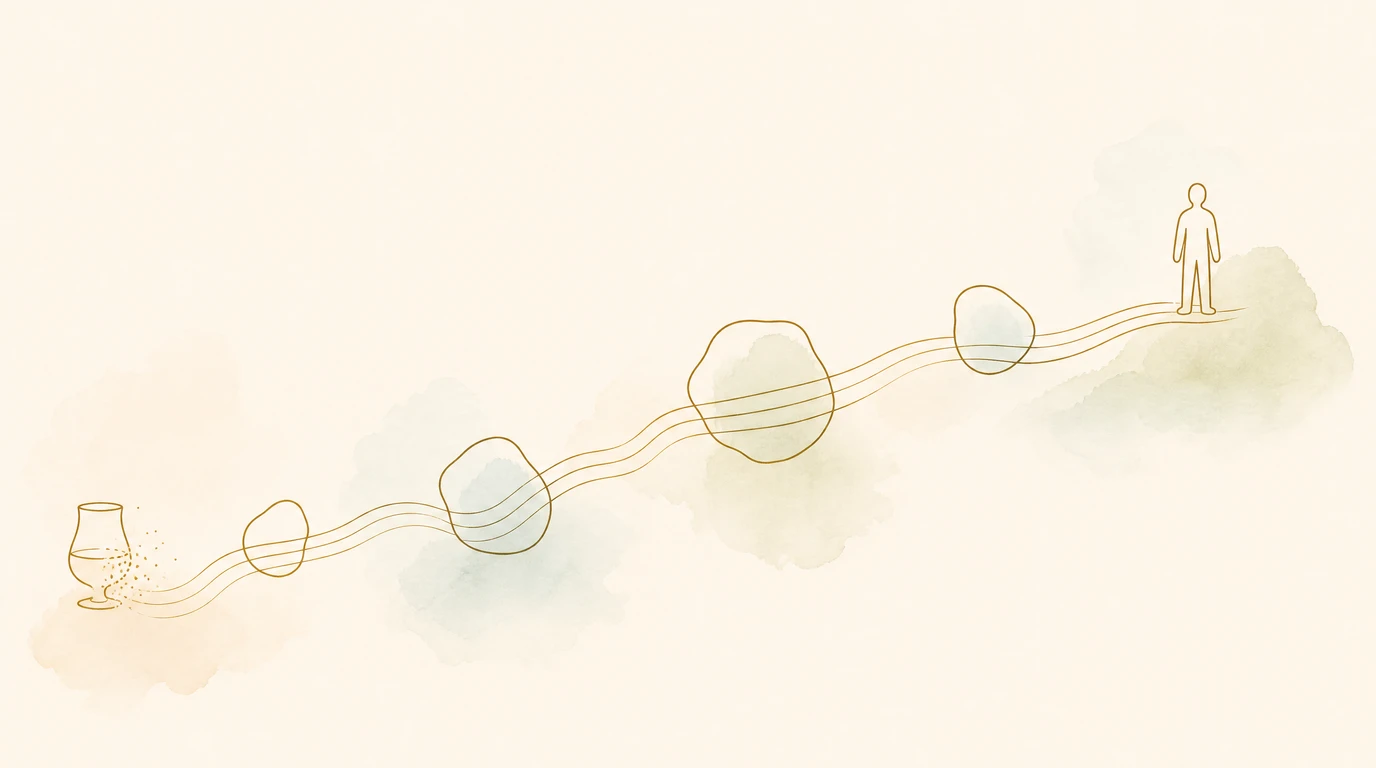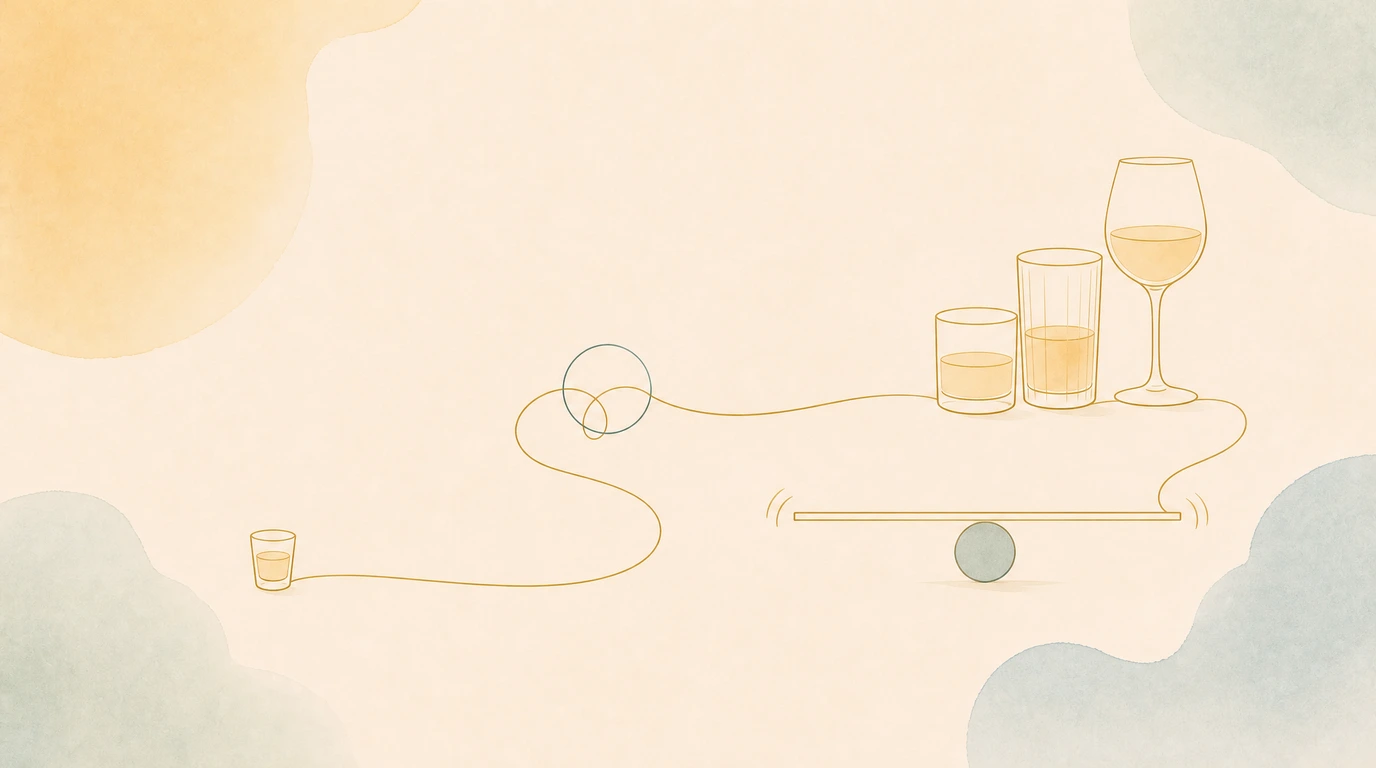

Signs of alcohol addiction are easier to recognize when you look at the full pattern across time. The central questions are whether drinking has become difficult to control, increasingly important, or costly in parts of life that matter to you.
The clinical term is alcohol use disorder, or AUD. It ranges from mild to severe. A person can meet the criteria without drinking every day, losing a job, or reaching a crisis. Another person may drink frequently and still need a careful assessment before any conclusion is made.
This guide helps you examine the pattern across the past year. It can support a conversation with a clinician, but it cannot diagnose you.
Key takeaways
- Alcohol use disorder is assessed through 11 symptoms involving control, priority, consequences, tolerance, and withdrawal
- Daily drinking is not required for alcohol use disorder
- Two or more symptoms within 12 months can meet the clinical threshold, with severity based on the number present
- Tolerance or a single regretted night needs context before it carries a label
- You can choose to stop drinking before a problem becomes severe or receives a diagnosis
What alcohol addiction means clinically
The Diagnostic and Statistical Manual of Mental Disorders describes AUD as a problematic pattern of alcohol use that causes clinically significant impairment or distress. The diagnosis is based on 11 possible symptoms during the same 12-month period.
According to the National Institute on Alcohol Abuse and Alcoholism, two or three symptoms indicate mild AUD, four or five indicate moderate AUD, and six or more indicate severe AUD (NIAAA, 2025). The count describes clinical severity. Character and deservingness remain outside the assessment.
The phrase "alcohol addiction" commonly refers to the more persistent loss-of-control pattern associated with moderate or severe AUD. Search language and clinical language overlap imperfectly, so this article uses both while keeping the criteria precise.
The 11 signs of alcohol use disorder
Look back over the past 12 months. The clinical symptoms ask whether you:
- drank more alcohol or for longer than you intended
- wanted to cut down or stop and could not do so consistently
- spent substantial time getting alcohol, drinking, or recovering
- experienced strong cravings for alcohol
- repeatedly missed responsibilities at work, school, or home because of drinking
- continued drinking despite recurring conflict or relationship problems connected to it
- reduced or gave up important social, work, or recreational activities
- drank in situations where doing so was physically hazardous
- continued despite knowing alcohol was causing or worsening a physical or psychological problem
- developed tolerance, meaning you needed more for the same effect or felt less effect from the same amount
- experienced withdrawal, or drank to relieve or avoid withdrawal symptoms
NIAAA provides a clinician-facing Alcohol Symptom Checklist based on these criteria. Research in routine care found high test-retest reliability for the total criterion count, although the checklist still belongs within a clinical assessment (Hallgren et al., 2022).
Signs that drinking is becoming hard to control
Loss of control often appears in ordinary decisions before it appears in a crisis. You may set a number before the evening and repeatedly pass it. You may plan alcohol-free days, then move them when the time arrives. A quick drink may regularly become the center of the night.
Useful questions include:
- How often do I drink more than I planned?
- When I decide to stop for the night, how often does the decision hold?
- Have I made several serious attempts to cut down or quit?
- Do I keep changing the rule once drinking begins?
- Does alcohol occupy my attention before the first drink?
One occasion gives limited information. A repeated pattern across different settings deserves closer attention.
When alcohol takes more time and priority
The amount of time alcohol occupies can grow gradually. Drinking itself may still take only part of the day, while planning, purchasing, recovering, hiding evidence, checking messages, or repairing the next morning takes much longer.
Priority can also change quietly. You might choose places where drinking is easy, leave events that do not include alcohol, or lose interest in activities that compete with it. You may organize evenings around keeping enough alcohol available or avoiding questions from other people.
Ask what has moved aside. Sleep, exercise, hobbies, sex, parenting, friendships, work quality, and money can all lose space before a person uses a severe label for the pattern.
Consequences that keep repeating
AUD criteria focus on continued drinking despite recurring problems. These problems can be visible, such as injuries, missed work, unsafe driving, arguments, or medical concerns. They can also be private, such as anxiety after drinking, memory gaps, promises made while hungover, or a growing sense that the pattern conflicts with your values.
The key detail is recurrence. A consequence happens, you decide it should change the pattern, and alcohol later returns in a similar way.
A single regret carries limited diagnostic information. Repeated consequences belong in the assessment, especially when your attempts to prevent them keep failing.
Tolerance, withdrawal, and physical dependence
Tolerance means alcohol has less effect at a familiar amount or you need more to reach the effect you expect. It can develop with repeated exposure. Tolerance is one AUD symptom, and its meaning depends on the rest of the pattern.
Withdrawal can occur when a person who has become physically dependent reduces or stops drinking. Possible symptoms include shaking, sweating, nausea, anxiety, agitation, sleep disruption, a rapid pulse, hallucinations, or seizures. Withdrawal risk varies widely and can become medically dangerous for some people.
Physical dependence and AUD overlap, but they answer different questions. Physical dependence concerns the body's adaptation and withdrawal risk. AUD concerns the wider pattern of control, consequences, and impairment. If you have experienced withdrawal, needed a morning drink to feel steady, or had a previous withdrawal seizure or severe episode, read how to quit alcohol safely before making an abrupt change.
Can you have an alcohol problem without daily drinking?
Yes. The DSM criteria do not require daily drinking. A person might have several alcohol-free days and still experience repeated binge episodes, cravings, unsafe situations, relationship damage, or failed efforts to control use.
Frequency is one piece of the pattern. Amount, speed, context, consequences, and control also matter. Someone who drinks only on weekends may still spend the week anticipating alcohol or repairing what happened. Someone who drinks most evenings may remain within a consistent amount but decide the habit is affecting sleep, mood, or personal goals.
There is room between "no concern" and a severe disorder. You can act on that concern at any point.
A private self-check for the past year
Write short answers to these questions:
- What limits have I set, and how often have they held?
- What has alcohol changed in my health, sleep, mood, work, money, or relationships?
- Which activities have become less important or less frequent?
- Have I hidden, minimized, or explained away parts of my drinking?
- Have I experienced tolerance or symptoms when alcohol wears off?
- What happened during my last three attempts to change?
- If the next year looked exactly like the last one, how would I feel about it?
The answers can show where the pattern is concentrated. They also give a clinician more useful information than a vague statement that you drink "too much" or "sometimes."
For a validated screening approach, the full Alcohol Use Disorders Identification Test, or AUDIT, is widely used. A 2024 systematic review found that an AUDIT score of eight or higher meaningfully increased the likelihood of DSM-5 AUD across age groups (Wood et al., 2024). Screening results still require interpretation because drink sizes, populations, and local versions differ.
What to do with the result
If several criteria fit, consider discussing them with a primary-care clinician, addiction specialist, therapist, or another qualified professional. Bring the details you wrote, including your usual amount, frequency, longest recent alcohol-free period, previous withdrawal symptoms, medications, and other substance use.
You can also begin planning a change. The practical guide to stopping alcohol helps you define your goal, date, routines, support, and response to predictable drinking situations.
Get medical guidance before stopping if physical dependence may be present. That safety decision deserves an honest assessment based on your actual pattern.
A personal decision to stop can come before any diagnosis. The pattern you can see today is enough to begin the next useful step.