Does alcohol cause cancer? Yes. Alcoholic beverages are classified as a Group 1 human carcinogen, the category used when there is sufficient evidence that an exposure causes cancer in people. This classification describes the strength of the evidence. An individual's level of risk is a separate question.
Risk depends on the amount and duration of exposure, cancer type, genetics, smoking, age, sex-related biology, and other factors. Drinking does not mean that cancer is inevitable. Reducing or stopping alcohol lowers exposure and can reduce risk over time.
Key takeaways
- Alcohol causes at least seven types of cancer
- Risk generally rises as the amount of alcohol increases
- Light drinking can raise the risk of some cancers, especially breast cancer
- Beer, wine, and liquor all carry risk because each contains ethanol
- Cancer risk can decline after stopping, although the change may take years
- Relative risk and absolute risk answer different questions and should be read together
Which cancers are caused by alcohol?
The established alcohol-related cancers include:
- oral cavity, including the mouth
- pharynx, or throat
- larynx, or voice box
- esophagus, especially squamous cell carcinoma
- liver
- female breast
- colon and rectum
The National Cancer Institute summarizes strong evidence that alcohol causes these cancers and notes that risk generally increases with consumption (NCI, 2025).
A comprehensive meta-analysis combined 572 studies and 486,538 cancer cases. It found clear dose-risk relationships for oral and pharyngeal, esophageal squamous cell, colorectal, laryngeal, and breast cancers, with the largest relative risks among heavy drinkers for several sites (Bagnardi et al., 2015). Observational studies can be affected by measurement error and confounding, while the consistency, dose response, and biological evidence support a causal conclusion for the established sites.
How alcohol can lead to cancer
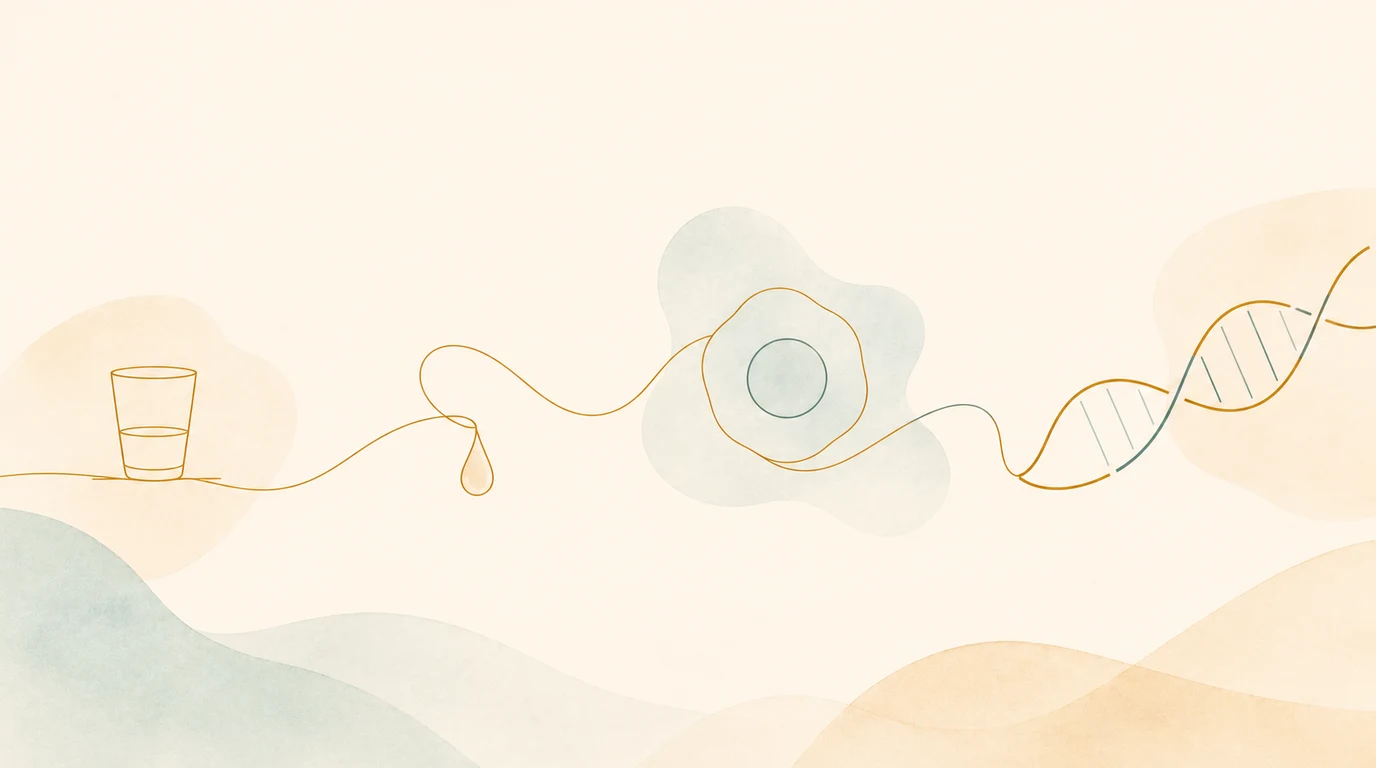
Ethanol is broken down into acetaldehyde, a toxic compound that can damage DNA and proteins. Alcohol can also increase oxidative stress, alter folate-related processes, raise estrogen levels, and make tissues in the mouth and throat more vulnerable to other carcinogens.
The mechanism varies by tissue. For breast cancer, hormonal pathways are relevant. For mouth, throat, and esophageal cancers, direct exposure to acetaldehyde and interaction with tobacco are especially important. Liver cancer risk can also be affected by alcohol-related liver injury and cirrhosis.
Genetic differences in alcohol metabolism influence exposure to acetaldehyde. People who flush after drinking because of certain ALDH2 variants can experience high acetaldehyde exposure and, if they continue drinking, higher risk of esophageal and head-and-neck cancers.
How much alcohol increases cancer risk?
Cancer risk generally increases with alcohol exposure. There is no threshold below which cancer risk has been proven to disappear for every alcohol-related cancer.
Light drinking can produce a small increase for some sites. A meta-analysis focused on light drinking found increased risks for cancers of the oral cavity and pharynx, esophageal squamous cell carcinoma, and female breast (Bagnardi et al., 2013). The size of the increase differs by site, and a relative increase can correspond to a small absolute change for an individual.
Lower amounts generally carry less risk than higher amounts, while even a low amount can add some risk for certain cancers.
The benefits of quitting alcohol guide covers other health and daily-life changes without turning them into a fixed timeline.
Relative risk and absolute risk
Relative risk compares two groups. Absolute risk describes how many people are expected to develop the outcome.
For example, a 20% relative increase changes an underlying risk of 5 in 100 to 6 in 100. The same relative increase changes a risk of 20 in 100 to 24 in 100. Age, sex-related biology, family history, smoking, weight, infections, screening, and other exposures affect the starting risk.
Population estimates cannot calculate your personal future. They can show the direction and approximate size of an association. A clinician can help interpret family history, previous cancer, liver disease, smoking, and screening needs.
Avoid online calculators that present one precise personal number without explaining their data, assumptions, and uncertainty.
Cancer risk still applies to wine
Red wine contains compounds such as resveratrol, but drinking wine also delivers ethanol. The NCI reports no evidence that moderate red wine consumption reduces overall cancer risk compared with white wine or other alcohol in a way that cancels ethanol's established harms.
The relevant exposure is the amount of pure alcohol. A standard drink in the United States contains about 14 grams of ethanol, although real pours often contain more than one standard drink.
Compare:
- container size
- alcohol by volume
- amount poured
- number of servings
Switching from liquor to wine can lower intake if the actual ethanol amount falls. The beverage label alone does not guarantee that change.
Alcohol and tobacco together
Alcohol and tobacco can interact strongly for cancers of the mouth, throat, larynx, and esophagus. Alcohol may make these tissues more permeable to tobacco carcinogens, and the combined risk can be greater than the simple sum of each exposure.
A pooled analysis from the International Head and Neck Cancer Epidemiology Consortium found evidence of a greater-than-multiplicative joint association between alcohol and tobacco for head and neck cancers (Hashibe et al., 2009).
Reducing either exposure can help. Addressing both may produce a larger risk reduction, while each recovery still needs its own practical plan and support.
What happens to cancer risk after quitting alcohol?
Stopping prevents further alcohol exposure from accumulating. Risk reduction after cessation differs by cancer type and may take years.
A meta-analysis of esophageal cancer studies estimated that alcohol-related excess risk declined after stopping and could take roughly 16 years to disappear, while the authors emphasized limited data and uncertainty (Jarl et al., 2012). That estimate applies to one cancer site and cannot be used as a universal countdown.
A large Korean cohort study found that sustained reduction or cessation was associated with lower alcohol-related cancer risk in several comparisons, although short-term patterns were complicated by age, health, and reasons people changed drinking (Yoo et al., 2022). Observational results cannot prove the exact effect for one person.
The practical conclusion is simpler: stopping now removes future exposure. That change is useful even when the exact recovery timeline is uncertain.
Screening and symptoms
Stopping alcohol does not replace routine cancer screening. Follow the screening schedule recommended for your age, anatomy, family history, and country.
Speak with a clinician about persistent symptoms such as:
- a mouth sore or throat symptom that does not heal
- trouble or pain with swallowing
- unexplained weight loss
- a persistent change in voice
- a breast lump or change
- blood in stool or persistent bowel change
- jaundice or persistent upper abdominal symptoms
These symptoms have many possible causes. Prompt assessment is the useful response.
If you have cancer or are receiving treatment, ask the oncology team about alcohol. Treatment, medication, liver function, nutrition, bleeding risk, and recurrence risk can change the advice.
Use the information without panic
Cancer risk can be discussed accurately without turning every drink into a prediction. Measure the pattern, reduce exposure, stop if that is your goal, avoid tobacco, and keep screening current.
If you want a practical stopping plan, use the guide to stopping alcohol. If regular heavy drinking may have created physical dependence, review the alcohol withdrawal safety guide before stopping abruptly.
Alcohol causes cancer, and lower exposure generally means lower risk. That information can support a decision today without requiring certainty about your personal future.