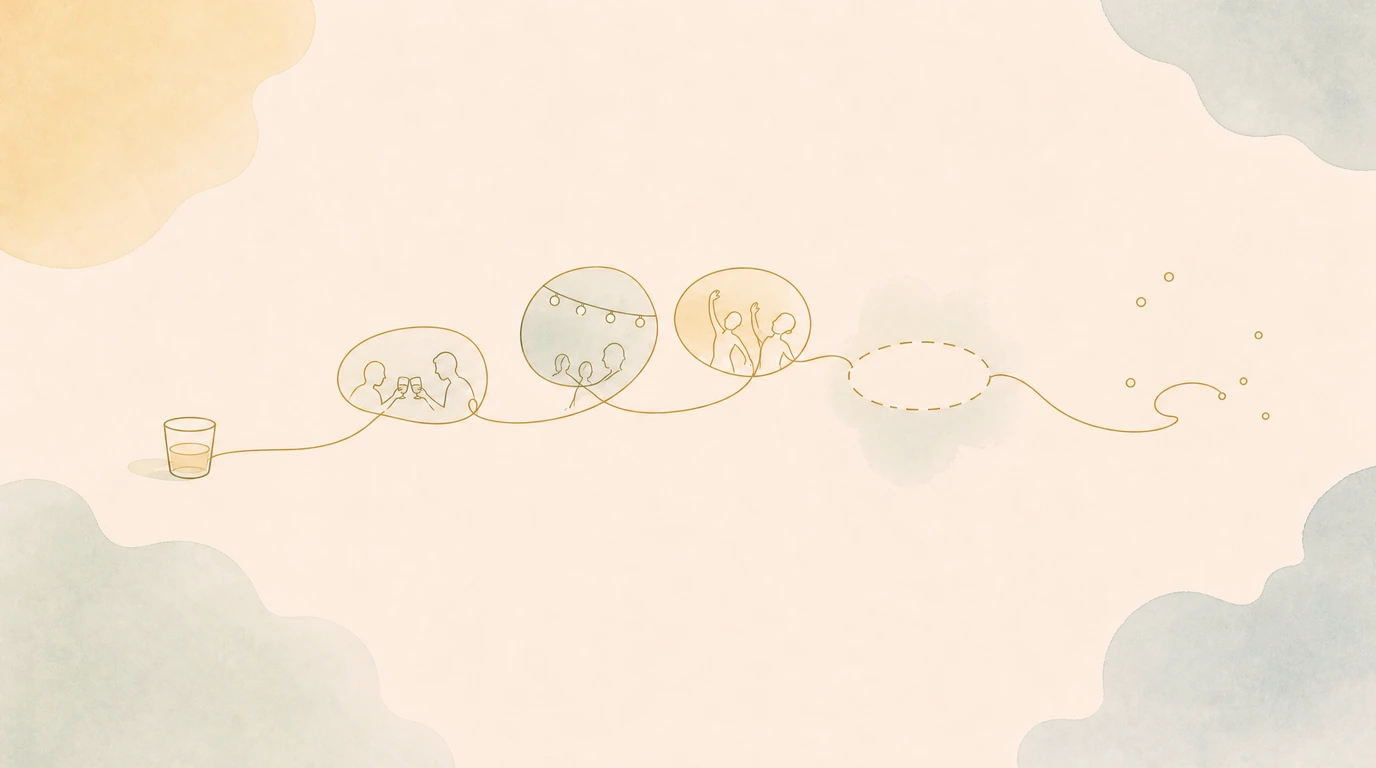
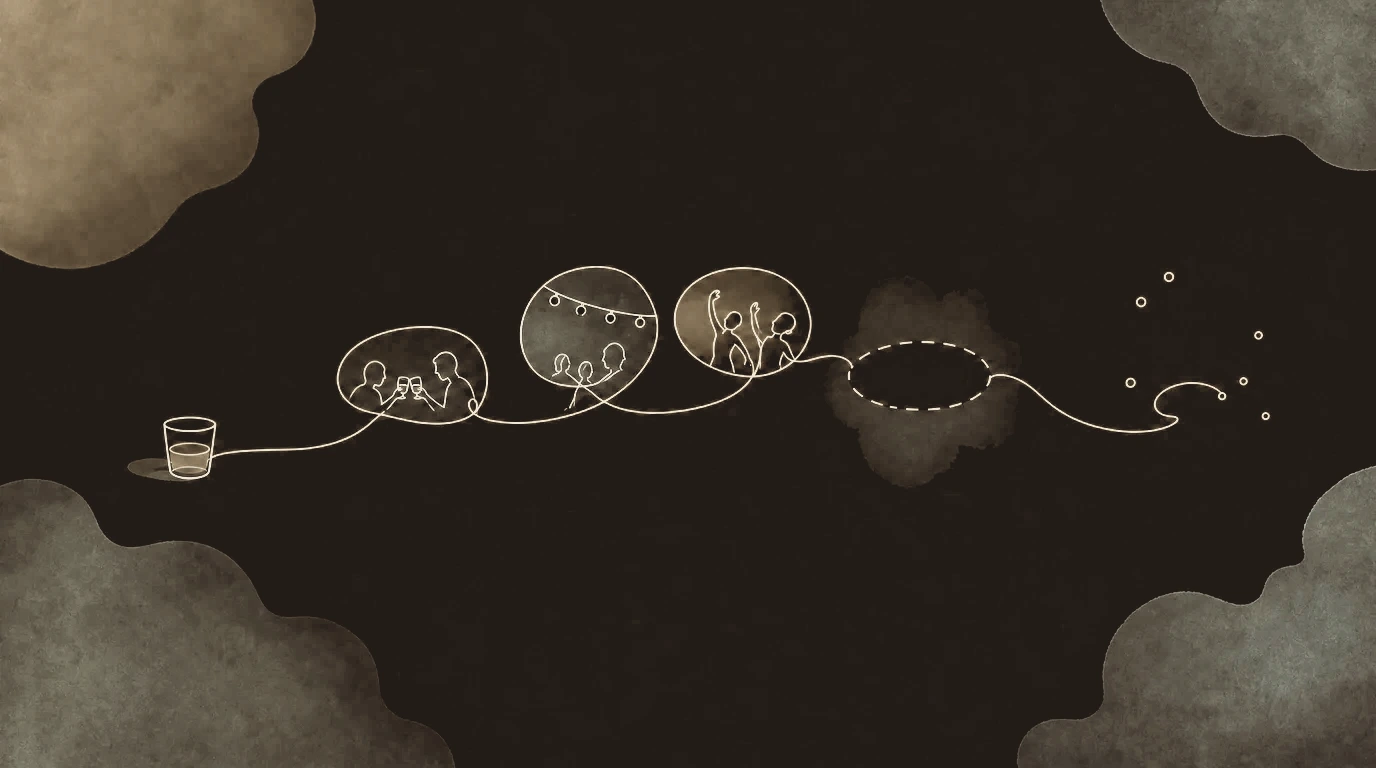
Alcohol blackouts are gaps in memory caused by intoxication. During the missing period, a person may have remained awake and appeared able to talk, walk, send messages, travel, or continue drinking. The brain failed to store parts of the experience as lasting memories.
A blackout deserves attention even when the evening looked ordinary to other people. It signals a level and pattern of intoxication that can carry substantial risk.
Key takeaways
- A blackout is a memory-formation failure during intoxication
- The person can remain conscious and active during the missing period
- Rapidly rising blood alcohol concentration is a major risk factor
- Fragmentary gaps and complete en bloc blackouts are different
- Repeated blackouts deserve a clinical alcohol assessment
- An unresponsive person may have alcohol poisoning and needs urgent help
What an alcohol blackout is
An alcohol blackout is an episode of anterograde amnesia. The person has difficulty transferring new experience into long-term memory while intoxicated.
This differs from forgetting an event over time. The memory may have been incompletely stored or absent from the beginning.
A review of alcohol-induced blackouts explains that people can engage in complex behavior during these episodes and later have limited or absent recall. The review identifies disruption in hippocampal memory processes and a rapid rise in blood alcohol concentration as central features (Wetherill and Fromme, 2016).
The person may:
- hold a conversation
- make purchases
- use a phone
- move between locations
- have sex
- argue or behave affectionately
- continue ordering or pouring alcohol
- answer questions without retaining the exchange
Apparent participation cannot confirm clear memory, sound judgment, or meaningful consent.
Fragmentary and en bloc blackouts
Researchers commonly describe two patterns.
Fragmentary blackout
Memory contains islands with gaps between them. A cue from another person, a photo, a location, or a message may prompt some recall.
En bloc blackout
Memory is absent for a continuous period. The missing material was not consolidated into durable memory, so reminders generally cannot restore it.
The boundary can feel unclear afterward. Someone may remember arriving and waking while the middle remains missing, or recall several scenes without knowing their sequence.
Avoid forcing a coherent story from guesses. Separate direct memory, digital records, other people's reports, and unanswered questions.
Why alcohol blackouts happen
Blackout risk rises when blood alcohol concentration climbs quickly. Important contributors include:
- drinking rapidly
- shots or strong mixed drinks
- drinking on an empty stomach
- high-intensity or binge drinking
- pre-drinking before an event
- drinking games
- unexpectedly strong pours
- mixing alcohol with sedating substances
- continuing after memory has started to fragment
A placebo-controlled laboratory study included 108 college students, half of whom had experienced a fragmentary blackout during the previous year. The groups performed similarly on memory tasks before drinking. After alcohol, participants with a blackout history had greater difficulty recalling a narrative and its source information. The study supports individual differences in vulnerability to alcohol-related memory impairment; it does not establish a personal blood alcohol threshold for blackout (Hartzler and Fromme, 2003).
Sex-related physiology, body size, drinking history, genetics, sleep, medication, and context may also affect risk. These factors cannot convert a high-speed drinking pattern into a safe one.
Blacking out and passing out are different
During a blackout, the person is conscious. Passing out means losing consciousness.
An unconscious or barely responsive person may have alcohol poisoning. Call emergency services when someone:
- cannot be awakened
- breathes slowly, irregularly, or stops breathing
- has blue, gray, or very pale skin
- vomits while unresponsive
- has a seizure
- is severely confused or unable to stay awake
- may have a head injury
Stay with the person, place them on their side if appropriate, and follow emergency instructions. Avoid leaving them to sleep it off.
Warning signs during a drinking episode
A blackout is often recognized after the fact. During the event, possible warning signs include:
- repeating the same question or story
- losing track of recent conversations
- confusion about where an object came from
- sudden gaps in the sequence of events
- being unable to recall a recent move between locations
- rapid drinking and escalating intoxication
- friends reporting behavior the person immediately forgets
These signs call for stopping alcohol, moving to a safer setting, arranging sober supervision, and preventing driving or further substance use. They cannot determine how much memory will be missing later.
What to do the next day
Start with immediate safety and health.
- Check for head injury, severe pain, vomiting, breathing difficulty, confusion, assault, unsafe sex, lost medication, or possible drink tampering.
- Seek urgent medical care when symptoms or circumstances are concerning.
- Avoid driving until fully sober and physically able.
- Write what you directly remember before adding other accounts.
- Review messages, transactions, transport, photos, and location data carefully.
- Speak with a trusted person who was present.
- Preserve evidence and seek specialist support when assault may have occurred.
The emotional response can include fear, embarrassment, anger, or shame. The guide to guilt and shame after drinking helps separate verified facts from global self-judgment.
Can memories return later?
Some fragmentary memories can return when a cue connects to material that was partially encoded. A complete en bloc gap generally remains absent because the memory was never stored in a retrievable way.
Be cautious with confident reconstruction. Photos and stories can influence what feels remembered. Keep categories clear:
- I remember this directly
- a record shows this
- another person reported this
- this remains unknown
That distinction can reduce false certainty while allowing practical repair and safety decisions.
Blackouts and alcohol use disorder
A blackout is not part of the diagnostic criteria for alcohol use disorder. It can occur in people who do and do not meet the disorder threshold.
Repeated blackouts still matter because they indicate hazardous intoxication and exposure to injury, assault, impaired driving, conflict, and other consequences. Ask:
- How often has this happened?
- Is the missing period getting longer?
- Do I intend to drink less than I actually drink?
- Have I tried to prevent blackouts and repeated the pattern?
- Is tolerance rising?
- Do I drink despite consequences?
- Has anyone expressed concern?
Use the signs of alcohol addiction guide for the broader criteria.
Reduce the chance of another blackout
The most reliable way to prevent another alcohol blackout is to avoid alcohol. If you are planning change, focus on the conditions that produced the rapid rise:
- remove alcohol access before the event
- avoid pre-drinking and shots
- choose alcohol-free plans
- arrange transport in advance
- tell one person about the goal
- leave when the event shifts toward rapid drinking
- avoid mixing alcohol with sedatives or other drugs
- seek treatment or medical support when control is difficult
Someone who drinks heavily or regularly may need medical advice before stopping. The guide to quitting alcohol safely explains withdrawal risk.
When to talk with a clinician
Arrange an assessment after a repeated blackout, an injury, a major consequence, a surprisingly small amount, or any episode involving loss of control.
Bring the estimated standard drinks, timing, food, medications, other substances, witnesses, symptoms, and previous episodes. A clinician can review alcohol use, memory concerns, head injury, medication interactions, withdrawal risk, and treatment options.
Blackouts do not need to become frequent before they matter. One episode can provide enough information to make a safer plan for next time.