Why is alcohol addictive when many people can drink without developing alcohol use disorder? Alcohol can create reward, relief, and strong learned associations. With repeated exposure, some people develop tolerance, withdrawal, increasingly automatic routines, and a narrower focus on alcohol. Biology and environment shape how strongly each part of that cycle develops.
There is no single alcohol-addiction switch. The pattern usually emerges through interacting changes in learning, motivation, stress, habit, access, and nervous-system adaptation.
Key takeaways
- Alcohol can reinforce drinking through pleasure, social effects, sedation, or relief
- Repeated cues and routines can activate wanting before a deliberate decision is made
- Tolerance and withdrawal can shift drinking toward avoiding discomfort
- Genetics, development, mental health, environment, and drinking pattern affect risk
- Understanding the mechanism can point to practical treatment targets
Alcohol changes several brain systems at once
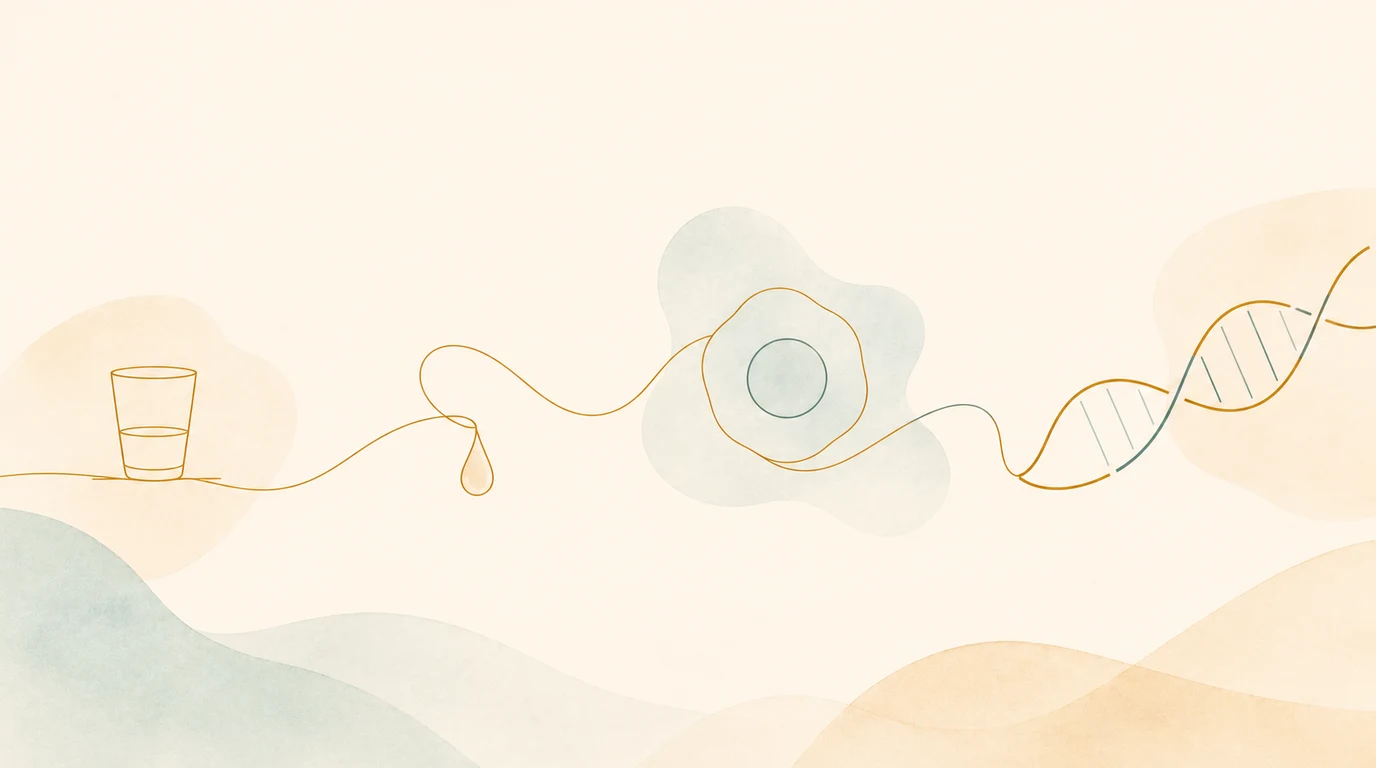
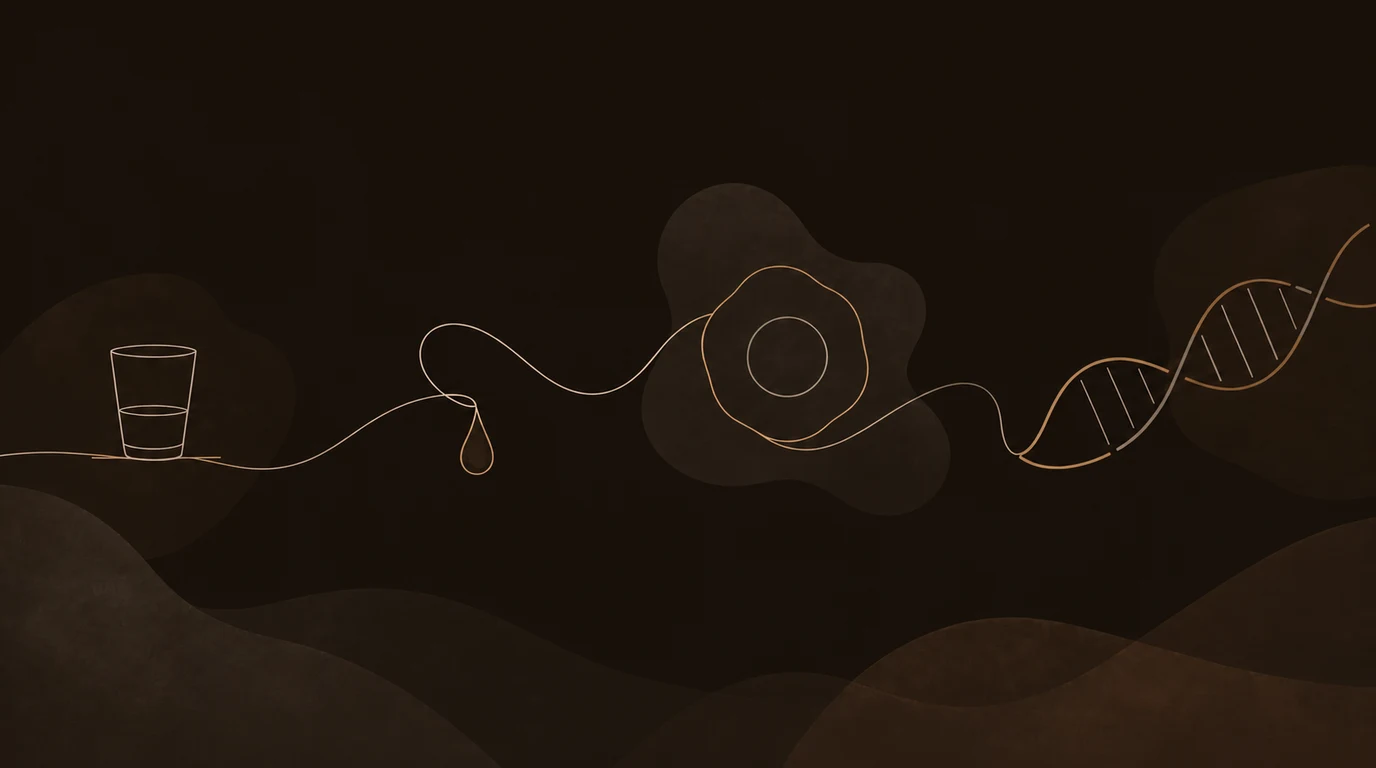
Alcohol is a small molecule with broad effects. It influences inhibitory and excitatory signaling, reward, stress, memory, motor control, sleep, and decision making. The immediate experience can include relaxation, stimulation, reduced social inhibition, sedation, impaired coordination, and slower judgment.
There is no single chemical in the brain that explains addiction. A historical neurobiology review describes alcohol's effects across GABA, glutamate, dopamine, opioid, and other systems, along with the learning and motivational changes that accompany repeated use (Tabakoff and Hoffman, 2013).
People also differ in their subjective response. The same amount can feel rewarding to one person, unpleasant to another, and different across occasions. Dose, speed, food, sleep, medication, genetics, expectations, and setting all influence the experience.
Reward teaches the brain to repeat a drinking context
Alcohol may make a social event feel easier, mark the end of work, create temporary pleasure, or change an uncomfortable internal state. When a result matters, the surrounding cues can become predictors of that result.
The cue may be Friday evening, a kitchen glass, a sports broadcast, a particular friend, cooking, payday, a bar smell, or the sound of opening a can. Repetition gives those cues motivational weight. Wanting can begin before alcohol is consumed.
Research on alcohol mechanisms combines evidence from human and animal studies around incentive sensitization, allostasis, and reinforcement. A 2020 review found support for several parts of these models while emphasizing individual variation and limits in translating animal findings directly to people (Kramer et al., 2020).
This learned-cue process helps explain why a person can feel little desire at noon and a strong pull at the usual evening time.
Relief can reinforce drinking too
Alcohol use can be repeated because it appears to remove or soften something: anxiety, tension, loneliness, boredom, pain, self-consciousness, insomnia, or withdrawal discomfort. In learning terms, relief can reinforce the action that came before it.
The short-term effect may be real while the longer sequence creates additional problems. Alcohol can disrupt sleep, increase next-day anxiety, worsen conflict, and narrow the number of coping responses available. Repeated drinking for relief can make the same internal state a stronger cue.
Models of alcohol dependence describe a growing role for stress and negative reinforcement as dependence develops (Gilpin and Koob, 2008). Human evidence does not support one identical progression for everyone. Some people continue drinking mainly for reward, some for relief, and many report changing mixtures across time.
Tolerance can increase the amount needed for the same effect
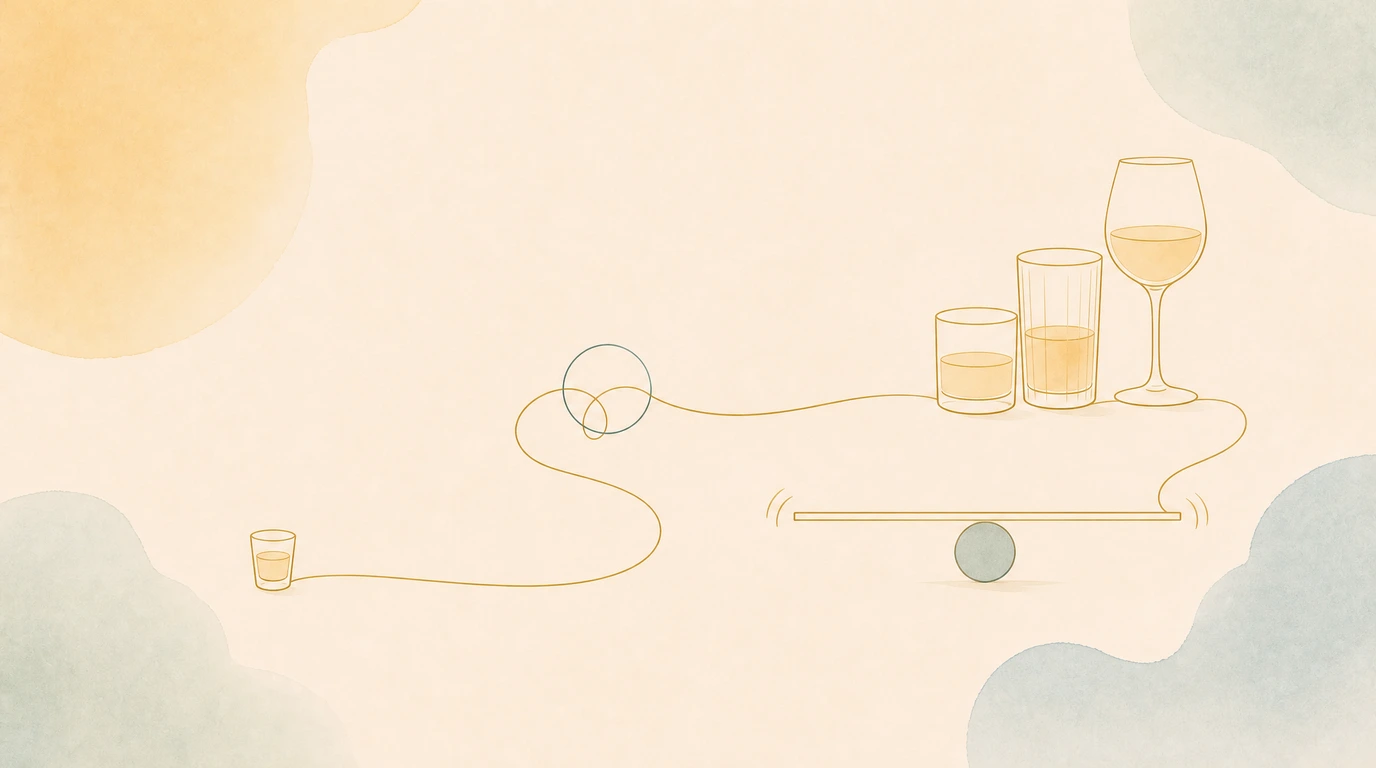
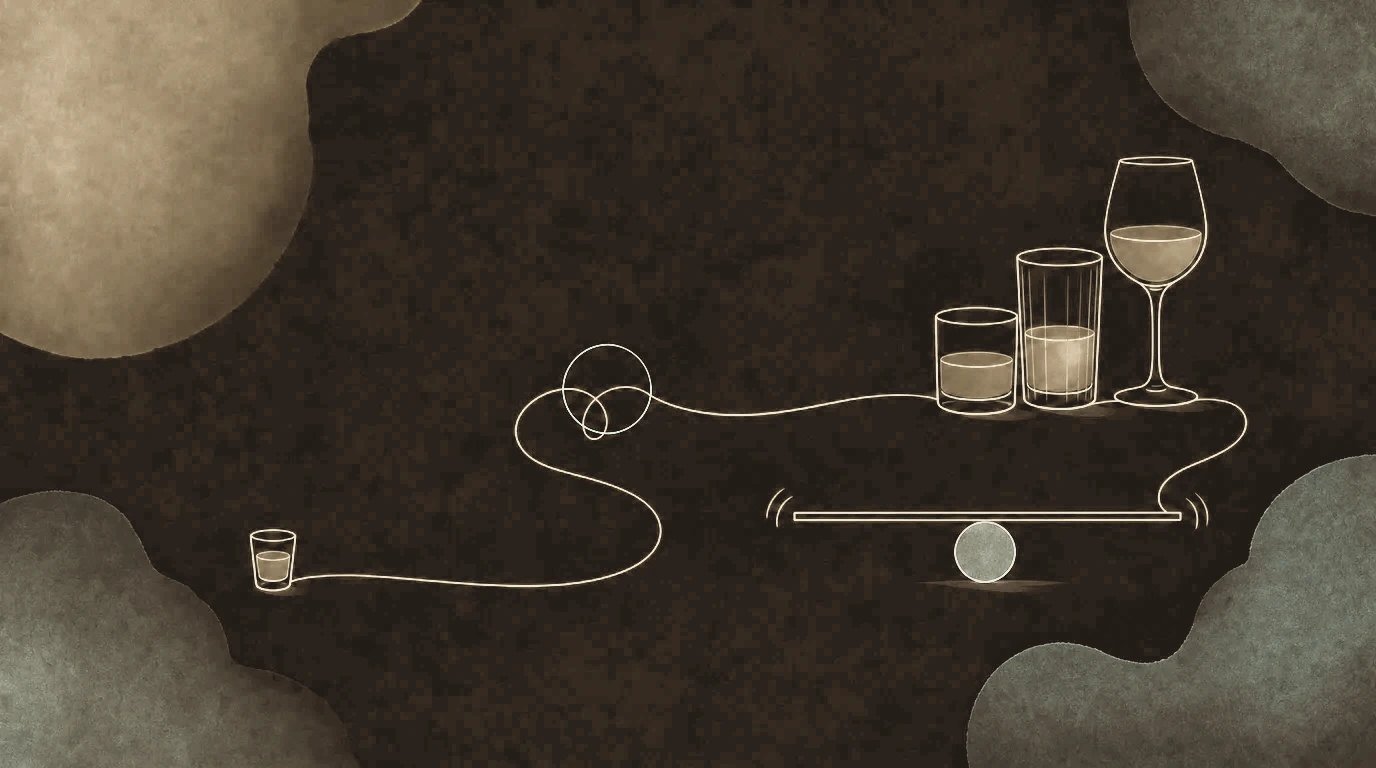
Tolerance means a familiar amount produces less effect or more alcohol is needed to reach the expected effect. It can develop through nervous-system adaptation, learned compensation in familiar settings, or both.
Tolerance can move the usual amount upward. A person may still describe the goal as relaxing or sleeping while the dose, duration, and consequences grow. High tolerance can also hide visible impairment from other people while judgment and physical risk remain affected.
Tolerance is one possible symptom of alcohol use disorder. Its presence alone cannot determine the diagnosis. The signs of alcohol addiction covers the full 11-symptom clinical assessment.
Physical dependence adds withdrawal and negative reinforcement
With sufficient sustained exposure, the nervous system can adapt to functioning in the presence of alcohol. When alcohol falls sharply, shaking, sweating, anxiety, nausea, insomnia, agitation, seizures, or delirium may occur.
Drinking can then relieve early withdrawal symptoms, which reinforces continued use. Morning drinking or drinking to feel steady can be part of this loop.
Physical dependence is one mechanism within alcohol addiction, and it can also exist without every other feature of a severe disorder. The alcohol withdrawal symptoms guide explains the timeline and urgent signs. Anyone with possible dependence should get medical guidance before an abrupt stop.
Repetition turns decisions into routines
Frequent drinking reduces the number of fresh decisions required. The route, purchase, glass, time, seat, and first sip can become a practiced sequence. Once the first cue appears, later steps may unfold with limited reflection.
Habit does not mean the action is impossible to change. It means the environment is carrying part of the sequence. Changing access, routes, timing, people, and the transition into the drinking window can therefore be as important as changing thoughts.
Neuroimaging research across addictions identifies altered responses in reward, habit, salience, executive, memory, and self-directed networks, with similar broad patterns reported in alcohol and other substance disorders. A systematic review also noted major differences among tasks, stages, and individuals (Zilverstand et al., 2018). Brain images cannot diagnose one person or prove that a specific routine is permanent.
Cravings combine learning, state, and access
A craving may contain several processes at once:
- a cue predicts alcohol
- an internal state creates a desire for change
- memory supplies the expected effect
- easy access makes drinking feel immediate
- attention narrows toward the alcohol option
In a real-time study of people with alcohol use disorder attempting moderation, craving was higher in personally valued drinking contexts (Kuerbis et al., 2020). This helps explain why generic advice can miss the strongest situations.
The guide to stopping alcohol cravings turns that mechanism into a trigger record and short response.
Why risk differs between people
Alcohol exposure alone does not produce the same outcome for everyone. Risk is shaped by:
- genetic differences
- age at first use and developmental stage
- amount, speed, and frequency of drinking
- repeated binge or withdrawal cycles
- mental-health symptoms and coping motives
- trauma and chronic stress
- social norms and the drinking of people nearby
- price, availability, and marketing
- family history
- other substance use
- sleep, pain, and medical conditions
These factors change probability. They do not assign destiny. A person with several risk factors may never develop AUD, while someone without an obvious family history can develop a serious pattern.
Why deciding to stop can still feel difficult
A clear decision competes with learned cues, immediate expected effects, automatic access, and a nervous system that may be adapted to alcohol. Motivation also changes across time and context. The person who wants to stop in the morning may encounter a different set of rewards, pressures, and options at 7 p.m.
This gap can feel confusing because your reasons to quit remain true even when you want to drink. Planning means fewer decisions have to be made again in the moment.
The practical alcohol quit plan covers goal, date, access, routines, support, and high-risk situations. Medical care can address withdrawal risk and medications for alcohol use disorder. Behavioral treatment can work on cues, coping, decision patterns, and support.
Recovery works on several parts of the cycle
Different tools target different mechanisms:
- Environment changes reduce cue exposure and fast access
- Routine changes interrupt automatic sequences
- Craving responses create time and another action
- Behavioral treatment builds coping, planning, and decision skills
- Medication can support abstinence or reduce heavy drinking for some people
- Medical withdrawal care manages physical dependence safely
- Social support adds contact before and during high-risk moments
- Mental-health care treats anxiety, depression, trauma, pain, or sleep problems that may be linked to drinking
The combination should reflect the pattern you actually have. Someone with a strong after-work routine may need environment and transition changes. Someone with withdrawal needs medical care. Someone whose drinking follows panic or trauma symptoms may need integrated mental-health treatment.
What the explanation can and cannot tell you
The addiction cycle is a useful model for understanding repeated alcohol use. It cannot tell you from one behavior whether you have AUD, which mechanism is strongest, or which treatment will work best.
Use the explanation to ask specific questions:
- Which effects of alcohol am I repeating?
- Which cues start the sequence?
- Has the amount increased?
- Do I drink to relieve withdrawal or another difficult state?
- How quickly can I access alcohol when a craving appears?
- Which part of the cycle needs medical, behavioral, or social support?
Alcohol is addictive because it can recruit reward, relief, learning, habit, and physical adaptation in the same repeated behavior. Those mechanisms develop differently across people. They also give recovery several concrete places to intervene.