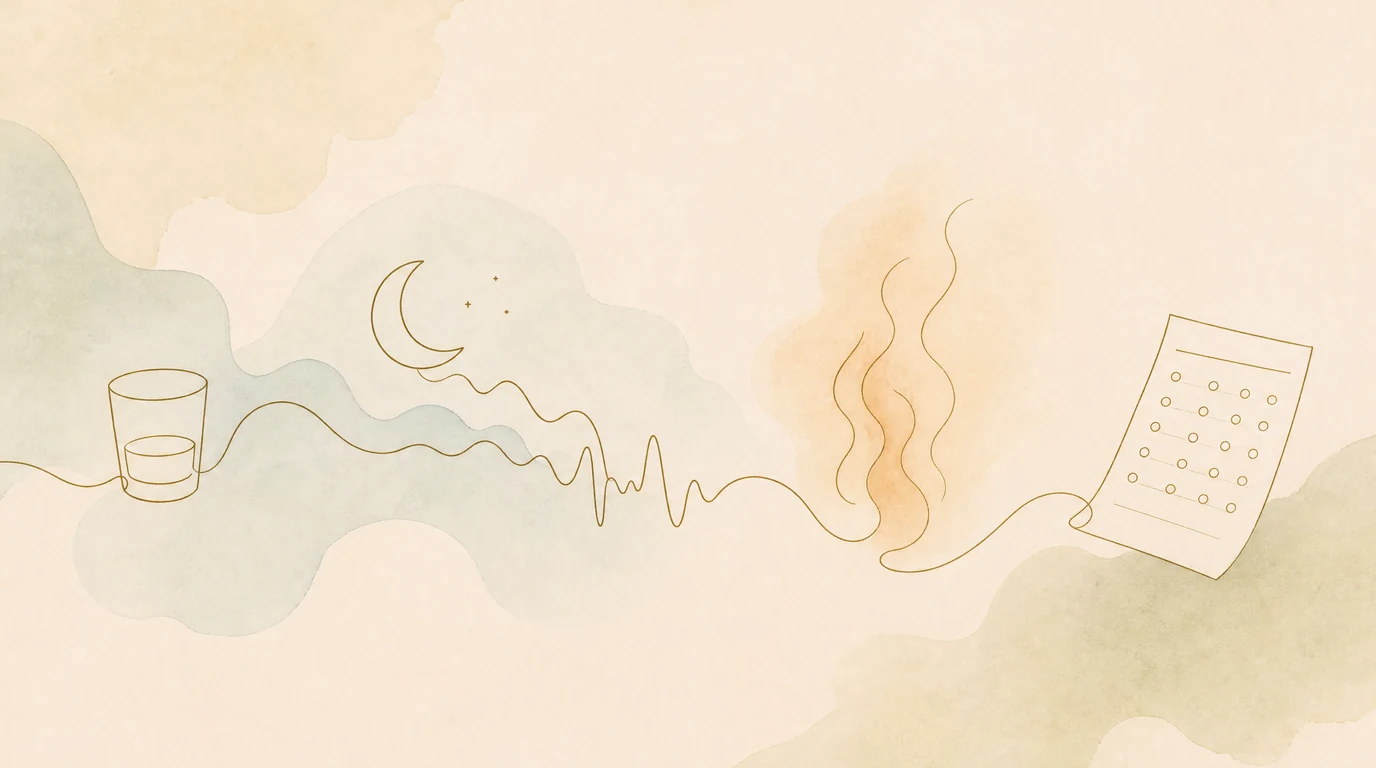
Sleep after quitting alcohol can improve, worsen briefly, or move between better and worse nights. Alcohol may have helped you fall asleep quickly while making the second half of the night lighter and more fragmented. Removing it ends that direct disruption, yet your sleep system and evening routine may need time to settle.
The course depends on how much and how often you drank, whether you used alcohol specifically for sleep, your withdrawal risk, and any existing insomnia, anxiety, depression, pain, sleep apnea, shift work, or medication effects. This guide explains the common patterns without assigning one deadline to everybody.
Key takeaways
- Alcohol can shorten sleep onset at higher doses while reducing and delaying REM sleep
- Early alcohol-free sleep may include insomnia, sweating, restlessness, or vivid dreams
- Sleep often improves over time, although persistent insomnia is common enough to deserve care
- A stable wake time and a repeatable evening routine provide better information than chasing one perfect night
- Severe withdrawal symptoms require urgent medical help
Why alcohol can feel like a sleep aid
Alcohol has sedating effects. At higher doses, it can shorten the time between getting into bed and falling asleep. That early effect can make alcohol seem useful even when the rest of the night is worse.
A systematic review and meta-analysis of 27 controlled studies found that alcohol delayed the start of rapid eye movement sleep and reduced REM duration. REM disruption appeared even at lower doses and became greater as the dose increased. Shorter sleep-onset time appeared mainly at higher doses (Gardiner et al., 2025).
This helps explain a familiar pattern: falling asleep quickly, waking in the middle of the night, sleeping lightly, sweating, using the bathroom, or waking earlier than planned. Snoring and breathing problems may also worsen after alcohol because it relaxes the upper airway.
Why sleep can feel worse after quitting alcohol
Stopping removes the sedating effect your evening may have relied on. It also changes a routine that linked a particular time, room, glass, or feeling with the transition to bed. The first alcohol-free nights can therefore expose several separate problems:
- acute withdrawal or nervous-system activation
- a bedtime that depended on drinking
- worry about whether sleep will happen
- an existing sleep disorder that alcohol had been masking
- late caffeine, irregular waking, screen use, pain, or medication effects
- a learned expectation that sleep requires alcohol
Insomnia is also one possible alcohol withdrawal symptom. Anyone with a history of severe withdrawal, seizures, hallucinations, delirium, or heavy regular drinking should review the medical safety questions before quitting.
What the first days and weeks may look like
During the first few days, sleep may be shorter, lighter, and more interrupted. Some people experience night sweats, anxious feelings, a racing heart, or restlessness. These symptoms belong to the broader withdrawal picture and should be judged together, especially when they intensify.
Later in the first week, the pattern may become inconsistent. One night can feel surprisingly good and the next can feel poor. Vivid dreams may appear as REM timing changes. Daytime fatigue can remain even after total sleep begins to rise.
Research in people treated for alcohol dependence shows why fixed promises are unreliable. A longitudinal study of 267 patients found that insomnia symptoms decreased with abstinence or moderate drinking outcomes over six months, yet insomnia persisted in one quarter of participants who remained abstinent (Brower et al., 2011). That clinical sample had more severe alcohol problems than many people who choose to stop drinking, so its percentages should not be applied to every ResetHive member.
Use the first seven days without alcohol guide for the daily structure. This page keeps the focus on sleep itself.
Track sleep without turning it into a nightly exam
A short record can separate a pattern from the feeling left by one bad night. For two weeks, note:
- the time you got into bed
- your best estimate of when you fell asleep
- major awake periods
- final wake time and time out of bed
- naps
- caffeine timing
- daytime sleepiness and concentration
- nightmares or vivid dreams that disrupted sleep
Avoid checking the clock repeatedly during the night. Record an estimate in the morning. The useful questions are whether sleep opportunity is becoming more regular and whether daytime function is improving.
Wearables can provide another estimate, but consumer devices do not measure sleep stages as precisely as clinical sleep studies. Their scores can also increase worry. Use a device only when the information helps you make a clear decision.
Rebuild the evening transition
Choose a sequence that can begin at the time drinking used to begin. Keep it simple enough to repeat after a tiring day.
- End work, chores, or stimulating media at a defined point.
- Prepare tomorrow's essentials so unfinished tasks stop circulating.
- Lower light and choose one quiet activity.
- Go to bed when sleepy, within a reasonably consistent window.
- Get up at the same time the next morning.
A stable wake time is usually more controllable than a forced bedtime. Morning light and daytime movement help anchor circadian timing. If you are awake in bed for a long period and becoming frustrated, move to a dim, quiet place and return when sleepiness increases.
These are general sleep principles. People with bipolar disorder, seizure disorders, significant medical illness, shift work, or severe daytime sleepiness may need an individualized plan.
Be careful with replacement sleep aids
The urge to replace alcohol with another sedating substance is understandable. Over-the-counter antihistamines, cannabis, borrowed medication, and supplements each have their own risks and evidence limits. Combining sedatives can be dangerous, and some prescription sleep medicines can create dependence or interact with alcohol if drinking resumes.
Review a sleep aid with a pharmacist or clinician who knows your alcohol history, other medications, breathing problems, pregnancy status, and medical conditions. Avoid changing prescribed medication suddenly.
For persistent insomnia, cognitive behavioral therapy for insomnia, or CBT-I, has direct evidence in people with alcohol use disorder. A 2023 randomized clinical trial found greater reductions in insomnia severity with CBT-I than with sleep-hygiene education. It also found fewer alcohol-related problems over time, while heavy-drinking frequency did not differ between groups (Miller et al., 2023). A broader meta-analysis also found that insomnia interventions improved sleep quality, with stronger average effects for behavioral treatments, while evidence for improved alcohol abstinence remained uncertain (Miller et al., 2017).
Check for another sleep condition
Quitting alcohol may reveal a problem that needs its own treatment. Arrange an assessment when you notice:
- loud snoring, choking, or witnessed breathing pauses
- uncomfortable leg sensations or repeated leg movements
- sleepiness that makes driving or work unsafe
- sleepwalking or dangerous behavior during sleep
- nightmares tied to trauma
- a very late or shifting sleep schedule
- insomnia lasting several weeks with impaired daytime function
Anxiety, depression, pain, menopause symptoms, thyroid problems, and medications can also affect sleep. Treating these conditions is compatible with alcohol recovery.
Know when sleep symptoms are urgent
Insomnia alone can feel awful. Urgency rises when it appears with signs of severe alcohol withdrawal. Seek emergency help for a seizure, hallucinations, severe confusion, collapse, extreme agitation, or rapidly worsening symptoms.
Get prompt professional help if several nights without sleep are accompanied by unusually high energy, racing thoughts, risky behavior, or a feeling that you do not need sleep. Seek immediate support if exhaustion or low mood brings thoughts of suicide or an inability to stay safe.
Review progress across several weeks
At the end of each week, review four measures:
- average time needed to fall asleep
- number and length of awakenings
- consistency of waking time
- daytime energy, attention, and safety
The benefits of quitting alcohol include ending alcohol's direct effect on sleep architecture. Your own improvement may arrive gradually and may still require insomnia treatment. A difficult night does not erase the broader change you are making.
If sleep remains poor, take the two-week record to a clinician. It gives them a clearer starting point for checking withdrawal, insomnia, breathing, mood, medication, and schedule factors.