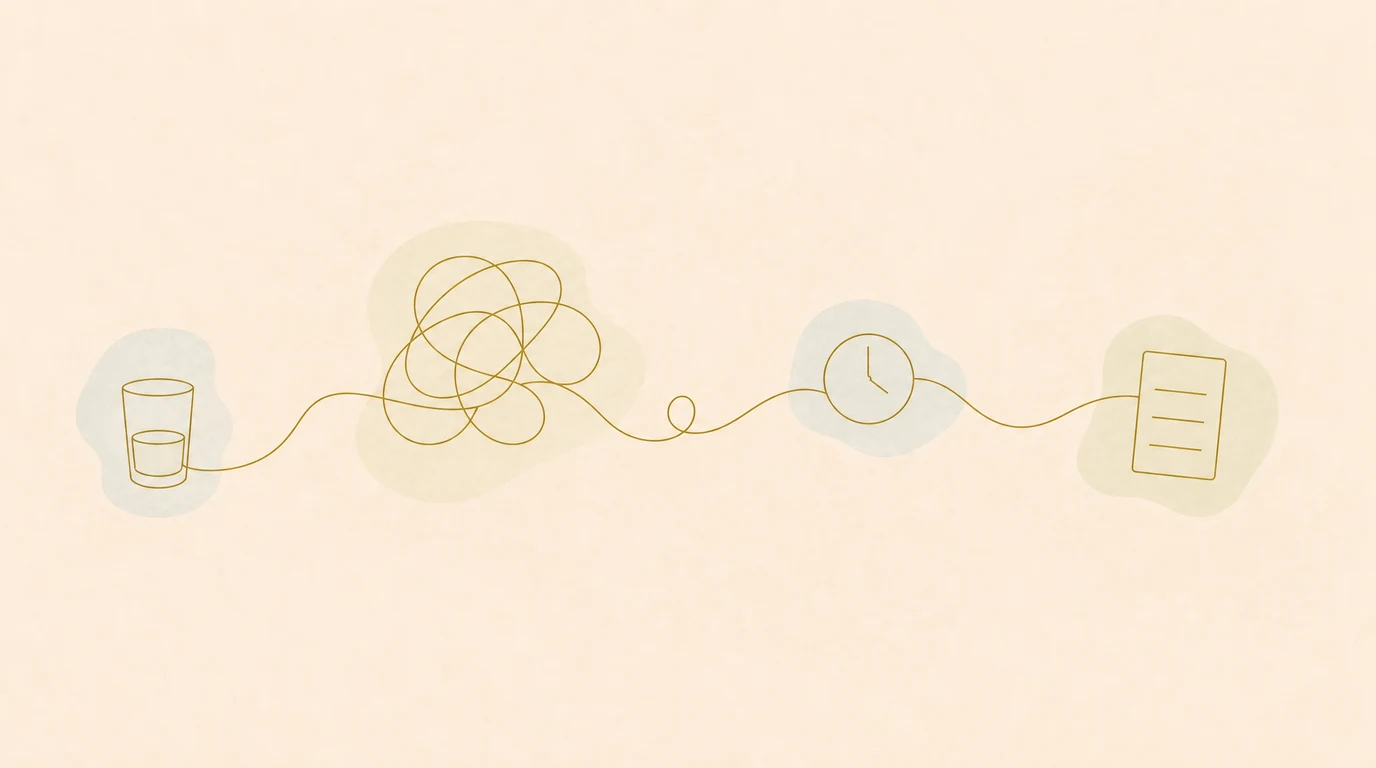
Does alcohol cause anxiety? It can contribute in several ways. Alcohol may feel calming while it is active, then anxiety can rise as the dose wears off, sleep is disrupted, a hangover develops, or withdrawal begins. Repeated use for relief can also make alcohol feel like the expected response whenever tension appears.
Alcohol does not explain every anxiety disorder. Some people were anxious before they drank, some develop anxiety during a period of heavier use, and others notice it mainly the next morning. Looking at timing is more useful than assigning one cause from a single symptom.
Key takeaways
- Alcohol can reduce tension temporarily and leave higher anxiety later
- Hangxiety is a common informal term for anxiety during a hangover
- Acute withdrawal can include anxiety and may require medical care
- Long-term evidence on alcohol causing anxiety is limited and mixed
- Recurring anxiety deserves its own assessment alongside the drinking pattern
Why alcohol can feel calming at first
Alcohol changes several brain systems involved in arousal, inhibition, reward, and stress. During a drinking episode, it may reduce self-consciousness, slow some thoughts, loosen muscle tension, or make a difficult social setting feel easier.
That immediate experience is real. It is also temporary. The same dose can impair judgment, increase emotional reactions, disrupt sleep, and create uncertainty about conversations or decisions. As the effect fades, the nervous system and stress response keep changing.
When alcohol becomes the standard response to anxiety, it also prevents a clear test of what else might help. The person may leave a gathering believing alcohol made the event possible, even though arrival, familiar people, time, and practice also affected the anxiety.
What hangxiety can feel like
Hangxiety describes anxiety during a hangover. It can begin overnight, on waking, or later the next day. Common experiences include:
- physical tension, sweating, nausea, tremor, or a racing heart
- worry about messages, conversations, spending, work, or memory gaps
- repeated checking and reassurance seeking
- restlessness or a sense that something is wrong
- shame or regret that intensifies ordinary uncertainty
- panic symptoms in someone who is already vulnerable to panic
A 2026 systematic review of 22 studies involving 6,152 participants found that hangovers were associated with higher negative affect, including anxiety, stress, and depressed mood. The included studies differed in methods and populations, so the review supports an association without providing one biological explanation or a precise duration for everyone (Rothman et al., 2026).
Does alcohol cause anxiety over the long term?
The long-term relationship is harder to separate. People may drink because they feel anxious, experience anxiety because of drinking-related effects, or move through both directions over time. Mental health, trauma, social conditions, sleep, medication, other substances, and physical health can influence both.
A 2024 systematic review found only eight longitudinal adult studies that measured alcohol exposure and anxiety at least three months later. Results varied in direction and significance, and most studies used specific clinical or convenience samples. The authors concluded that evidence remains too limited to define a clear long-term dose-response relationship (D'Aquino et al., 2024).
This uncertainty supports a personal test. Track anxiety during drinking periods and during a sustained alcohol-free period while keeping other major changes visible. Improvement adds useful evidence about your pattern. Persistent anxiety gives you a reason to pursue anxiety-specific care.
Anxiety after stopping alcohol
Anxiety can rise during early abstinence for more than one reason. The familiar coping method is gone, sleep may be poor, unresolved situations remain, and the nervous system may be adjusting. With physical dependence, anxiety can be part of alcohol withdrawal.
Withdrawal anxiety often appears with other signs such as tremor, sweating, nausea, insomnia, agitation, or a fast heart rate. A history of severe withdrawal, seizures, hallucinations, delirium, or heavy regular drinking changes the level of risk. Review how to quit alcohol safely before stopping when those factors may apply.
In a large treatment sample of 1,005 people with alcohol use disorder, anxiety and depression symptoms generally declined during the first month, while a subgroup had sustained high symptoms. Co-occurring mental health conditions and PTSD symptoms were among the factors that differed across trajectories (Gopaldas et al., 2025). This clinical evidence describes groups and cannot predict one person's timeline.
Map your relief-and-rebound cycle
For one or two weeks, record the sequence around anxiety and alcohol:
- What happened before the anxiety rose?
- What did you notice in your body and thoughts?
- When did drinking begin, and how much did you drink?
- What changed during the first hour?
- How was sleep that night?
- What did anxiety feel like the next morning and afternoon?
- When did the desire to drink return?
This record can reveal several different cycles. One person drinks before social events. Another drinks after work, sleeps poorly, wakes anxious, and drinks again the next evening to settle down. A third has panic symptoms unrelated to alcohol and uses drinking as an inconsistent form of self-treatment.
The alcohol cravings guide can help you map the trigger and choose a short response when the desire to drink is active.
Respond to anxiety the next day
During a hangover, start with safety and basic orientation. Check whether you are still impaired before driving, working with machinery, taking sedating medication, or caring for someone else. Eat and hydrate according to your normal medical needs, reduce avoidable stimulation, and postpone major conclusions until the acute state has settled.
Choose one concrete repair if alcohol created a problem. Send the necessary message, check the account, or reschedule the commitment. Repeatedly reviewing every detail can feed the anxiety without adding new information.
Avoid using more alcohol as the default way to stop the feeling. Relief can reinforce the same cycle and can obscure emerging withdrawal. If symptoms are escalating or include severe withdrawal signs, seek medical care.
Change the recurring pattern
If anxiety repeatedly leads to drinking, build a response that begins earlier than the first drink:
- name the recurring situation precisely
- decide what you will do during the first ten minutes
- reduce alcohol access before the situation starts
- tell one person what kind of support would help
- plan transport and an exit for social settings
- schedule anxiety treatment if the pattern persists
The response should match the context. A crowded event may need a shorter visit and a planned exit. Work stress may need a transition routine before arriving home. Nighttime anxiety may require a sleep assessment. Trauma reminders, panic attacks, or obsessive worry may need professional treatment designed for those conditions.
Ending alcohol use can remove hangovers and give you cleaner information about your baseline mental health. The benefits of quitting alcohol may include a more predictable mood and sleep pattern, while individual anxiety can follow a separate course.
When anxiety needs professional help
Arrange an assessment when anxiety is frequent, lasts beyond drinking or withdrawal episodes, interferes with work or relationships, causes panic attacks, or leads you to drink for relief. Tell the clinician about both the anxiety timeline and alcohol pattern. This helps them consider withdrawal, medication interactions, sleep, medical causes, and an independent anxiety disorder.
Seek emergency help for a seizure, hallucinations, severe confusion, fainting, chest pain, dangerous agitation, or thoughts of suicide. If anxiety rises sharply after cutting down or stopping, include the timing and amount of your last drinks when asking for help.
Recovery can address both parts of the cycle. Removing alcohol gives anxiety less fuel from intoxication, sleep disruption, hangovers, and withdrawal. Anxiety-specific care gives you more ways to handle the situations that previously led to drinking.