If you’re a teenager reading this, a few things are probably true: you found porn young, you didn’t choose for it to become a habit, and you’re starting to notice it’s affecting you in ways you don’t like.
Maybe you’re spending more time on it than you want. Maybe the content has escalated into stuff that bothers you. Maybe it’s messing with your focus, your confidence, or how you see other people. Maybe you just feel off and you’re starting to connect the dots.
Whatever brought you here, the fact that you’re reading this puts you ahead of most adults. Recognizing a pattern and wanting to change it (especially at your age) takes real self-awareness.
This guide is for you. Not your parents, not a health teacher. You. Straight talk about what’s happening, why it’s harder as a teenager, and what actually helps.
Key takeaways
- Your teenage brain forms habits faster and stronger than an adult brain; that’s biology, not a character flaw, and it’s why addressing this now matters more than waiting
- Reduce access first: charge your phone outside your bedroom, use content blockers, remove triggering apps; environment changes beat willpower every time
- Urges peak within 5-15 minutes and then fade; your job is to get through that window with movement, environment changes, or a timer
- You don’t need to tell everyone, but finding one trusted person (counselor, therapist, older sibling, helpline) breaks the isolation that keeps the cycle going
- Relapses are normal and don’t erase your progress; what matters is how quickly you recover, not whether you’re perfect
Why it hits different when you’re young
Your brain is still developing. Specifically, the prefrontal cortex (the part responsible for impulse control, long-term planning, and evaluating consequences) doesn’t fully mature until your mid-twenties.
This isn’t a weakness. It’s biology. But it means:
- Your reward system is more reactive. Dopamine hits from porn feel more intense during adolescence than they will later. Your brain is primed to form strong habits around anything that delivers high reward, and porn is engineered to deliver the highest possible reward.
- Habits form faster and run deeper. Neural pathways laid down during your teenage years are especially durable. A habit that starts at 13 wires itself in more firmly than one that starts at 25.
- Your understanding of sex is still forming. If porn is your primary reference for what sex looks like, it shapes your expectations in ways that don’t match reality. This can create confusion, performance anxiety, and difficulty connecting with real people later.
None of this means you’re broken or that the damage is permanent. It means the sooner you address this, the better, and you’re addressing it right now.
The unique challenges you’re facing
Limited privacy for recovery
Adults can restructure their environment. They can set up their apartment, control their devices, choose their schedule. You probably share a room, use family devices, or have parents monitoring your activity.
This means:
- You might not be able to install blocking software without someone noticing
- Journaling feels risky if someone might find it
- Seeking help means potentially revealing something you’re deeply private about
These are real constraints, not excuses. Work around them:
- Use private browsing for recovery resources, not for porn. Ironic, but practical. If you need to read articles like this one without someone asking questions, that’s okay.
- Journal in a notes app with a passcode, or use a physical notebook you keep in your school bag.
- If you can install a content blocker on your own device, do it. It doesn’t need to be perfect; it just needs to add friction. Even a few seconds of delay during an urge can make the difference.
Peer pressure and normalization
In many friend groups, porn is treated as normal, even a bonding activity. Jokes about it, sharing links, comparing what you’ve seen. If everyone around you treats it as harmless entertainment, deciding to quit can feel isolating.
You don’t have to announce your decision. You don’t owe anyone an explanation. But know this: the fact that something is common doesn’t make it harmless. Lots of teenagers drink too. That doesn’t make alcohol good for developing brains.
You might be surprised to find that some of your friends feel the same way you do but haven’t said anything. You don’t have to start a movement, but you’re not as alone in this as you think.
Shame that keeps you silent
Shame is the biggest obstacle for teenagers in this situation. You might think:
- “I’m disgusting for watching this stuff.”
- “No one else my age has this problem.”
- “If anyone found out, my life would be over.”
Let’s be direct: millions of teenagers are dealing with the same thing right now. You are not uniquely broken. You encountered something designed by adults to be maximally addictive, at an age when your brain was maximally vulnerable to it. That’s not a character flaw. That’s a bad situation.
Shame makes you hide, and hiding makes recovery harder. Finding even one person you can be honest with (a counselor, a trusted older sibling, a therapist, a helpline) can crack the isolation that keeps the cycle going.
The escalation problem
Many teenagers notice that their porn use escalates over time. Content that was stimulating a year ago doesn’t do it anymore, so you seek out more extreme, more novel, or more niche material. Sometimes you end up watching things that don’t reflect your actual desires or values.
This is how dopamine tolerance works, not a sign that you’re becoming a bad person. When you stop, your tastes gradually normalize. The escalation reverses. What feels permanent right now isn’t.
What actually helps
Reduce access, because willpower alone is not enough
Your environment matters more than your determination. Make porn harder to get to:
- Remove social media apps that lead you to triggering content
- Charge your phone outside your bedroom at night
- If you have a laptop, use it in shared spaces when possible
- Clear bookmarks and accounts tied to porn use
- Use your device’s built-in screen time or content restriction features
You’re not building a fortress. You’re adding speed bumps. Every extra step between the urge and the behavior gives your rational brain a chance to catch up.
Learn to ride the urge
Urges feel like they’ll last forever. They don’t. A typical urge peaks within five to fifteen minutes and then fades. Your job is to get through that window.
When an urge hits:
- Name it. “I’m having an urge. I’m feeling [bored/stressed/lonely/tired].”
- Move your body. Push-ups, a walk, cold water on your face, anything physical.
- Change your environment. Leave the room. Go somewhere with other people.
- Wait fifteen minutes. Set a timer if you need to. Just don’t act on it until the timer is done.
You won’t always succeed. That’s normal. But every time you ride out an urge, you’re training your brain that it can survive without the hit. That training adds up. Check out the full urge surfing guide for a more detailed protocol.
Find replacement activities that actually satisfy
Boredom is one of the biggest triggers at your age. You need things to do that genuinely engage you, not just “distractions” but activities that give you real satisfaction.
- Physical activity (sports, gym, running, martial arts)
- Creative projects (music, art, coding, writing, building things)
- Social time with friends in person
- Learning something you’re genuinely curious about
The goal isn’t to fill every minute. It’s to build a life with enough genuine reward that porn stops being the default.
Talk to someone
This is the hardest step and the most powerful one.
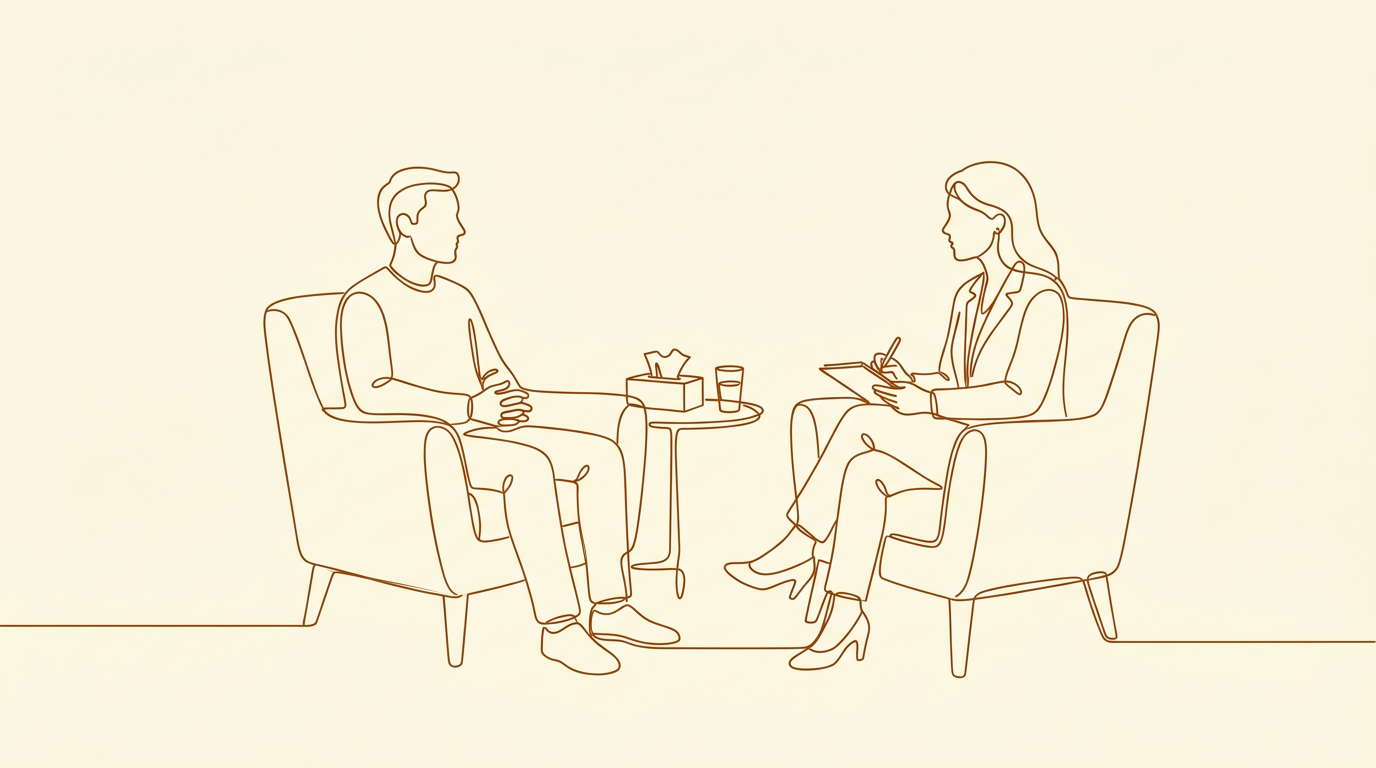
A school counselor is trained to handle this kind of conversation. They’re not going to announce it to your class. They hear personal stuff every day.
A therapist who works with adolescents can help enormously, especially one familiar with compulsive behaviors. If your family has insurance, you may be able to see one. You can also check for free or low-cost options in your area.
A trusted adult (an older sibling, a coach, a family friend, a relative you’re close to) can provide support even if they’re not a professional. Sometimes just having one person who knows makes the weight bearable.
A helpline or chat service lets you talk anonymously if you’re not ready for a face-to-face conversation.
You don’t have to tell everyone. You just need one person.
Handle relapses without self-destruction
You will probably slip up. Most people do, regardless of age. When it happens:
- Don’t spiral. A relapse is one event, not a reset of all your progress.
- Write down what happened: what triggered it, what you were feeling, what time of day it was.
- Identify one thing you’ll do differently next time.
- Move on. Self-punishment doesn’t prevent the next relapse; it makes it more likely.
The people who successfully quit aren’t the ones who never relapse. They’re the ones who recover from relapse quickly instead of turning one slip into a week-long binge.
What you’re building
Quitting porn as a teenager isn’t just about stopping a bad habit. It’s about giving your developing brain the best possible foundation. The neural pathways you build now (for managing urges, for dealing with discomfort, for connecting with real people) will serve you for the rest of your life.
The adults who struggle most with this issue often say the same thing: “I wish I’d dealt with it when I was younger.”
You’re dealing with it now. That’s not just smart; it’s brave.
You don’t need to be perfect. You don’t need to fix everything today. You just need to keep making the next right choice, one urge at a time.