You’ve told yourself “never again” before. Probably many times. And you meant it every single time.
So why didn’t it stick?
Not because you’re weak. Not because you don’t want it enough. Because willpower is the wrong tool for this job, and relying on it for your porn addiction recovery almost guarantees you’ll fail.
Key takeaways
- Willpower is depletable, state-dependent, and can’t compete with automated behavior; it’s the wrong primary tool for quitting porn
- Environment design is the highest-leverage change: make porn harder to access and healthier behaviors easier to do
- Interrupt the habit loop at the cue stage (remove triggers), not the response stage (resist in the moment)
- Build systems that work on your worst days: blockers, accountability, scheduled alternatives during high-risk windows
- Long-term change comes from identity shift, not constant resistance: “I’m not someone who watches porn” beats “I want to but I’m choosing not to”
The willpower myth
We’re taught that overcoming bad habits is a matter of discipline. Just decide. Just stop. Just be stronger.
This framing sounds empowering, but it’s a trap. It puts the entire burden on a single psychological resource (your conscious self-control), and that resource has real limitations.
Willpower is depletable. Research on self-control consistently shows it functions like a battery. Every decision you make throughout the day drains it. By evening (when most porn use happens), you’ve been making decisions, resisting impulses, and managing stress for hours. Your willpower battery is nearly empty right when you need it most.
Willpower is state-dependent. When you’re well-rested, fed, calm, and socially connected, willpower is abundant. When you’re tired, hungry, stressed, lonely, or bored, it evaporates. And those depleted states are exactly the ones that trigger porn use.
Willpower can’t compete with automated behavior. Habits that have been reinforced thousands of times operate below conscious awareness. By the time willpower kicks in, you’ve already picked up the phone, already opened the browser, already started scrolling. You’re fighting a battle that was lost before you knew it started.
The real problem: you’re fighting the wrong war
White-knuckling your way through urges is like standing in a river trying to push water upstream. You might hold your ground for a while, but the current doesn’t stop, and eventually your arms give out.
The people who successfully quit porn don’t have more willpower than you. They have better systems.
They changed the river.
What works instead: environment design
The single most effective thing you can do for recovery is make porn harder to access and healthier behaviors easier to do. This is environment design, and it works because it removes the need for willpower in the first place.
Examples:
- Block porn on your phone. Not because you can’t bypass it, but because the extra steps give your conscious brain time to catch up.
- Move your phone out of the bedroom. Most late-night use happens because the device is within arm’s reach when you’re already in a low-willpower state.
- Delete apps and accounts connected to porn use. Every tap you add between trigger and behavior is a chance to choose differently.
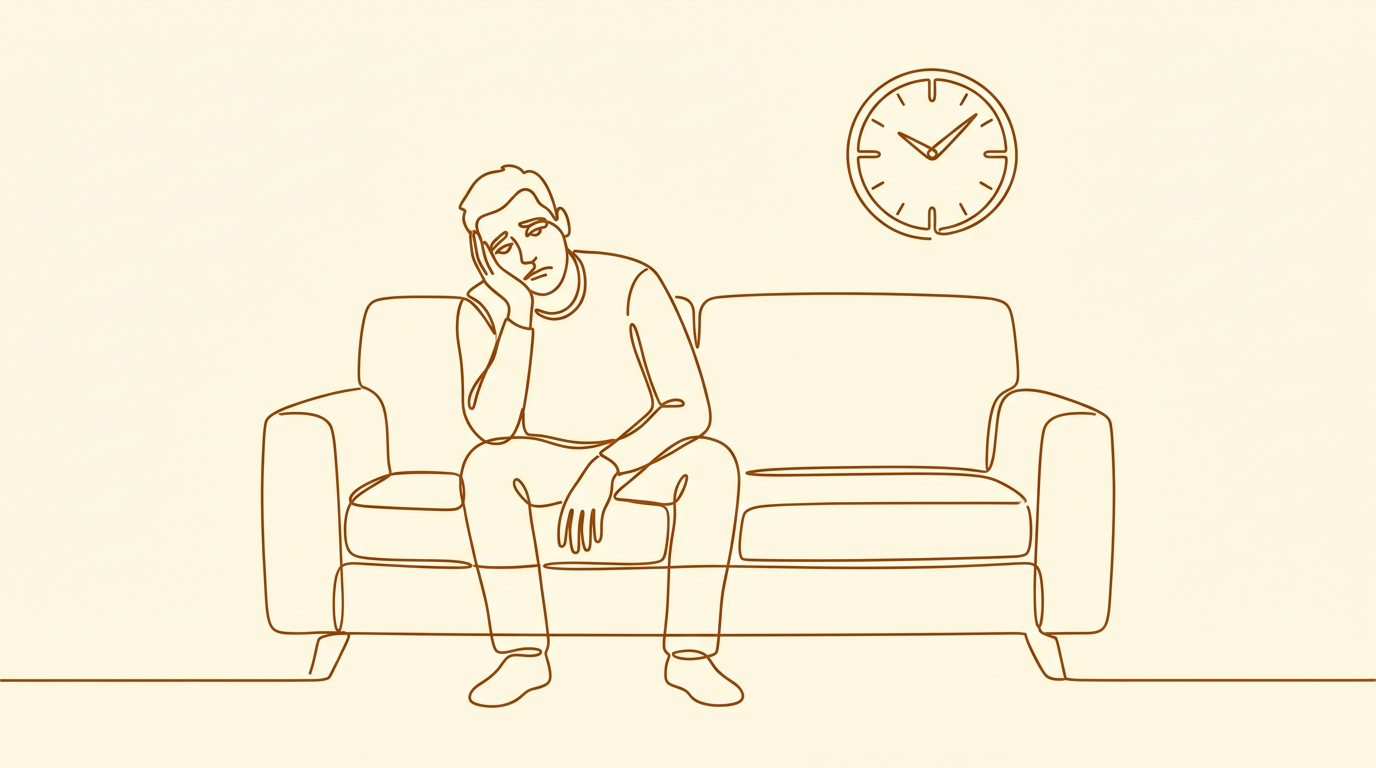
- Rearrange your physical space. If you always use porn on the couch late at night, don’t be on the couch late at night. Change the furniture, change the room, change the routine.
Environment design isn’t about building a cage. It’s about making the default path lead somewhere better.
Understanding the habit loop
Every habitual behavior follows the same loop: cue → craving → response → reward.
For porn use, this might look like:
- Cue: You’re alone in bed at night, phone in hand, nothing to do.
- Craving: A mix of boredom, tension, and the memory of how porn feels.
- Response: You open a browser and start searching.
- Reward: Dopamine release, temporary relief from whatever you were feeling.
Willpower tries to interrupt this loop at the response stage, after the cue has fired and the craving is already building. That’s the hardest possible place to intervene.
Smarter approaches intervene earlier:
- Remove the cue. No phone in bed. Different evening routine. Never be in the situation where the loop starts.
- Redirect the craving. When the restless energy appears, channel it into something physical. Push-ups. A cold shower. A walk. The craving is just energy looking for an outlet; give it a different one.
- Replace the response. Have a specific plan for what to do instead of watching porn that you’ve decided on in advance, not in the heat of the moment.
- Find alternative rewards. Your brain needs dopamine. The goal isn’t to starve it but to find sources that don’t come with a shame hangover. Exercise, creative work, real human connection. These produce genuine reward.
Building systems, not relying on motivation
Motivation is willpower’s cousin. It feels powerful when it’s there, but it’s unreliable. You can’t schedule motivation. You can’t summon it when you need it most.
Systems work regardless of how you feel. A system is any structure that makes the right behavior automatic:
- A morning routine that starts your day with intention instead of reaching for your phone.
- An accountability check-in with someone who knows what you’re working on. Not confession-based, just consistent. Healthy accountability creates gentle external pressure that compensates for days when internal motivation is low.
- Scheduled activities during high-risk times. If you know 10pm to midnight is your danger zone, fill that time before it arrives. A class, a regular call with a friend, a gym session, anything that’s planned and committed.
- Friction by design. Every barrier between you and porn (even small ones) adds up. A passcode you don’t know. An app you deleted. A browser that’s filtered. A device that’s in another room.
The beauty of systems is that they work on your worst days. Willpower is strongest when you need it least. Systems carry you through the moments when willpower is gone.
The role of identity
There’s one more piece that willpower misses entirely: identity.
Willpower says “I want to watch porn, but I’m choosing not to.” That’s exhausting. You’re in constant conflict with yourself.
Identity says “I’m not someone who watches porn.” There’s no conflict to resolve. The decision has already been made at a deeper level.
This shift doesn’t happen overnight. You can’t fake it. But it builds gradually as you accumulate evidence. Every time you choose differently (especially when it’s hard), you’re casting a vote for the person you’re becoming.
Over weeks and months, those votes add up. The identity solidifies. And what once required enormous effort starts to feel natural.
What to do with this information
Stop blaming yourself for failed attempts that were based on willpower alone. That’s not a character flaw; it’s a strategy flaw.
Instead:
- Audit your environment. Where are the cues? Where is the access? What makes it easy? Change those things.
- Map your habit loop. Know your triggers, your craving patterns, and your highest-risk times.
- Build at least three systems that work without motivation: blockers, accountability, scheduled alternatives.
- Start small. You don’t need a perfect system on day one. One environmental change today is worth more than a grand plan you never execute.
For the full framework of how these pieces fit together, read our comprehensive guide on how to quit porn.
Willpower got you to this page. Systems will get you to the other side.