You told yourself you were done. You meant it. Then something happened (a bad day, a late night, a flash of an image), and twenty minutes later it was over. Now you are sitting in the aftermath asking: what just happened? Did I even choose that?
Understanding what happens in your brain during a porn relapse does not excuse the behavior. But it explains the speed, the feeling of powerlessness, and the seemingly automatic quality of the whole thing. And when you understand the machinery, you can start interrupting it.
Key takeaways
- A porn relapse follows a four-stage neurological cascade: trigger → craving → autopilot → crash
- The “autopilot” feeling is real; your basal ganglia can execute the behavior before your conscious mind catches up
- Willpower fails under pressure because it’s a slow prefrontal cortex function competing against fast, deeply grooved limbic responses
- The best intervention points are before the cascade starts (environment design) and at the craving stage (physical interruption), not during autopilot
- Your brain isn’t broken; the same neuroplasticity that built the habit can undo it through consistent new responses
The Four-Stage Neurological Cascade
A porn relapse is not one event. It is a chain reaction with distinct stages, each driven by different brain systems. Most people only notice stage four, the regret. The real action happens earlier.
Stage 1: The Trigger
Every relapse begins with a cue. It can be external (a provocative image, being alone at night, opening a specific device) or internal (loneliness, stress, boredom, anger, even excitement).
Your brain’s amygdala (the threat-and-reward detection system) flags the cue before you are consciously aware of it. This happens in milliseconds. You may notice a subtle shift in your body: a tightness, a pull, a restlessness. That is your limbic system waking up.
At this stage, nothing has gone wrong yet. Triggers are not choices. They are environmental and emotional inputs. The question is what happens next.
Stage 2: The Craving
Once the trigger fires, your brain’s reward system activates. Dopamine (the anticipation chemical) begins rising. Not because you are experiencing pleasure, but because your brain is predicting it.
This is a critical distinction. Dopamine is not about enjoyment. It is about wanting. Your brain has learned, through hundreds or thousands of repetitions, that this trigger sequence leads to a dopamine payoff. So it starts revving the engine before you have even turned the key.
The craving feels physical. Your focus narrows. Other priorities fade. The rational part of your brain (the prefrontal cortex) is still online, but it is now competing with a system that is louder, faster, and more practiced.
This is where most people describe “the war in my head.” One voice says stop, another says go. The go voice has a neurological head start.
Stage 3: Autopilot
If the craving is not interrupted, something shifts. People describe it as “going on autopilot,” “checking out,” or “watching myself do it.” This is not imagination. It is a real neurological state.
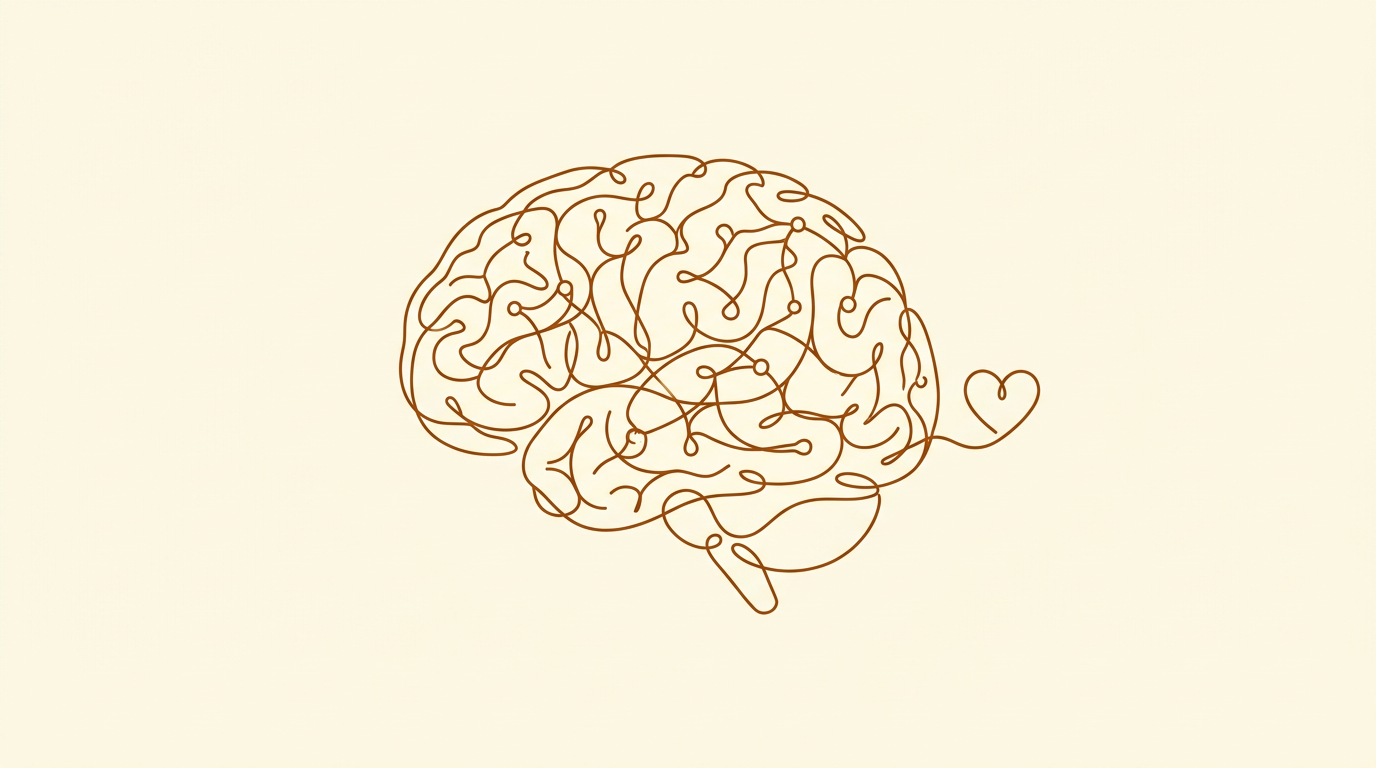
Your brain has a system for executing well-practiced routines without conscious input: the basal ganglia. It is the same system that lets you drive a familiar route without thinking. When a behavior has been repeated enough times in response to the same cues, it gets encoded as a habit loop: cue → routine → reward.
During autopilot, your prefrontal cortex (the part responsible for long-term thinking, impulse control, and identity-based decisions) is effectively sidelined. It is not gone, but it is overridden by a faster system that does not care about your goals. It only knows the pattern.
This is why relapse often feels like it “just happened.” In a real neurological sense, your conscious decision-making was not fully in the driver’s seat. The habit system was.
That does not mean you had zero agency. There were moments (small windows) where a different choice was possible. But those windows were narrow, and they required a kind of awareness and preparation that most people have not yet built.
Stage 4: The Crash
After the behavior, dopamine drops sharply. Prolactin rises. The prefrontal cortex comes back online, and now it has full access to what just happened.
This is where regret, shame, and disgust hit. Your brain is no longer in craving mode. It is in evaluation mode. And the evaluation is brutal because you are now judging a decision that was made by a different brain state.
It is like waking up and reviewing the choices someone else made while you were asleep. Except that someone else was also you.
The neurochemical crash can last hours. During this window, you are at high risk for the what-the-hell effect, the pattern where the emotional pain of the crash drives you straight back into the behavior for relief.
Why “Just Use Willpower” Does Not Work
Willpower is a prefrontal cortex function. It is slow, effortful, and runs on limited fuel. The craving-to-autopilot sequence is a limbic and basal ganglia function. It is fast, automatic, and deeply grooved.
Asking willpower to consistently override a well-practiced habit loop is like asking a bicycle to outrun a train. It can work sometimes, when the craving is mild, when you are rested, when the environment is supportive. But as a primary strategy, it will fail under pressure.
This is not a weakness. It is how brains work. Every human brain prioritizes fast, practiced responses over slow, deliberate ones. The difference is not willpower. It is preparation.
Where the Intervention Points Are
Once you understand the four stages, you can see where to intervene, and it is almost never at stage three.
Before Stage 1: Environment design. Remove cues. Change the context. If your relapses happen in bed with your phone at midnight, the intervention is not “be stronger at midnight.” It is “the phone does not come to bed.” This is the highest-leverage change you can make.
At Stage 1: Trigger awareness. Learn to notice the trigger as it happens. This is a skill, not a talent. It develops with practice. Journaling your relapse patterns builds this awareness over time. The goal is to catch the cue in the first few seconds, before craving escalates.
At Stage 2: Craving interruption. Once the craving is active, you need a physical and environmental interrupt. Change rooms. Do something with your hands. Go outside. Call someone. The craving will peak and start to fade within 10-20 minutes if you do not feed it. This is what urge surfing is: riding the wave without acting on it.
At Stage 3: Friction. If you have reached autopilot, your best hope is friction, anything that creates a pause between the impulse and the action. Content blockers, devices in another room, accountability software. None of these are foolproof. But they create a gap, and in that gap, your prefrontal cortex might catch up.
After Stage 4: Damage control. If the relapse happened, your job shifts to preventing the spiral. The crash is temporary. The shame is a feeling, not a verdict. What you do in the next hour matters more than what happened in the last twenty minutes.
Your Brain Is Not Broken
Here is the part that matters most: the same neuroplasticity that built the porn habit is the same mechanism that will undo it.
Every time you notice a trigger without acting on it, you are weakening the old pathway. Every time you ride out a craving, you are proving to your brain that the predicted reward is not required. Every time you choose a different response to stress or loneliness, you are building a new loop.
This takes time. The old pathways do not vanish overnight. But they do weaken. Neuroscience calls this “synaptic pruning”: unused connections gradually lose strength. The pathways you practice are the ones that persist.
A relapse does not undo that pruning. One slip does not rebuild a highway. It is more like a footpath getting stepped on once, noticeable, but not permanent unless you keep walking it.
Your brain is not your enemy. It is a pattern machine doing exactly what pattern machines do. Your job is to feed it better patterns, consistently, patiently, without expecting perfection.
The next time you feel that cascade begin, you will know what it is. That knowledge alone changes the equation. Awareness is the first crack in autopilot.