At some point in recovery, you’ll notice something that goes deeper than urges or habits. It’s about who you think you are.
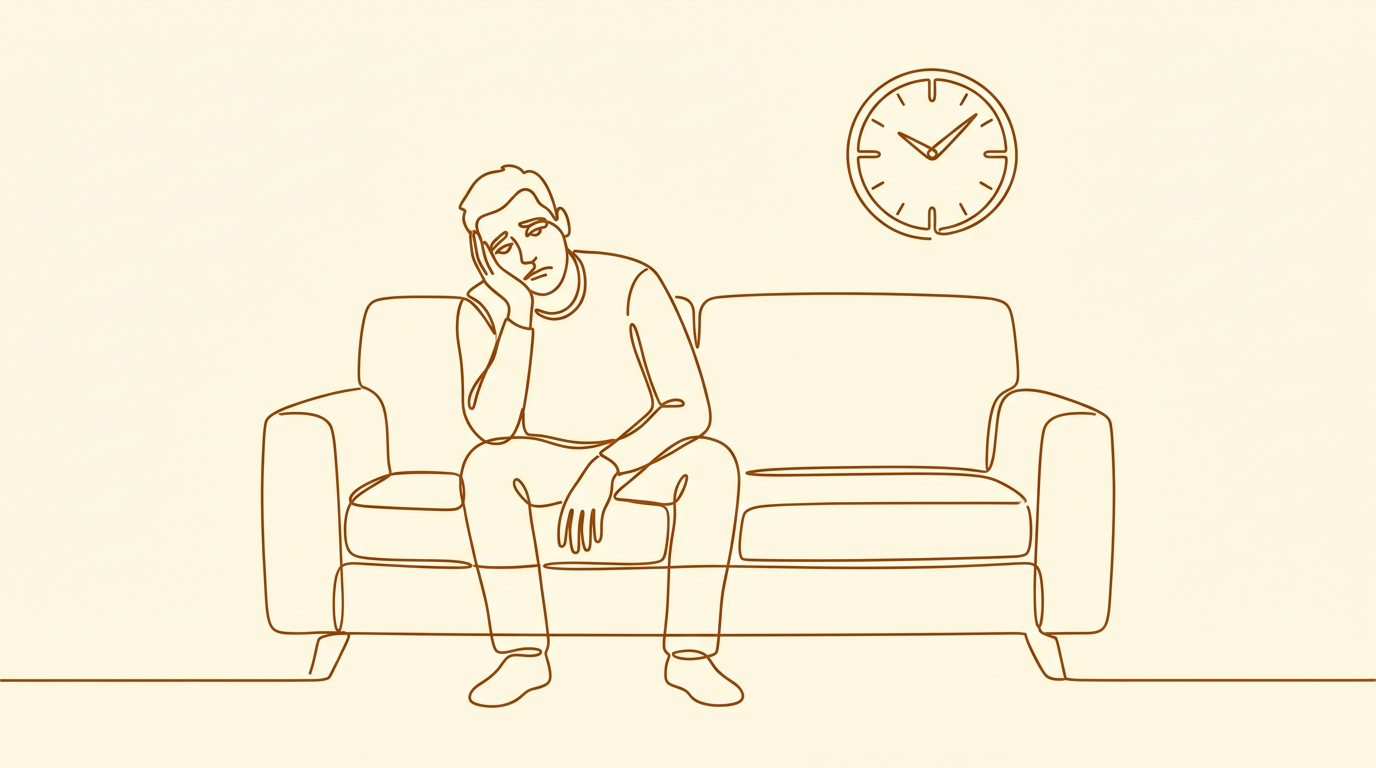
Maybe you’ve been calling yourself an addict for months, or years. Maybe every time you relapse, a voice in your head says “of course you did, that’s who you are.” Maybe you’ve built your entire self-image around this one behavior, and now you can’t imagine yourself without it.
This is one of the most underrated obstacles in porn recovery. The urges get all the attention, but identity, the story you tell yourself about who you are, quietly shapes everything. It determines whether a relapse feels like a temporary setback or proof that you’ll never change. It determines whether recovery feels like becoming someone new or pretending to be someone you’re not.
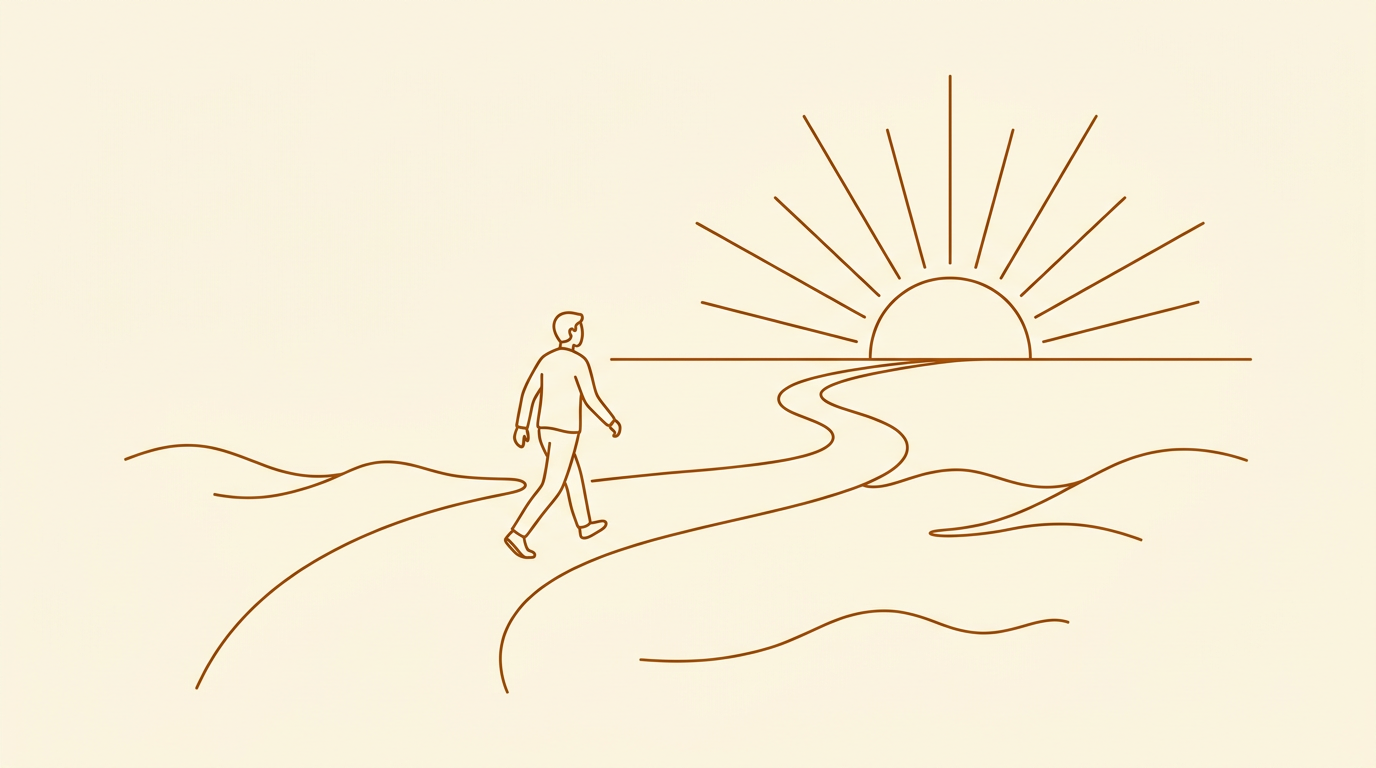
The good news: identity isn’t fixed. It’s something you build, one choice at a time. And you’ve already started.
Key takeaways
- Your identity (the story you tell about who you are) powerfully shapes your behavior, often more than willpower or motivation
- The “addict” label can be useful for taking the problem seriously, but harmful when it becomes a fixed identity that makes relapse feel inevitable
- Identity changes through action, not declaration: small, repeated behaviors that align with who you want to be create real shifts over time
- A relapse doesn’t erase your new identity; how you respond to it determines which identity gets reinforced
- Recovery isn’t about becoming a totally different person, it’s about expanding your sense of self beyond one compulsive behavior
Why Identity Matters More Than Willpower
Research on habit change consistently shows the same thing: people who change their behavior long-term are the ones who change how they see themselves.
A smoker who says “I’m trying to quit” is in a fundamentally different position than one who says “I’m not a smoker.” The first person is fighting against their identity. The second person is acting from it. The behavior (not smoking) is the same, but the internal experience is completely different. One takes constant effort. The other feels natural.
The same dynamic plays out in porn recovery. If your core identity is “I’m a porn addict,” then every day of abstinence is a day you’re fighting against who you believe you are. That’s exhausting. It’s also unstable, because the moment your defenses drop (stress, loneliness, fatigue), the “real you” reasserts itself.
This isn’t about denying that you have a problem. It’s about refusing to let the problem be the sum total of who you are.
The Problem with “I Am an Addict”
Let’s be clear: acknowledging addiction is important. If you spent years minimizing the problem (“I can stop whenever I want,” “it’s not that bad”), then naming it as addiction might have been the most honest and necessary thing you’ve done.
But labels that help you get into recovery can sometimes keep you stuck inside it.
Here’s how the addict identity can backfire:
It Makes Relapse Feel Predetermined
If “addict” is who you are at your core, then relapse doesn’t feel like a mistake you made. It feels like your true nature leaking through. This makes it harder to recover from a slip because you interpret it as confirmation rather than information.
Compare: “I relapsed because I was alone, stressed, and didn’t have a plan for the evening” versus “I relapsed because I’m an addict.” The first leads to a specific, fixable change. The second leads to resignation.
It Shrinks Your Self-Concept
You are not one thing. You’re someone who reads, or cooks, or cares about their friends, or is good at their job, or loves music, or is trying to be a better partner. When addiction becomes the center of your identity, all of those other parts get pushed to the edges. You start seeing every experience through the lens of recovery, and your world contracts.
It Creates a Permanent Patient Mindset
Some people get stuck in a version of recovery where they’re always healing, always fragile, always one bad day from collapse. This isn’t recovery; it’s a holding pattern. Real recovery involves getting to a point where porn is a chapter in your history, not the organizing principle of your life.
Separating Behavior from Identity
The first step in rewiring your identity is a cognitive one: learning to separate what you did from who you are.
This isn’t about excusing the behavior. It’s about accuracy. You are a person who developed a compulsive habit in response to specific conditions (boredom, loneliness, stress, unprocessed pain, easy access, adolescence). That habit became deeply grooved in your brain. Now you’re working to change it.
That description is true, and it doesn’t require you to define yourself by the habit.
Try this reframe: instead of “I am an addict,” try “I am someone who developed an addictive pattern with porn, and I’m in the process of changing it.”
It’s longer. It’s less punchy. And it’s more accurate. It acknowledges the reality of the problem while leaving room for change. The word “process” matters, it implies movement, not a fixed state.
How Identity Actually Changes
Here’s the part that trips people up: you can’t just decide to have a new identity. You can’t wake up one morning and declare “I am now a disciplined, healthy person” and have it stick. Identity doesn’t work that way.
Identity changes through evidence. Specifically, it changes through the accumulation of small actions that are consistent with the person you want to be. Each action is a vote for your new identity, and when enough votes accumulate, the identity shifts.
The Evidence Loop
It works like this:
- You choose a small action aligned with who you want to become
- You do it, even if it feels forced or fake
- Your brain registers: “A person like me does this”
- Next time, the action feels slightly more natural
- Repeat until the identity and the behavior are aligned
This is why quitting porn isn’t just about stopping a behavior. It’s about starting others. Every time you go to the gym instead of opening an incognito tab, you’re casting a vote for a different identity. Every time you sit with boredom instead of numbing it, you’re proving to yourself that you’re someone who can tolerate discomfort. Every time you reach out to a friend instead of isolating, you’re building evidence that you’re a connected person.
The individual actions feel small. The accumulated evidence is transformative.
It Feels Fake at First
This is normal and worth naming. When you start acting like the person you want to be, it will feel performative. You’ll think “I’m not really a disciplined person, I’m just pretending.” You’ll feel like a fraud.
This is actually how all identity change works. The feeling of authenticity comes after the behavior, not before it. You don’t wait to feel like a runner before you start running. You run, awkwardly and reluctantly, until one day you realize you’re a runner.
The same applies here. You don’t wait to feel like a person who doesn’t need porn. You act like one, repeatedly, until the feeling catches up.
Practical Ways to Build Your New Identity
Define What You’re Moving Toward
Most people in recovery can articulate what they’re moving away from (compulsive porn use, shame, isolation). Fewer can articulate what they’re moving toward.
Take 10 minutes and write a brief description of the person you want to be in one year. Not in terms of porn (don’t write “someone who hasn’t watched porn in a year”), but in terms of character, relationships, and daily life.
Examples:
- “Someone who handles stress by going outside or calling a friend, not by numbing”
- “Someone who is present and honest in relationships”
- “Someone who is physically active and takes care of their body”
- “Someone who has interests and passions beyond work and screens”
This isn’t a vision board exercise. It’s a targeting exercise. You need to know what you’re building so you can recognize the actions that build it.
Adopt Identity-Level Language
The words you use about yourself matter. Start noticing your internal monologue and gently shift it:
- From “I’m trying not to watch porn” to “I don’t watch porn”
- From “I’m an addict in recovery” to “I’m someone who’s building a better life”
- From “I can’t handle stress” to “I’m learning new ways to handle stress”
- From “I always relapse” to “I’ve relapsed before, and I’ve also recovered before”
You don’t need to force this. Just notice the language and, when you catch a fixed, fatalistic statement, ask yourself if there’s a more accurate and more useful way to say it.
Build an Identity Portfolio
Your identity shouldn’t rest on a single pillar (not on “addict” and not on “person in recovery” either). Build multiple sources of self-concept:
- A physical practice: running, lifting, yoga, martial arts, hiking. Something that gives you a body-based identity.
- A creative or intellectual pursuit: writing, music, coding, reading, woodworking. Something that engages your mind in a way that builds skill.
- A relational role: being a reliable friend, a present partner, a mentor, a community member. Something that connects you to others.
- A values-based practice: journaling, volunteering, therapy, spiritual practice. Something that grounds you in what you believe.
Each of these gives you something to be beyond “the person who’s trying not to watch porn.” And each one provides identity evidence that reinforces the version of you that you’re building.
What Happens When You Relapse
This is where identity work gets tested. Because a relapse, under the old identity, confirms the story: “See? I’m still an addict. Nothing changed.”
Under the new identity, a relapse is processed differently. Not minimized, but contextualized:
- “I slipped because I was exhausted, lonely, and had no evening plan. That’s a solvable problem.”
- “The version of me that built 47 days of recovery is still here. One night doesn’t erase that.”
- “What can I learn from this? What will I do differently next time?”
The key insight: how you respond to the relapse determines which identity gets reinforced. If you collapse into shame and declare yourself a failure, you’ve reinforced the addict identity. If you treat it as data, adjust your approach, and continue, you’ve reinforced the identity of someone who keeps going.
Forgiving yourself after a relapse isn’t about lowering standards. It’s about refusing to let a single event define you.
The Long Game of Identity
Identity doesn’t flip overnight. It shifts gradually, through months of accumulated evidence. There will be days when the old story feels more true than the new one. Days when a relapse or a bad mood or a wave of shame convinces you that nothing has changed.
Those days are part of the process, not proof against it.
The question to keep asking isn’t “Am I a different person yet?” It’s “What did I do today that’s consistent with who I want to become?” If you can answer that honestly, even with something small (I went for a walk, I didn’t isolate, I told the truth about how I’m feeling), then your identity is shifting.
You’re not defined by the worst thing you’ve ever done. You’re not defined by a label. You’re defined by what you do next, and next, and next. And that, unlike the past, is something you get to choose.
If you’re wondering whether the effort is worth it, read Is Quitting Porn Worth It?. The answer is more nuanced (and more hopeful) than you might expect.